Taihu Lake
⭐ 3.60
Hanshan County, Ma'anshan City, Anhui Province, China
 Taihu Mountain National Forest Park sits about 84 km southeast of Hefei and 97 km southwest of Ma'anshan, easily reached by car via the Hefei-Wuhu highway. The park consists of two parts: the forest reserve and the adjacent Deer Park. Some twenty karst peaks form a dramatic "Nine Dragons Playing with a Pearl" arrangement, echoing the limestone scenery of Guilin though on a more intimate scale. With forest coverage between 92% and 95%, the area functions as a natural oxygen bar for central Anhui, and after rainfall, small springs and waterfalls bring added vitality to the mossy slopes.
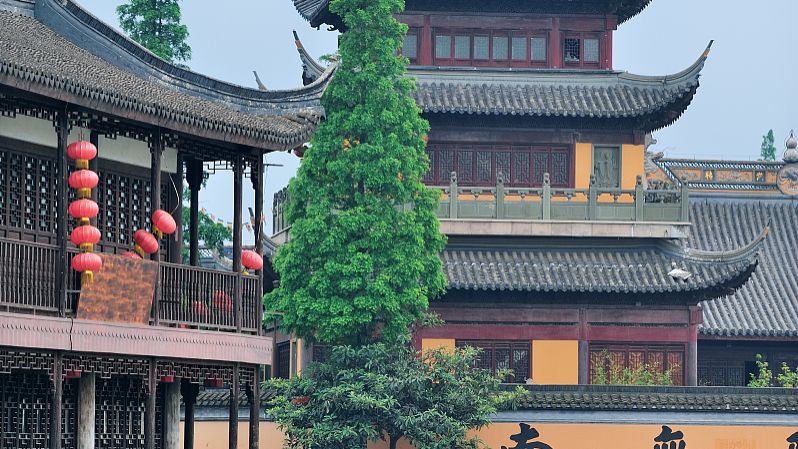
The Taihu Zen Temple was first built during the Northern Song Dynasty (960–1127 CE), an era when Chinese Buddhism flourished alongside the rise of neo-Confucian thought. The complex features traditional architecture with upturned eaves and orderly courtyards, reminiscent of Song-era monastery halls at Mount Wutai or the wooden temples of Japan's Nara. Two famous oddities draw the curious: the "Indoor Pagoda," whose tower rises from inside a hall rather than standing freely outside, and the "Well by the Stove," whose water level remains constant despite its proximity to the kitchen fire—a phenomenon that has puzzled visitors for centuries.
The temple's nickname, "Little Jiuhua of the North Yangtze," links it spiritually to Mount Jiuhua, one of China's four sacred Buddhist mountains. Pilgrims and travelers come seeking the contemplative atmosphere of morning bells and evening drums, a tradition parallel to monastic rhythms still practiced at Italy's Assisi or Greece's Mount Athos. Beyond religion, the park hosts one of the largest sika deer breeding bases in eastern China, where visitors can feed and photograph these gentle creatures—an experience comparable to encountering fallow deer in London's Richmond Park or Vienna's Lainzer Tiergarten.
The park welcomes visitors daily from 09:00 to 16:00, with last entry at 4 PM—similar to the limited hours of many Italian villa gardens. Tickets run about 18–20 RMB ($2.50–3 USD), a fraction of most European heritage fees, with discounts or free admission for seniors and students upon presentation of ID. Allow 3 to 4 hours for a satisfying visit, and if you intend to climb to the summit pavilion overlooking the Yangtze River—a panorama comparable to gazing from a Pyrenean peak toward the Mediterranean—budget extra time and a reasonable level of fitness.
Spring (March–May) and autumn (September–November) offer the most comfortable weather, with mild temperatures akin to a Mediterranean spring. Avoid summer heat and humidity by arriving early morning or after 3 PM. Trails are stone steps with some steep sections, so sturdy anti-slip shoes are essential—think Cinque Terre cobbles rather than gentle garden paths. On-site amenities are basic, so bring sufficient water and snacks. This rustic simplicity is precisely what makes Taihu Mountain an authentic retreat for families seeking nature education, Buddhist heritage, and a quiet communion with the Chinese landscape.
Taihu Mountain National Forest Park sits about 84 km southeast of Hefei and 97 km southwest of Ma'anshan, easily reached by car via the Hefei-Wuhu highway. The park consists of two parts: the forest reserve and the adjacent Deer Park. Some twenty karst peaks form a dramatic "Nine Dragons Playing with a Pearl" arrangement, echoing the limestone scenery of Guilin though on a more intimate scale. With forest coverage between 92% and 95%, the area functions as a natural oxygen bar for central Anhui, and after rainfall, small springs and waterfalls bring added vitality to the mossy slopes.
The Taihu Zen Temple was first built during the Northern Song Dynasty (960–1127 CE), an era when Chinese Buddhism flourished alongside the rise of neo-Confucian thought. The complex features traditional architecture with upturned eaves and orderly courtyards, reminiscent of Song-era monastery halls at Mount Wutai or the wooden temples of Japan's Nara. Two famous oddities draw the curious: the "Indoor Pagoda," whose tower rises from inside a hall rather than standing freely outside, and the "Well by the Stove," whose water level remains constant despite its proximity to the kitchen fire—a phenomenon that has puzzled visitors for centuries.
The temple's nickname, "Little Jiuhua of the North Yangtze," links it spiritually to Mount Jiuhua, one of China's four sacred Buddhist mountains. Pilgrims and travelers come seeking the contemplative atmosphere of morning bells and evening drums, a tradition parallel to monastic rhythms still practiced at Italy's Assisi or Greece's Mount Athos. Beyond religion, the park hosts one of the largest sika deer breeding bases in eastern China, where visitors can feed and photograph these gentle creatures—an experience comparable to encountering fallow deer in London's Richmond Park or Vienna's Lainzer Tiergarten.
The park welcomes visitors daily from 09:00 to 16:00, with last entry at 4 PM—similar to the limited hours of many Italian villa gardens. Tickets run about 18–20 RMB ($2.50–3 USD), a fraction of most European heritage fees, with discounts or free admission for seniors and students upon presentation of ID. Allow 3 to 4 hours for a satisfying visit, and if you intend to climb to the summit pavilion overlooking the Yangtze River—a panorama comparable to gazing from a Pyrenean peak toward the Mediterranean—budget extra time and a reasonable level of fitness.
Spring (March–May) and autumn (September–November) offer the most comfortable weather, with mild temperatures akin to a Mediterranean spring. Avoid summer heat and humidity by arriving early morning or after 3 PM. Trails are stone steps with some steep sections, so sturdy anti-slip shoes are essential—think Cinque Terre cobbles rather than gentle garden paths. On-site amenities are basic, so bring sufficient water and snacks. This rustic simplicity is precisely what makes Taihu Mountain an authentic retreat for families seeking nature education, Buddhist heritage, and a quiet communion with the Chinese landscape.