Yuantouzhu Scenic Area
⭐ 4.20
Yuantouzhu Scenic Area, Binhu District, Wuxi, Jiangsu, China
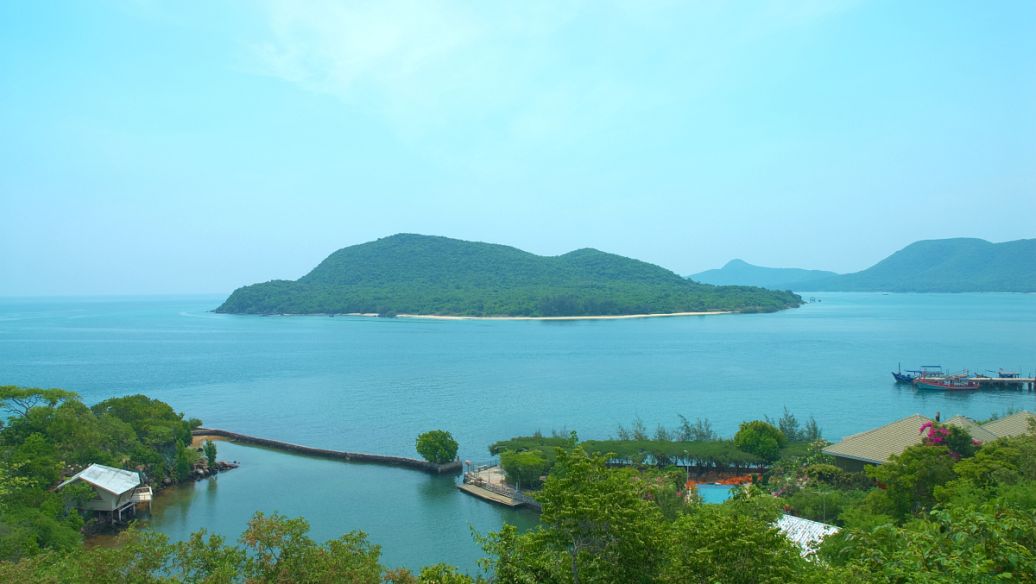 The peninsula's modern story begins in the 1920s, when Wuxi textile magnate Yang Hanxi transformed the rocky headland into the elegant Hengyun Villa, launching a tradition of private estate-building that recalls the great villa-era developments of Italy's Lake Como. The name itself is older: the craggy outcrop pushing into the bay has long been likened to a giant softshell turtle—a creature from Chinese myth that supports mountains or carries immortals. Across the centuries, literati carved monumental inscriptions like "Bao Yun Wu Yue" ("Embracing Wu and Yue Kingdoms") into the cliff faces, layering the landscape with literary memory akin to verses etched into rocks at Greece's Delphi or Scotland's Highland passes.
The scenery unfolds in distinct acts. Lude Mountain, the peninsula's highest point, offers a 360-degree panorama over the vastness of Lake Tai—comparable to gazing from a Highland tor across a Scottish loch, though the body of water here is more than eight times larger than Loch Lomond. From the summit, the eye travels across the rippling surface to distant shores blurred by haze. At Wanlang Juanxue ("Ten Thousand Waves Rolling Snow"), spray explodes against the rocks in windy weather, evoking the storm-battered cliffs of Cornwall. The five-kilometer Shili Fangjing path shifts mood with every bend, while a stand of dawn redwoods along the shore blazes russet and gold each autumn, mirroring New England's fall forests.
Human craftsmanship dots the landscape. Guangfu Temple, founded during the Tang dynasty and rebuilt several times since, anchors the site with its weathered halls and renowned vegetarian noodle offerings—a culinary tradition paralleled in the Buddhist temples of Kyoto. Nearby, the Republican-era Hengyun Villa blends Chinese classical design with Western geometric layout, an architectural hybrid reminiscent of the syncretic styles found in Portugal's Sintra palaces. Stone inscriptions by calligraphers of every era are scattered along paths and tucked into crevices, while the elegant arch of Changchun Bridge—famed for cherry blossoms in spring—provides a graceful focal point for photographers even outside blooming season.
The highlight for many visitors is Taihu Fairy Island (Sanshan Island), reached by a 20-minute ferry ride across deep-green waters. Once ashore, a complex of Taoist temples climbs the slopes, with the commanding Mother of Taihu statue gazing over the lake—evoking the mythic grandeur of Mount Olympus presiding over the Aegean. Wandering between incense-wreathed halls and viewing terraces, with only the lap of waves and toll of bells for company, feels like stepping into a Chinese Arcadia. The crossing itself is part of the pleasure: ferries thread between the three islets as breezes ruffle the surface, offering the unhurried waterborne romance that charmed Grand Tour travelers on Italy's Lake Maggiore.
Covering a large area, the park rewards strategic planning. Buy the combined ticket that includes the ferry—visit the islands first while energy is high, then explore Changchun Bridge and the Lude Mountain ridge on foot later. Electric shuttles and additional boats operate throughout for tired legs. Summer mornings are best: thinner crowds, cooler temperatures, and softer light for photography. Allow a full day; six hours is the comfortable minimum. The site sits roughly 10 kilometers from Wuxi Railway Station, easily reached by metro or taxi, and English signage at major viewpoints makes independent exploration straightforward.
The peninsula's modern story begins in the 1920s, when Wuxi textile magnate Yang Hanxi transformed the rocky headland into the elegant Hengyun Villa, launching a tradition of private estate-building that recalls the great villa-era developments of Italy's Lake Como. The name itself is older: the craggy outcrop pushing into the bay has long been likened to a giant softshell turtle—a creature from Chinese myth that supports mountains or carries immortals. Across the centuries, literati carved monumental inscriptions like "Bao Yun Wu Yue" ("Embracing Wu and Yue Kingdoms") into the cliff faces, layering the landscape with literary memory akin to verses etched into rocks at Greece's Delphi or Scotland's Highland passes.
The scenery unfolds in distinct acts. Lude Mountain, the peninsula's highest point, offers a 360-degree panorama over the vastness of Lake Tai—comparable to gazing from a Highland tor across a Scottish loch, though the body of water here is more than eight times larger than Loch Lomond. From the summit, the eye travels across the rippling surface to distant shores blurred by haze. At Wanlang Juanxue ("Ten Thousand Waves Rolling Snow"), spray explodes against the rocks in windy weather, evoking the storm-battered cliffs of Cornwall. The five-kilometer Shili Fangjing path shifts mood with every bend, while a stand of dawn redwoods along the shore blazes russet and gold each autumn, mirroring New England's fall forests.
Human craftsmanship dots the landscape. Guangfu Temple, founded during the Tang dynasty and rebuilt several times since, anchors the site with its weathered halls and renowned vegetarian noodle offerings—a culinary tradition paralleled in the Buddhist temples of Kyoto. Nearby, the Republican-era Hengyun Villa blends Chinese classical design with Western geometric layout, an architectural hybrid reminiscent of the syncretic styles found in Portugal's Sintra palaces. Stone inscriptions by calligraphers of every era are scattered along paths and tucked into crevices, while the elegant arch of Changchun Bridge—famed for cherry blossoms in spring—provides a graceful focal point for photographers even outside blooming season.
The highlight for many visitors is Taihu Fairy Island (Sanshan Island), reached by a 20-minute ferry ride across deep-green waters. Once ashore, a complex of Taoist temples climbs the slopes, with the commanding Mother of Taihu statue gazing over the lake—evoking the mythic grandeur of Mount Olympus presiding over the Aegean. Wandering between incense-wreathed halls and viewing terraces, with only the lap of waves and toll of bells for company, feels like stepping into a Chinese Arcadia. The crossing itself is part of the pleasure: ferries thread between the three islets as breezes ruffle the surface, offering the unhurried waterborne romance that charmed Grand Tour travelers on Italy's Lake Maggiore.
Covering a large area, the park rewards strategic planning. Buy the combined ticket that includes the ferry—visit the islands first while energy is high, then explore Changchun Bridge and the Lude Mountain ridge on foot later. Electric shuttles and additional boats operate throughout for tired legs. Summer mornings are best: thinner crowds, cooler temperatures, and softer light for photography. Allow a full day; six hours is the comfortable minimum. The site sits roughly 10 kilometers from Wuxi Railway Station, easily reached by metro or taxi, and English signage at major viewpoints makes independent exploration straightforward.