Huishan Clay Figurines
⭐ 4.20
Huishan Clay Figurines Museum, Huishan District, Wuxi City, Jiangsu Province, China
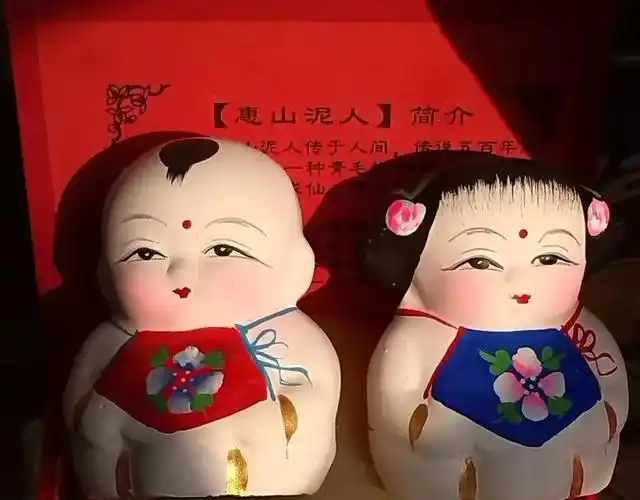 The story of Huishan Clay Figures begins in the Ming Dynasty and flourished during the Qing Dynasty, reaching artistic maturity around the same era that European porcelain dynasties like Meissen were perfecting their own ceramic traditions. In 2006, this ancient craft was inscribed on China's first national list of intangible cultural heritage, placing it alongside other living traditions such as Peking opera and Kunqu. Over four hundred years, what began as humble folk toys for children gradually evolved into a sophisticated art form that captures the cultural memory of the Jiangnan region south of the Yangtze River.
What truly distinguishes Huishan Clay Figures from other ceramic traditions worldwide is the extraordinary raw material itself. The clay is harvested exclusively from a specific geological layer on the northern slope of Huishan Hill, giving it a fine, silken texture that dries without cracking, a quality reminiscent of the prized kaolin deposits that made Jingdezhen China's "Porcelain Capital." This unique earth has been worked by generations of artisans whose hands have shaped it into everything from festival mascots to theatrical masterpieces, carrying forward an unbroken lineage of craftsmanship rarely matched even by Italy's centuries-old ceramic centers.
The art form splits into two distinct categories that reward visitors with very different experiences. "Coarse wares" represent the folk tradition, with the iconic Da Afu, a plump, smiling child figure symbolizing good fortune and happiness, serving as the most beloved example. These pieces are designed to bring luck and are often given as gifts. "Fine wares," by contrast, are miniature sculptural marvels depicting characters from classical Chinese opera, requiring weeks of painstaking hand-modeling. Together they illustrate a folk-art range that compares to the breadth seen in German Biedermeier figurines or Russian lacquer-box miniatures.
The artistic philosophy governing these figures follows the famous principle of "three parts sculpture, seven parts painting," meaning the final painted decoration ultimately determines each piece's vitality. Master painters adhere to four visual standards: "fresh" colors that glow with life, "clean" brushwork with no muddy tones, "orderly" composition balanced across the figure, and "vivid" expressions that capture the subject's spirit. This commitment to surface artistry parallels the meticulous gilding traditions of Byzantine icons or the delicate enamel work found in Fabergé eggs, demonstrating that Huishan artisans viewed their humble clay as a canvas worthy of the highest painterly ambition.
The China Clay Figure Museum, nestled within the atmospheric Huishan Ancient Town just west of Wuxi's city center, offers the most comprehensive introduction to this heritage. Housed in traditional Jiangnan-style architecture beside picturesque canals, the museum displays both historic masterpieces and contemporary works while hosting live demonstrations by resident masters. Visitors can watch artisans shape clay on their pottery wheels, observe the meticulous painting process, and even participate in hands-on workshops to create their own small figure to take home, an experience unavailable at most major ceramic museums in Europe or Asia.
Beyond the museum, the surrounding Huishan Ancient Town rewards exploration with its cobblestone lanes, ancestral halls, and the famous thousand-year-old ginkgo tree at Jichang Garden, a classical Chinese garden comparable in intimacy to Suzhou's celebrated gardens. For travelers seeking an authentic encounter with living Chinese folk art away from the well-trodden tourist circuits, a visit here reveals why UNESCO and Chinese cultural authorities alike consider Huishan Clay Figures a treasure worth preserving, a handcrafted legacy as culturally significant as Delft pottery in the Netherlands or Staffordshire figurines in England.
The story of Huishan Clay Figures begins in the Ming Dynasty and flourished during the Qing Dynasty, reaching artistic maturity around the same era that European porcelain dynasties like Meissen were perfecting their own ceramic traditions. In 2006, this ancient craft was inscribed on China's first national list of intangible cultural heritage, placing it alongside other living traditions such as Peking opera and Kunqu. Over four hundred years, what began as humble folk toys for children gradually evolved into a sophisticated art form that captures the cultural memory of the Jiangnan region south of the Yangtze River.
What truly distinguishes Huishan Clay Figures from other ceramic traditions worldwide is the extraordinary raw material itself. The clay is harvested exclusively from a specific geological layer on the northern slope of Huishan Hill, giving it a fine, silken texture that dries without cracking, a quality reminiscent of the prized kaolin deposits that made Jingdezhen China's "Porcelain Capital." This unique earth has been worked by generations of artisans whose hands have shaped it into everything from festival mascots to theatrical masterpieces, carrying forward an unbroken lineage of craftsmanship rarely matched even by Italy's centuries-old ceramic centers.
The art form splits into two distinct categories that reward visitors with very different experiences. "Coarse wares" represent the folk tradition, with the iconic Da Afu, a plump, smiling child figure symbolizing good fortune and happiness, serving as the most beloved example. These pieces are designed to bring luck and are often given as gifts. "Fine wares," by contrast, are miniature sculptural marvels depicting characters from classical Chinese opera, requiring weeks of painstaking hand-modeling. Together they illustrate a folk-art range that compares to the breadth seen in German Biedermeier figurines or Russian lacquer-box miniatures.
The artistic philosophy governing these figures follows the famous principle of "three parts sculpture, seven parts painting," meaning the final painted decoration ultimately determines each piece's vitality. Master painters adhere to four visual standards: "fresh" colors that glow with life, "clean" brushwork with no muddy tones, "orderly" composition balanced across the figure, and "vivid" expressions that capture the subject's spirit. This commitment to surface artistry parallels the meticulous gilding traditions of Byzantine icons or the delicate enamel work found in Fabergé eggs, demonstrating that Huishan artisans viewed their humble clay as a canvas worthy of the highest painterly ambition.
The China Clay Figure Museum, nestled within the atmospheric Huishan Ancient Town just west of Wuxi's city center, offers the most comprehensive introduction to this heritage. Housed in traditional Jiangnan-style architecture beside picturesque canals, the museum displays both historic masterpieces and contemporary works while hosting live demonstrations by resident masters. Visitors can watch artisans shape clay on their pottery wheels, observe the meticulous painting process, and even participate in hands-on workshops to create their own small figure to take home, an experience unavailable at most major ceramic museums in Europe or Asia.
Beyond the museum, the surrounding Huishan Ancient Town rewards exploration with its cobblestone lanes, ancestral halls, and the famous thousand-year-old ginkgo tree at Jichang Garden, a classical Chinese garden comparable in intimacy to Suzhou's celebrated gardens. For travelers seeking an authentic encounter with living Chinese folk art away from the well-trodden tourist circuits, a visit here reveals why UNESCO and Chinese cultural authorities alike consider Huishan Clay Figures a treasure worth preserving, a handcrafted legacy as culturally significant as Delft pottery in the Netherlands or Staffordshire figurines in England.