Lhalu Wetland
⭐ 3.50
Lhalu Wetland National Nature Reserve, Chengguang District, Lhasa City, Tibet Autonomous Region, China
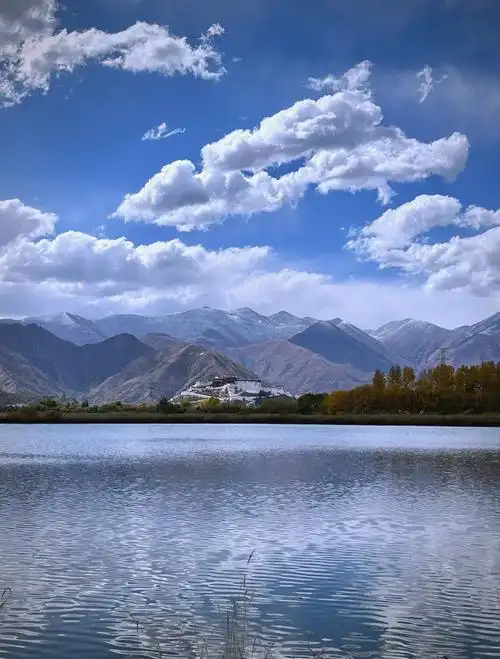 Lhasa has welcomed Buddhist pilgrims for more than a millennium, drawing seekers along routes that once linked Central Asia with the Indian subcontinent—much like medieval journeys to Canterbury or Santiago de Compostela. The Potala Palace, looming above the wetland, has anchored Tibetan spiritual life since the seventh century and became a UNESCO World Heritage site in 1994. For centuries, this very marshland quietly sustained the city below, regulating floods, purifying water, and earning its nickname as the "Lung of Lhasa." Without it, the high-altitude capital would be far harsher.
Unlike the manicured geometries of Versailles or Schönbrunn, Lhalu is deliberately wild. The eight-kilometer boardwalk rises above the marsh without a single step, threading through reed beds where waterfowl paddle and nest. Birders will spot cousins of species seen in France's Camargue or England's Norfolk Broads, though here the bar-headed goose flies higher than any other migratory bird on Earth. The elusive black-necked crane, an icon of the plateau, winters here from November through March.
The wetland's signature viewpoint, a plain white window frame near the north gate, transforms the landscape into a living canvas reminiscent of Romantic-era paintings by Turner or Constable. Position it just right and the Potala Palace appears suspended above shimmering water, framed by reeds and Himalayan sky. Photographers gather here at golden hour, though any time of day delivers a postcard-worthy shot. Bring a wide-angle lens and patience for the occasional heron gliding through the frame.
Entry is free and no reservation is needed, but foreign travelers must carry a valid Tibet Travel Permit and enter with a licensed guide—a regulation strictly enforced across Tibet. The reserve opens daily from 8:00 to 21:00 between May and October, and closes entirely to tourists in winter to protect migratory species. Enter via the north gate to combine the window viewpoint with a Potala reflection platform. No food, water, or toilets exist inside the reserve; pack snacks and use facilities in town beforehand. Allow two to three hours for a relaxed visit.
Strict ecological rules apply: stay on the boardwalk or paved paths, never wade into the water, and absolutely no drones, fires, or feeding birds—fines for violations can be steep. Visitors must carry out all rubbish. The wetland sits at 3,650 meters, nearly 12,000 feet, but because the boardwalk is flat and the pace gentle, it makes an ideal acclimatization stop on your first day or two in Lhasa. Drink water, move slowly, and let your lungs adjust.
Think of it as Lhasa's answer to a Central Park stroll, except the backdrop is a 17th-century palace and the air thins toward the Himalayas. Bring sunscreen, a windproof jacket for cool evenings, and mosquito repellent in summer. Pause on the benches to listen for crane calls and the rustle of reeds. In a region famous for monasteries and mountains, this quiet wetland offers the rarest luxury of all: stillness, light, and the chance to breathe deep—literally—at the top of the world.
Lhasa has welcomed Buddhist pilgrims for more than a millennium, drawing seekers along routes that once linked Central Asia with the Indian subcontinent—much like medieval journeys to Canterbury or Santiago de Compostela. The Potala Palace, looming above the wetland, has anchored Tibetan spiritual life since the seventh century and became a UNESCO World Heritage site in 1994. For centuries, this very marshland quietly sustained the city below, regulating floods, purifying water, and earning its nickname as the "Lung of Lhasa." Without it, the high-altitude capital would be far harsher.
Unlike the manicured geometries of Versailles or Schönbrunn, Lhalu is deliberately wild. The eight-kilometer boardwalk rises above the marsh without a single step, threading through reed beds where waterfowl paddle and nest. Birders will spot cousins of species seen in France's Camargue or England's Norfolk Broads, though here the bar-headed goose flies higher than any other migratory bird on Earth. The elusive black-necked crane, an icon of the plateau, winters here from November through March.
The wetland's signature viewpoint, a plain white window frame near the north gate, transforms the landscape into a living canvas reminiscent of Romantic-era paintings by Turner or Constable. Position it just right and the Potala Palace appears suspended above shimmering water, framed by reeds and Himalayan sky. Photographers gather here at golden hour, though any time of day delivers a postcard-worthy shot. Bring a wide-angle lens and patience for the occasional heron gliding through the frame.
Entry is free and no reservation is needed, but foreign travelers must carry a valid Tibet Travel Permit and enter with a licensed guide—a regulation strictly enforced across Tibet. The reserve opens daily from 8:00 to 21:00 between May and October, and closes entirely to tourists in winter to protect migratory species. Enter via the north gate to combine the window viewpoint with a Potala reflection platform. No food, water, or toilets exist inside the reserve; pack snacks and use facilities in town beforehand. Allow two to three hours for a relaxed visit.
Strict ecological rules apply: stay on the boardwalk or paved paths, never wade into the water, and absolutely no drones, fires, or feeding birds—fines for violations can be steep. Visitors must carry out all rubbish. The wetland sits at 3,650 meters, nearly 12,000 feet, but because the boardwalk is flat and the pace gentle, it makes an ideal acclimatization stop on your first day or two in Lhasa. Drink water, move slowly, and let your lungs adjust.
Think of it as Lhasa's answer to a Central Park stroll, except the backdrop is a 17th-century palace and the air thins toward the Himalayas. Bring sunscreen, a windproof jacket for cool evenings, and mosquito repellent in summer. Pause on the benches to listen for crane calls and the rustle of reeds. In a region famous for monasteries and mountains, this quiet wetland offers the rarest luxury of all: stillness, light, and the chance to breathe deep—literally—at the top of the world.