Norbulingka
⭐ 4.50
No. 21, Norbulingka Road, Chengguan District, Lhasa, Tibet Autonomous Region, China
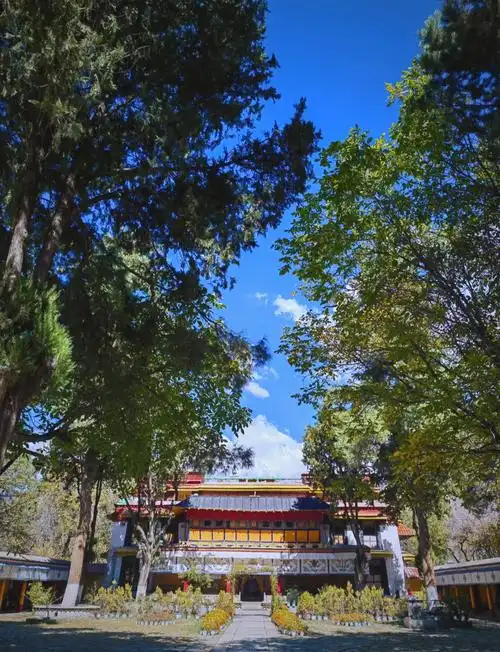 Norbulingka's story begins in the 1740s, when the 7th Dalai Lama, suffering from painful arthritis, sought refuge from the cold stone halls of the Potala Palace during Lhasa's brief but glorious summers. Over the following two centuries, eight successive Dalai Lamas expanded the estate, transforming a modest garden into Tibet's most important political retreat — think of it as a hybrid of France's Versailles and the Vatican, where governance, religious study, and leisure converged in one elegant setting.
The park's heart lies in three great palaces. Gesang Phodrang, the oldest, charms with its restrained, classical Tibetan lines. The Golden Phodrang dazzles with gilded woodwork and intricate carvings that rival the finest royal chambers of Europe. New Palace (Daten Lingka), the largest and most recent, conceals its true treasure upstairs: a stunning 301-panel mural cycle depicting Tibetan origins, the rise and fall of the Tibetan Empire, and the spread of Buddhism — a visual chronicle as vivid as any Renaissance fresco.
Beyond its palaces, Norbulingka safeguards an extraordinary collection of cultural treasures: silk thangkas, bronze statues, and exquisite porcelain gifted by Qing emperors. Its murals blend Han Chinese, Tibetan, and Indian artistic traditions, making the complex an unparalleled archive for scholars and a feast for curious travelers. UNESCO recognized this significance in 2001, inscribing Norbulingka alongside the Potala Palace as a World Heritage Site.
Getting here is straightforward — take bus 2, 8, or 13 to the Museum stop, entering through the southeast gate and exiting via the northeast. Allow 2.5 to 3 hours for a relaxed visit. Tickets cost 60 yuan in peak season (May–October) and 40 yuan in winter; students and visitors over 65 pay half price with valid ID. Wear comfortable shoes — the grounds are expansive — and observe no-photography rules inside the palace halls.
Visit between June and September, when Lhasa enjoys mild weather, lush greenery, and the famous Shoton Festival. During this time, the park erupts with traditional Tibetan opera performances and families spreading blankets for leisurely picnics on the lawns — one of the most authentic snapshots of contemporary Lhasa life you'll find anywhere. Don't miss the small high-altitude zoo in the park's eastern section, home to snow leopards and Tibetan mastiffs.
What makes Norbulingka truly special is its unique atmosphere — at once regal and relaxed, sacred and secular. While the Potala Palace awes with vertical grandeur, Norbulingka invites you to slow down, breathe the rarefied mountain air, and glimpse how Tibet's spiritual and political elite once escaped the weight of ceremony to enjoy poetry, picnics, and the simple pleasure of summer shade.
Norbulingka's story begins in the 1740s, when the 7th Dalai Lama, suffering from painful arthritis, sought refuge from the cold stone halls of the Potala Palace during Lhasa's brief but glorious summers. Over the following two centuries, eight successive Dalai Lamas expanded the estate, transforming a modest garden into Tibet's most important political retreat — think of it as a hybrid of France's Versailles and the Vatican, where governance, religious study, and leisure converged in one elegant setting.
The park's heart lies in three great palaces. Gesang Phodrang, the oldest, charms with its restrained, classical Tibetan lines. The Golden Phodrang dazzles with gilded woodwork and intricate carvings that rival the finest royal chambers of Europe. New Palace (Daten Lingka), the largest and most recent, conceals its true treasure upstairs: a stunning 301-panel mural cycle depicting Tibetan origins, the rise and fall of the Tibetan Empire, and the spread of Buddhism — a visual chronicle as vivid as any Renaissance fresco.
Beyond its palaces, Norbulingka safeguards an extraordinary collection of cultural treasures: silk thangkas, bronze statues, and exquisite porcelain gifted by Qing emperors. Its murals blend Han Chinese, Tibetan, and Indian artistic traditions, making the complex an unparalleled archive for scholars and a feast for curious travelers. UNESCO recognized this significance in 2001, inscribing Norbulingka alongside the Potala Palace as a World Heritage Site.
Getting here is straightforward — take bus 2, 8, or 13 to the Museum stop, entering through the southeast gate and exiting via the northeast. Allow 2.5 to 3 hours for a relaxed visit. Tickets cost 60 yuan in peak season (May–October) and 40 yuan in winter; students and visitors over 65 pay half price with valid ID. Wear comfortable shoes — the grounds are expansive — and observe no-photography rules inside the palace halls.
Visit between June and September, when Lhasa enjoys mild weather, lush greenery, and the famous Shoton Festival. During this time, the park erupts with traditional Tibetan opera performances and families spreading blankets for leisurely picnics on the lawns — one of the most authentic snapshots of contemporary Lhasa life you'll find anywhere. Don't miss the small high-altitude zoo in the park's eastern section, home to snow leopards and Tibetan mastiffs.
What makes Norbulingka truly special is its unique atmosphere — at once regal and relaxed, sacred and secular. While the Potala Palace awes with vertical grandeur, Norbulingka invites you to slow down, breathe the rarefied mountain air, and glimpse how Tibet's spiritual and political elite once escaped the weight of ceremony to enjoy poetry, picnics, and the simple pleasure of summer shade.