Sera Monastery
⭐ 4.50
Sera Monastery, Chengguan District, Lhasa City, Tibet Autonomous Region, China
 Founded in 1419 by Jetsun Shakya Yeshe, a senior disciple of Tsongkhapa—the 14th-century sage who established the Gelug ("Virtuous") school of Tibetan Buddhism—Sera Monastery has stood for over six centuries as a powerhouse of religious learning. Its founding coincided with the early Ming dynasty in China and the late medieval period in Europe, when the great universities of Oxford and Bologna were also taking shape. Like those Western institutions, Sera was conceived as a scholastic citadel, and it remains one of the six great Gelug monasteries that shaped Tibetan intellectual and political history.
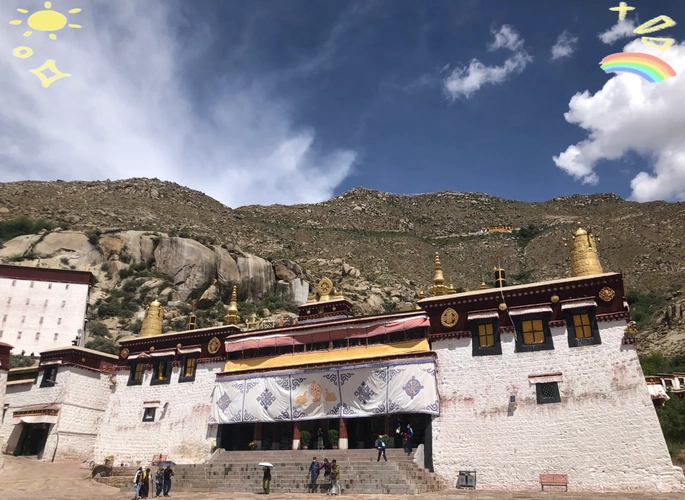
Built along a mountainside on the northern outskirts of Lhasa, Sera's architecture unfolds in cascading terraces that recall the terraced monastic complexes of Mount Athos in Greece. Its gleaming white walls, oxblood-red eaves, and gilded roof finials create a striking visual rhythm against the surrounding ochre hills. The complex centers on the great Tsokchen Assembly Hall and three tantric colleges—Mey, Gyey, and Ngaba—each with its own courtyard, chapels, and assembly halls. Inside, visitors discover Ming-dynasty imperial gifts, intricate murals, and butter-lamp altars, while the Gyey College enshrines the monastery's revered Hayagriva (Horse-Necked Deity) statue, considered its spiritual guardian.
The monastery's most electrifying feature is its daily debating session, held in the courtyard every Monday through Friday from 3 to 5 p.m. Here, monks pair off in dramatic philosophical duels: one debater claps loudly, stamps a bare foot, and gestures theatrically while the other remains seated, defending his position. This tradition—rooted in centuries-old scholastic logic and traceable in spirit to the disputation methods of medieval European universities—transforms abstract metaphysics into a kinetic, almost theatrical event. It is, for many visitors, the single most memorable encounter with living Buddhist culture anywhere in the Himalayas.
Sera sits at Sera Road No. 1 in Lhasa's Chenguan District, roughly 20 minutes by taxi or local bus from the city center. Admission is 50 RMB in peak season, payable at the gate. Most assembly halls close between 4 and 5 p.m., so morning is best for exploring the chapels, while afternoons should be reserved for the debating courtyard. Travelers with extra energy can climb the hillside behind the monastery to a circumambulation path tracing Tsongkhapa's meditation caves.
Dress modestly—shoulders and knees covered—and remove hats inside halls. Photography is forbidden within the chapels but permitted in the courtyards, including during debates, where you can capture unforgettable images. Always walk clockwise around shrines and prayer wheels as a sign of respect. Visiting Sera rewards those who arrive curious: it is not a relic but a working monastery where 600-year-old traditions of debate, devotion, and scholarship continue uninterrupted against one of the world's most dramatic skylines.
Founded in 1419 by Jetsun Shakya Yeshe, a senior disciple of Tsongkhapa—the 14th-century sage who established the Gelug ("Virtuous") school of Tibetan Buddhism—Sera Monastery has stood for over six centuries as a powerhouse of religious learning. Its founding coincided with the early Ming dynasty in China and the late medieval period in Europe, when the great universities of Oxford and Bologna were also taking shape. Like those Western institutions, Sera was conceived as a scholastic citadel, and it remains one of the six great Gelug monasteries that shaped Tibetan intellectual and political history.
Built along a mountainside on the northern outskirts of Lhasa, Sera's architecture unfolds in cascading terraces that recall the terraced monastic complexes of Mount Athos in Greece. Its gleaming white walls, oxblood-red eaves, and gilded roof finials create a striking visual rhythm against the surrounding ochre hills. The complex centers on the great Tsokchen Assembly Hall and three tantric colleges—Mey, Gyey, and Ngaba—each with its own courtyard, chapels, and assembly halls. Inside, visitors discover Ming-dynasty imperial gifts, intricate murals, and butter-lamp altars, while the Gyey College enshrines the monastery's revered Hayagriva (Horse-Necked Deity) statue, considered its spiritual guardian.
The monastery's most electrifying feature is its daily debating session, held in the courtyard every Monday through Friday from 3 to 5 p.m. Here, monks pair off in dramatic philosophical duels: one debater claps loudly, stamps a bare foot, and gestures theatrically while the other remains seated, defending his position. This tradition—rooted in centuries-old scholastic logic and traceable in spirit to the disputation methods of medieval European universities—transforms abstract metaphysics into a kinetic, almost theatrical event. It is, for many visitors, the single most memorable encounter with living Buddhist culture anywhere in the Himalayas.
Sera sits at Sera Road No. 1 in Lhasa's Chenguan District, roughly 20 minutes by taxi or local bus from the city center. Admission is 50 RMB in peak season, payable at the gate. Most assembly halls close between 4 and 5 p.m., so morning is best for exploring the chapels, while afternoons should be reserved for the debating courtyard. Travelers with extra energy can climb the hillside behind the monastery to a circumambulation path tracing Tsongkhapa's meditation caves.
Dress modestly—shoulders and knees covered—and remove hats inside halls. Photography is forbidden within the chapels but permitted in the courtyards, including during debates, where you can capture unforgettable images. Always walk clockwise around shrines and prayer wheels as a sign of respect. Visiting Sera rewards those who arrive curious: it is not a relic but a working monastery where 600-year-old traditions of debate, devotion, and scholarship continue uninterrupted against one of the world's most dramatic skylines.