Zhang Lan Memorial Hall
⭐ 3.20
No. 1, Biaofang Street, Shunqing District, Nanchong City, Sichuan, China
 Zhang Lan lived from 1872 to 1955, an extraordinary span covering the twilight of China's imperial era, the turmoil of the Republic, and the birth of the People's Republic—contemporary with Bertrand Russell and H.G. Wells in Europe, though Zhang's activism placed him at the very heart of Chinese politics. He helped build the China Democratic League in 1941 as a third-force alternative to both the Nationalists and Communists, much as France's Popular Front or post-war Italy's Christian Democrats sought to channel mass aspirations into democratic institutions. When Mao proclaimed the new China in 1949, Zhang became its first Vice Chairman, an elder statesman whose non-Communist credentials lent symbolic legitimacy to the new regime.
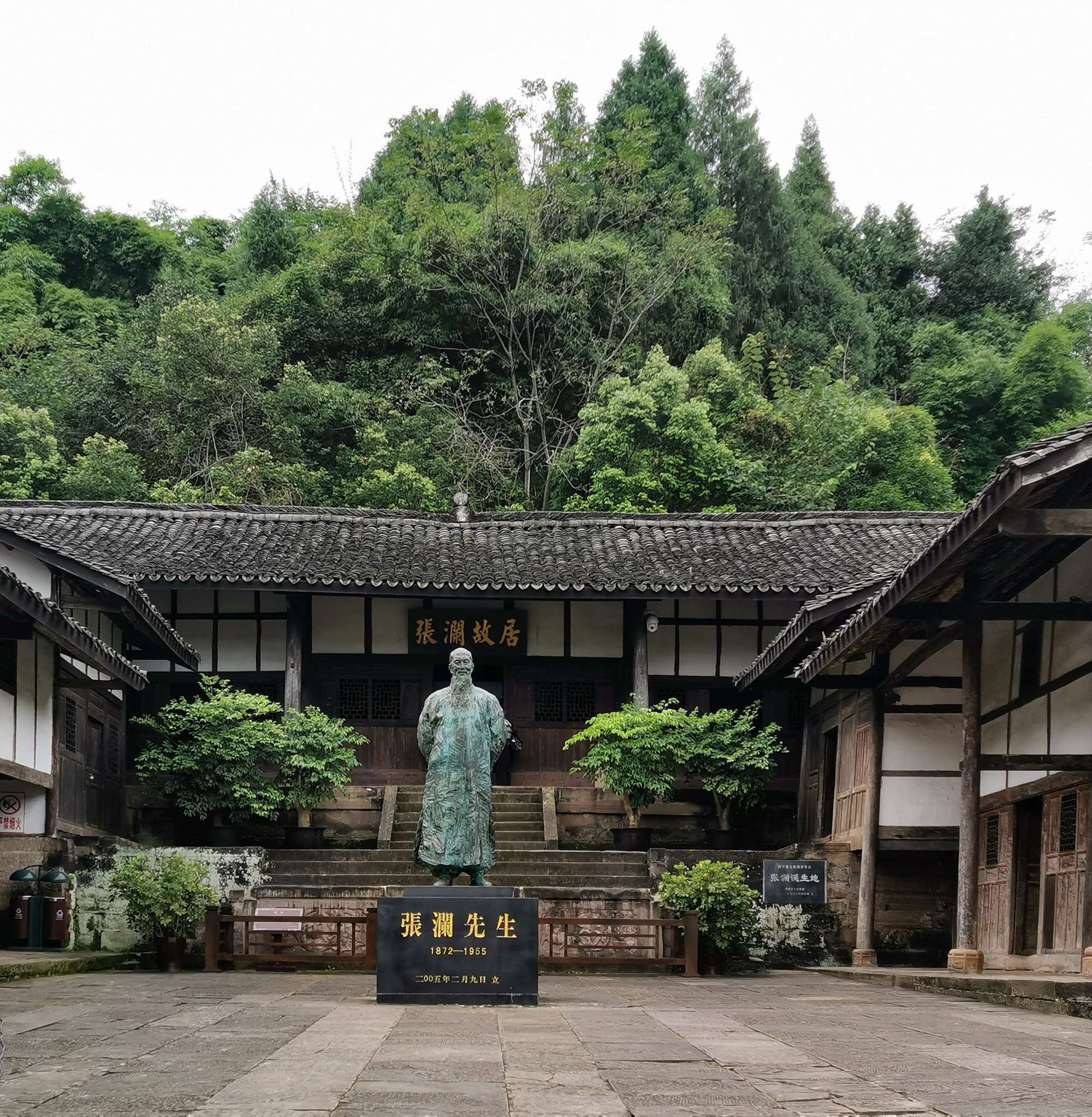
The memorial's centerpiece is a late-Qing wooden courtyard house dating from the Guangxu era (1875–1908), around 1,200 square meters of carved timber framing and gray-tiled roofs that recalls the half-timbered guild houses of medieval Bruges or the wooden machiya of Kyoto. Original carved brackets, lattice windows, and domestic objects remain where Zhang once lived and worked, lending the residence an atmosphere similar to London's preserved homes of Dickens or Dr Johnson. A modern exhibition hall appended to the courtyard employs audio-visual displays and seven themed galleries, juxtaposing Qing craftsmanship with contemporary museum design in a way that echoes the old-and-new contrasts at Berlin's Museumsinsel.
Beyond preserving one man's legacy, the memorial opens a window onto China's united front culture and the role of "democratic patriots"—non-Communist intellectuals who collaborated with the new state after 1949. For Western visitors familiar with post-war European Christian Democrat movements or the anti-fascist coalitions of mid-century Italy, this narrative offers an illuminating parallel. The site is officially a national key cultural relic protection unit and a 3A-rated red tourism destination, though it emphasizes moral and intellectual rather than martial heroism. A bronze statue square and a contemplative "Garden of Remembering the Worthy" surround the buildings, providing space for quiet reflection.
The memorial is free to all visitors, with entry requiring only a passport or ID card at the gate. Opening hours run 8:30 a.m. to 5:30 p.m., though the site may close Monday mornings, so an afternoon visit is advisable. Because the hall sits within the grounds of Jianhua Middle School, calling ahead to 0817-2795191 is strongly recommended to confirm access and avoid conflicts with school schedules. Guided tours are available and can be pre-booked for groups, adding considerable depth to the exhibits. The site lies roughly twenty minutes by taxi from Nanchong Gaoping Airport.
A sensible itinerary begins at the bronze statue square, then proceeds through the seven exhibition galleries in chronological order before stepping into the Qing courtyard, ending in the tranquil Garden of Remembering the Worthy. Allow ninety minutes to two hours for a thorough visit. For travelers crafting a broader revolutionary-heritage day, the memorial pairs naturally with the nearby former homes of Marshal Zhu De and General Luo Ruiqing—both prominent Nanchong-born figures—forming a compact half-day route through twentieth-century Chinese political history and an ideal counterpoint to the more familiar military landmarks of Yan'an or Jinggangshan.
Zhang Lan lived from 1872 to 1955, an extraordinary span covering the twilight of China's imperial era, the turmoil of the Republic, and the birth of the People's Republic—contemporary with Bertrand Russell and H.G. Wells in Europe, though Zhang's activism placed him at the very heart of Chinese politics. He helped build the China Democratic League in 1941 as a third-force alternative to both the Nationalists and Communists, much as France's Popular Front or post-war Italy's Christian Democrats sought to channel mass aspirations into democratic institutions. When Mao proclaimed the new China in 1949, Zhang became its first Vice Chairman, an elder statesman whose non-Communist credentials lent symbolic legitimacy to the new regime.
The memorial's centerpiece is a late-Qing wooden courtyard house dating from the Guangxu era (1875–1908), around 1,200 square meters of carved timber framing and gray-tiled roofs that recalls the half-timbered guild houses of medieval Bruges or the wooden machiya of Kyoto. Original carved brackets, lattice windows, and domestic objects remain where Zhang once lived and worked, lending the residence an atmosphere similar to London's preserved homes of Dickens or Dr Johnson. A modern exhibition hall appended to the courtyard employs audio-visual displays and seven themed galleries, juxtaposing Qing craftsmanship with contemporary museum design in a way that echoes the old-and-new contrasts at Berlin's Museumsinsel.
Beyond preserving one man's legacy, the memorial opens a window onto China's united front culture and the role of "democratic patriots"—non-Communist intellectuals who collaborated with the new state after 1949. For Western visitors familiar with post-war European Christian Democrat movements or the anti-fascist coalitions of mid-century Italy, this narrative offers an illuminating parallel. The site is officially a national key cultural relic protection unit and a 3A-rated red tourism destination, though it emphasizes moral and intellectual rather than martial heroism. A bronze statue square and a contemplative "Garden of Remembering the Worthy" surround the buildings, providing space for quiet reflection.
The memorial is free to all visitors, with entry requiring only a passport or ID card at the gate. Opening hours run 8:30 a.m. to 5:30 p.m., though the site may close Monday mornings, so an afternoon visit is advisable. Because the hall sits within the grounds of Jianhua Middle School, calling ahead to 0817-2795191 is strongly recommended to confirm access and avoid conflicts with school schedules. Guided tours are available and can be pre-booked for groups, adding considerable depth to the exhibits. The site lies roughly twenty minutes by taxi from Nanchong Gaoping Airport.
A sensible itinerary begins at the bronze statue square, then proceeds through the seven exhibition galleries in chronological order before stepping into the Qing courtyard, ending in the tranquil Garden of Remembering the Worthy. Allow ninety minutes to two hours for a thorough visit. For travelers crafting a broader revolutionary-heritage day, the memorial pairs naturally with the nearby former homes of Marshal Zhu De and General Luo Ruiqing—both prominent Nanchong-born figures—forming a compact half-day route through twentieth-century Chinese political history and an ideal counterpoint to the more familiar military landmarks of Yan'an or Jinggangshan.