Yudao Street
⭐ 3.00
Yudao Street, Shuangqiao District, Chengde City, Hebei Province, China
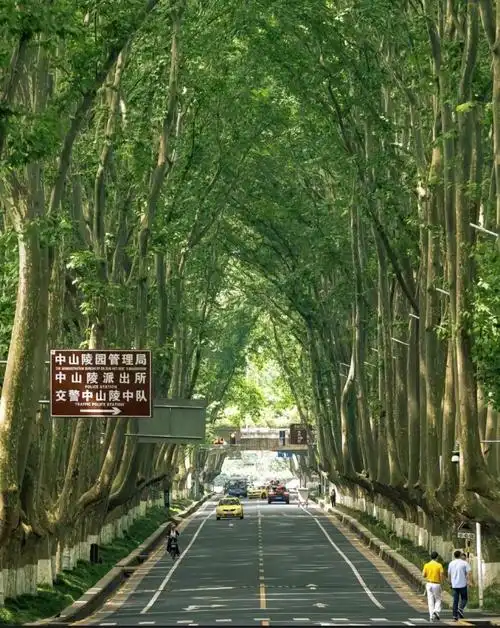 **Historical Context**: First laid in 1703, the year Kangxi began construction of the Mountain Resort, the Imperial Road was the exclusive highway reserved for the Qing emperor's annual migration north—rather like the royal routes linking Versailles to Paris or the Appian Way serving imperial Rome. Kangxi and his successors used it each summer to escape Beijing's heat and manage frontier affairs, with relay stations and temporary palaces punctuating the journey. After the dynasty fell, the road lost its ceremonial purpose, yet its alignment and the very name "Yulu" (Imperial Road) endured, witnessing Chengde's transformation from a frontier outpost into China's "capital beyond the Great Wall."
**Architecture and Streetscape**: The modern restoration evokes Qing-era road design through dressed stone paving, traditional balustrades, and three surviving memorial paifang (ceremonial archways). A roundabout near the Fire God Temple hosts a bronze statue of the Kangxi Emperor, while at the northern end the road delivers visitors directly to the imposing Lizheng Gate. The street's generous proportions and orderly layout create a deliberate visual hierarchy—shifting from the hushed ritual space of the imperial approach to the lively commercial hum of the southern districts, much like the transitions between the Foro Romano and surrounding Renaissance piazzas.
**Cultural Significance**: Designated as a buffer zone of the Mountain Resort and Outlying Temples UNESCO World Heritage Site, the Imperial Road is essential to understanding Chengde's urban logic. It physically embodies the imperial ideology of moving from civilized capital to wild frontier, a journey made each year by emperors who hunted at Mulan Weichang and held audiences with Mongol and Tibetan leaders. Walking its length, visitors read an open-air history of Qing political culture, summer-court diplomacy, and the multiethnic character of the eighteenth-century Chinese empire.
**Practical Visit Information**: The Imperial Road is an open public space—free to enter and walk at any hour. Begin at the Fire God Temple roundabout in the north and stroll roughly 600–700 meters southwest to the Lizheng Gate, allowing about thirty minutes for the walk. Public buses run frequently, and taxis or ride-hailing apps are readily available throughout the city. Early morning and late afternoon offer gentler light and cooler temperatures than the midday sun, while evening brings a softer atmosphere as the stonework glows under lantern light.
**Suggested Itinerary**: Combine the Imperial Road with the Mountain Resort and one or two of the Outlying Temples for a full cultural day—enter the Resort through Lizheng Gate in the morning, then visit Puning Temple or the Putuo Zongcheng Temple in the afternoon, before returning to Nanyingzi Avenue to sample Manchu snacks like lvdagunr (rolled sorghum cakes). Travelers with an evening to spare should catch the open-air performance "Kangxi Grand Ceremony" at nearby Dingsheng Dynasty Yuebao Street for an evocative nighttime counterpart to the daytime imperial route. Those with extra days can extend northward to the Yudaokou Grassland Forest Reserve, tracing the road's full extent to the old imperial hunting grounds.
**Historical Context**: First laid in 1703, the year Kangxi began construction of the Mountain Resort, the Imperial Road was the exclusive highway reserved for the Qing emperor's annual migration north—rather like the royal routes linking Versailles to Paris or the Appian Way serving imperial Rome. Kangxi and his successors used it each summer to escape Beijing's heat and manage frontier affairs, with relay stations and temporary palaces punctuating the journey. After the dynasty fell, the road lost its ceremonial purpose, yet its alignment and the very name "Yulu" (Imperial Road) endured, witnessing Chengde's transformation from a frontier outpost into China's "capital beyond the Great Wall."
**Architecture and Streetscape**: The modern restoration evokes Qing-era road design through dressed stone paving, traditional balustrades, and three surviving memorial paifang (ceremonial archways). A roundabout near the Fire God Temple hosts a bronze statue of the Kangxi Emperor, while at the northern end the road delivers visitors directly to the imposing Lizheng Gate. The street's generous proportions and orderly layout create a deliberate visual hierarchy—shifting from the hushed ritual space of the imperial approach to the lively commercial hum of the southern districts, much like the transitions between the Foro Romano and surrounding Renaissance piazzas.
**Cultural Significance**: Designated as a buffer zone of the Mountain Resort and Outlying Temples UNESCO World Heritage Site, the Imperial Road is essential to understanding Chengde's urban logic. It physically embodies the imperial ideology of moving from civilized capital to wild frontier, a journey made each year by emperors who hunted at Mulan Weichang and held audiences with Mongol and Tibetan leaders. Walking its length, visitors read an open-air history of Qing political culture, summer-court diplomacy, and the multiethnic character of the eighteenth-century Chinese empire.
**Practical Visit Information**: The Imperial Road is an open public space—free to enter and walk at any hour. Begin at the Fire God Temple roundabout in the north and stroll roughly 600–700 meters southwest to the Lizheng Gate, allowing about thirty minutes for the walk. Public buses run frequently, and taxis or ride-hailing apps are readily available throughout the city. Early morning and late afternoon offer gentler light and cooler temperatures than the midday sun, while evening brings a softer atmosphere as the stonework glows under lantern light.
**Suggested Itinerary**: Combine the Imperial Road with the Mountain Resort and one or two of the Outlying Temples for a full cultural day—enter the Resort through Lizheng Gate in the morning, then visit Puning Temple or the Putuo Zongcheng Temple in the afternoon, before returning to Nanyingzi Avenue to sample Manchu snacks like lvdagunr (rolled sorghum cakes). Travelers with an evening to spare should catch the open-air performance "Kangxi Grand Ceremony" at nearby Dingsheng Dynasty Yuebao Street for an evocative nighttime counterpart to the daytime imperial route. Those with extra days can extend northward to the Yudaokou Grassland Forest Reserve, tracing the road's full extent to the old imperial hunting grounds.