Kalahtun Temporary Palace
⭐ 2.00
Shuangqiao District, Chengde City, Hebei Province, China
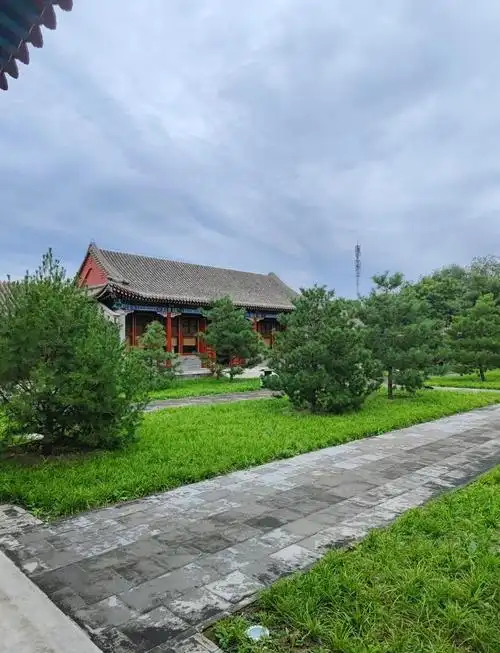 Historical Background: Erected in 1650 and expanded a half-century later, the Kalahetun Temporary Palace served as the principal residence for Qing emperors on their northern inspection tours—much as Schönbrunn functioned for the Habsburgs or Tsarskoye Selo for the Romanovs. It witnessed the death of Prince Dorgon, the powerful regent who shaped early Qing policy in a manner reminiscent of Cardinal Richelieu's dominance over a young French king. Kangxi later used this strategic riverside site to manage relations with Mongol princes, making it a nerve center for the multiethnic empire's frontier diplomacy before the Mountain Resort assumed that role.
Architecture and Scale: The compound originally sprawled across roughly 589 mu, about 39 hectares, encompassing a palace district, the Luanyang Villa, and a "Little Gold Mountain" garden, with some 414 halls and chambers in total—comparable in scale to Fontainebleau or the pre-fire Winter Palace. Today, however, every surface building has vanished. The original site lies beneath Chengde Steel Hospital, a sports stadium, and modern apartment blocks, leaving only fragmentary foundation traces and a commemorative stele. This layered erasure makes the location feel less like a monument and more like a buried archaeological stratum, akin to Roman forums glimpsed beneath modern streets.
Cultural Significance: Kalahetun is the wellspring from which Chengde's UNESCO-listed imperial culture flowed. Its siting and layout directly shaped the planning of the Mountain Resort two decades later, while nearby Qionglan Temple—Kangxi's first imperial Buddhist temple "beyond the wall"—anchors a wider constellation of Qing-era relics, including the surviving Linxiao Taoist abbey and the stone arches of the old Kalahetun Bridge. Together these form a frontier cultural landscape comparable in density to imperial ensembles of Central Europe, offering historians a tangible counterpoint to the better-known Mountain Resort.
Visiting Information: There is no entrance fee, no visitor center, and no English signage—merely scattered marker stones amid functioning hospital grounds and residential streets. Plan 1.5 to 2 hours for a slow walk-through combined with background reading. From central Chengde, the site lies roughly 30 minutes by car or taxi; set your GPS to "Kalahetun Ancient Bridge" or "Chenggang Hospital." Wear comfortable shoes for uneven pavement, bring water, and prepare for the absence of interpretive displays. Hiring a local guide or downloading a Chinese history app in advance is strongly recommended.
Why Visit: This is not a destination for casual sightseers but a pilgrimage site for those drawn to the quieter, contemplative side of imperial history. Stand where Dorgon drew his last breath, where Kangxi deliberated the fate of the steppe, and where the blueprint for China's greatest summer palace was first drafted. Spring and autumn offer the most comfortable exploring weather. Combine the visit with Qionglan Temple, the northern gate of Luanhe Old Street, Republican-era facades, and the dramatic twin-peaked Shuangta Mountain in the distance for a layered half-day excursion that captures Chengde's deeper, less-photographed story.
Historical Background: Erected in 1650 and expanded a half-century later, the Kalahetun Temporary Palace served as the principal residence for Qing emperors on their northern inspection tours—much as Schönbrunn functioned for the Habsburgs or Tsarskoye Selo for the Romanovs. It witnessed the death of Prince Dorgon, the powerful regent who shaped early Qing policy in a manner reminiscent of Cardinal Richelieu's dominance over a young French king. Kangxi later used this strategic riverside site to manage relations with Mongol princes, making it a nerve center for the multiethnic empire's frontier diplomacy before the Mountain Resort assumed that role.
Architecture and Scale: The compound originally sprawled across roughly 589 mu, about 39 hectares, encompassing a palace district, the Luanyang Villa, and a "Little Gold Mountain" garden, with some 414 halls and chambers in total—comparable in scale to Fontainebleau or the pre-fire Winter Palace. Today, however, every surface building has vanished. The original site lies beneath Chengde Steel Hospital, a sports stadium, and modern apartment blocks, leaving only fragmentary foundation traces and a commemorative stele. This layered erasure makes the location feel less like a monument and more like a buried archaeological stratum, akin to Roman forums glimpsed beneath modern streets.
Cultural Significance: Kalahetun is the wellspring from which Chengde's UNESCO-listed imperial culture flowed. Its siting and layout directly shaped the planning of the Mountain Resort two decades later, while nearby Qionglan Temple—Kangxi's first imperial Buddhist temple "beyond the wall"—anchors a wider constellation of Qing-era relics, including the surviving Linxiao Taoist abbey and the stone arches of the old Kalahetun Bridge. Together these form a frontier cultural landscape comparable in density to imperial ensembles of Central Europe, offering historians a tangible counterpoint to the better-known Mountain Resort.
Visiting Information: There is no entrance fee, no visitor center, and no English signage—merely scattered marker stones amid functioning hospital grounds and residential streets. Plan 1.5 to 2 hours for a slow walk-through combined with background reading. From central Chengde, the site lies roughly 30 minutes by car or taxi; set your GPS to "Kalahetun Ancient Bridge" or "Chenggang Hospital." Wear comfortable shoes for uneven pavement, bring water, and prepare for the absence of interpretive displays. Hiring a local guide or downloading a Chinese history app in advance is strongly recommended.
Why Visit: This is not a destination for casual sightseers but a pilgrimage site for those drawn to the quieter, contemplative side of imperial history. Stand where Dorgon drew his last breath, where Kangxi deliberated the fate of the steppe, and where the blueprint for China's greatest summer palace was first drafted. Spring and autumn offer the most comfortable exploring weather. Combine the visit with Qionglan Temple, the northern gate of Luanhe Old Street, Republican-era facades, and the dramatic twin-peaked Shuangta Mountain in the distance for a layered half-day excursion that captures Chengde's deeper, less-photographed story.