Imperial Hunting Park
⭐ 4.00
Imperial Hunting Park Scenic Area, Shuangqiao District, Chengde City, Hebei Province, China
 **A Qing-Era Hunting Reserve with Imperial Ambitions**
The Royal Hunting Grounds trace their founding to 1681, when the Kangxi Emperor, grandson of the Manchu conqueror who toppled the Ming in 1644, designated this lush highland as the Mulan Weichang. For nearly 140 years, Qing emperors led grand autumn hunts called "Mulan Qiuxian," with 105 recorded expeditions by 1810. These were no mere sport: they functioned as field maneuvers for the feared Bannermen cavalry and as statecraft—reinforcing bonds with Mongol princes, projecting imperial authority along the northern frontier, and preserving the Manchu tradition of horsemanship that had once swept across Eurasia. Think of them as a Far Eastern counterpart to the Bourbon royal hunts at Versailles, but staged on a wilderness scale reminiscent of the Scottish Highlands.
**Landscape: Where Forest Meets Steppe**
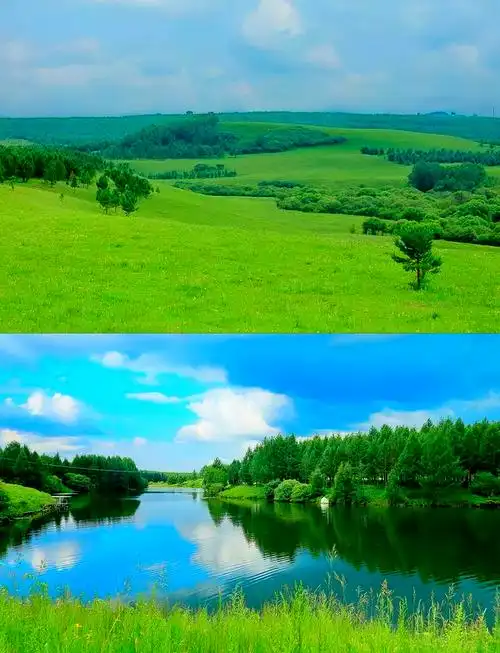
The reserve sits on the Bashang Plateau, a highland ecotone where the agricultural heartland of north China dissolves into the sweeping grasslands of Mongolia. Two complementary zones define the experience: Saihanba, famed for its planted forests and jewel-like lakes such as Qixing (Seven-Star) Lake and Princess Lake; and Yudaokou, a more open landscape of wetlands, rivers, and traditional pasture. At roughly 2,000 square kilometers, it represents the largest forest-grassland transition belt in North China, layered with birches, larches, wildflowers, and bird-rich marshes.
**An Ecological Miracle in Man-Made Forests**
Saihanba itself is a triumph of modern conservation. In the 1950s, this region was barren sand dunes; over half a century, three generations of foresters planted more than one billion trees, raising forest coverage above 80 percent and transforming the land into a green barrier against the encroaching Gobi. The resulting "man-made sea of forest" rivals the great afforestation projects of 19th-century Europe and offers some of the cleanest air within a day's drive of Beijing. In summer, lakes shimmer emerald beneath drifting morning mist; in autumn, the canopy blazes gold and crimson.
**Echoes of the Imperial Past**
Within the reserve, the Da Qing Lie Yuan cultural park recreates the atmosphere of an imperial hunting camp. A museum dedicated to the Mulan Autumn Hunts displays Qing court rituals, weaponry, and edicts, while sites such as Kangxi's Training Platform dot the landscape. Visitors can try their hand at traditional archery, pitch-pot (an ancient throwing game), or dress in understated hanfu for atmospheric photos against the historic backdrop. The cultural layer gives the park a depth beyond pure nature tourism, connecting modern travelers to a chapter of Inner Asian history rarely told in Western guidebooks.
**Practical Information for Travelers**
Plan at least two to three full days to appreciate both zones—walk the forest trails and lake circuits of Saihanba on one day, then ride horses or cycle across the Yudaokou grasslands on the next. The prime season runs from June through September, when daytime temperatures hover comfortably between 17 and 20°C; nights, however, can plunge below 10°C, so a windproof jacket is essential. The drive from central Chengde takes 3.5 to 4 hours on winding mountain roads—self-driving or hiring a private car with a local driver is strongly recommended over public buses. Lodging ranges from simple grassland yurts to comfortable forest lodges, and stargazing here, far from urban light pollution, can be spectacular.
**A Qing-Era Hunting Reserve with Imperial Ambitions**
The Royal Hunting Grounds trace their founding to 1681, when the Kangxi Emperor, grandson of the Manchu conqueror who toppled the Ming in 1644, designated this lush highland as the Mulan Weichang. For nearly 140 years, Qing emperors led grand autumn hunts called "Mulan Qiuxian," with 105 recorded expeditions by 1810. These were no mere sport: they functioned as field maneuvers for the feared Bannermen cavalry and as statecraft—reinforcing bonds with Mongol princes, projecting imperial authority along the northern frontier, and preserving the Manchu tradition of horsemanship that had once swept across Eurasia. Think of them as a Far Eastern counterpart to the Bourbon royal hunts at Versailles, but staged on a wilderness scale reminiscent of the Scottish Highlands.
**Landscape: Where Forest Meets Steppe**
The reserve sits on the Bashang Plateau, a highland ecotone where the agricultural heartland of north China dissolves into the sweeping grasslands of Mongolia. Two complementary zones define the experience: Saihanba, famed for its planted forests and jewel-like lakes such as Qixing (Seven-Star) Lake and Princess Lake; and Yudaokou, a more open landscape of wetlands, rivers, and traditional pasture. At roughly 2,000 square kilometers, it represents the largest forest-grassland transition belt in North China, layered with birches, larches, wildflowers, and bird-rich marshes.
**An Ecological Miracle in Man-Made Forests**
Saihanba itself is a triumph of modern conservation. In the 1950s, this region was barren sand dunes; over half a century, three generations of foresters planted more than one billion trees, raising forest coverage above 80 percent and transforming the land into a green barrier against the encroaching Gobi. The resulting "man-made sea of forest" rivals the great afforestation projects of 19th-century Europe and offers some of the cleanest air within a day's drive of Beijing. In summer, lakes shimmer emerald beneath drifting morning mist; in autumn, the canopy blazes gold and crimson.
**Echoes of the Imperial Past**
Within the reserve, the Da Qing Lie Yuan cultural park recreates the atmosphere of an imperial hunting camp. A museum dedicated to the Mulan Autumn Hunts displays Qing court rituals, weaponry, and edicts, while sites such as Kangxi's Training Platform dot the landscape. Visitors can try their hand at traditional archery, pitch-pot (an ancient throwing game), or dress in understated hanfu for atmospheric photos against the historic backdrop. The cultural layer gives the park a depth beyond pure nature tourism, connecting modern travelers to a chapter of Inner Asian history rarely told in Western guidebooks.
**Practical Information for Travelers**
Plan at least two to three full days to appreciate both zones—walk the forest trails and lake circuits of Saihanba on one day, then ride horses or cycle across the Yudaokou grasslands on the next. The prime season runs from June through September, when daytime temperatures hover comfortably between 17 and 20°C; nights, however, can plunge below 10°C, so a windproof jacket is essential. The drive from central Chengde takes 3.5 to 4 hours on winding mountain roads—self-driving or hiring a private car with a local driver is strongly recommended over public buses. Lodging ranges from simple grassland yurts to comfortable forest lodges, and stargazing here, far from urban light pollution, can be spectacular.