Chengde Old Street District
⭐ 3.80
Chengde Old Street District, Shuangqiao District, Chengde City, Hebei Province, China
 During the long reigns of Kangxi and Qianlong — the Qing contemporaries of Europe's Sun Kings and Enlightenment monarchs — Chengde functioned as China's second political capital, much as Versailles served the Bourbons away from Paris. The street preserved here was the imperial road itself, the literal path Qing rulers took between their walled mountain retreat and the administrative heart of a Manchu-led empire stretching from the Pacific to Central Asia. Between 1703 and the dynasty's collapse, this route carried diplomats from Mongolia, Tibet, and even Russia into the emperor's summer domain.
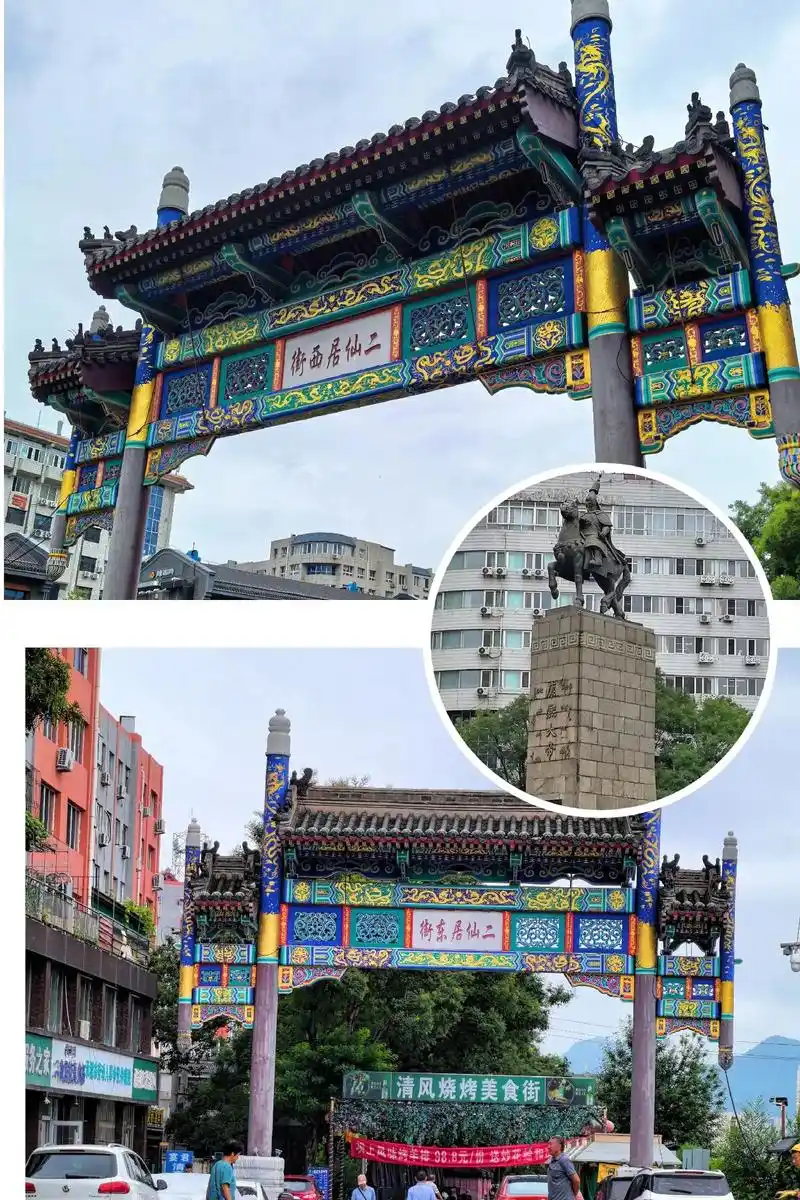
Three Qing-dynasty paifang — ceremonial wooden-and-stone archways whose civic role parallels that of Europe's triumphal arches — punctuate the street in succession. Their carved beams and imperial inscriptions such as "Nine Merits in Order" blend Han Chinese structural vocabulary with Manchu decorative sensibility. Just off the lane, the Confucian Temple's Hall of Great Achievement (Dacheng Dian) rises with the solemn geometry of a state basilica, while the smoke-darkened City God Temple offers a more earthy counterpoint of folk devotion and incense.
The block compresses three layers of traditional Chinese urban life into a few short streets: the imperial route above, temple precincts at either side, and merchant lanes below. Tucked among the courtyards are remnants of the Rehe Circuit Intendant's yamen — a regional magistrate's compound comparable in function to a French intendance or English county hall. This layering of court, faith, and everyday trade gives the street its distinctive texture: not a museum piece, but a working historic quarter where morning tai chi gives way to evening mahjong beneath Qing-era gables.
The street sits on West Avenue (Xidajie) in central Chengde's Shuangqiao District, reachable by several local bus routes and a short walk from the Mountain Resort itself. Admission is free. The most atmospheric hour is just after sunset, when the archways are floodlit and food stalls begin their evening trade. Look for laogao crisped on cast-iron griddles, chilled wanduor, and hand-pressed qiaomian helao (buckwheat noodles) at family-run eateries clustered nearby.
Photographers should aim for the blue hour, when the stone bases of the paifang catch warm uplighting against a deep sky — a composition reminiscent of the illuminated gates of Kyoto or Prague's lesser baroque portals. Allow at least two hours to absorb the carved stone details, brick reliefs, and faded shop signs. For deeper context, pair this walk with the Mountain Resort and the surrounding Outer Eight Temples, the wider UNESCO ensemble for which Chengde is best known overseas.
One caution for independent travelers: a different "Chengde Old Street" exists as an indoor faux-historic food court in the basement of the Easyhome mall in the High-Tech Zone, complete with stage performances but no genuine heritage fabric. Be sure your navigation points to the Erdao Pailou Historical Cultural Block on Xidajie — the open-air lanes beneath real Qing archways — rather than the themed shopping basement of the same name, which can disappoint visitors expecting the real thing.
During the long reigns of Kangxi and Qianlong — the Qing contemporaries of Europe's Sun Kings and Enlightenment monarchs — Chengde functioned as China's second political capital, much as Versailles served the Bourbons away from Paris. The street preserved here was the imperial road itself, the literal path Qing rulers took between their walled mountain retreat and the administrative heart of a Manchu-led empire stretching from the Pacific to Central Asia. Between 1703 and the dynasty's collapse, this route carried diplomats from Mongolia, Tibet, and even Russia into the emperor's summer domain.
Three Qing-dynasty paifang — ceremonial wooden-and-stone archways whose civic role parallels that of Europe's triumphal arches — punctuate the street in succession. Their carved beams and imperial inscriptions such as "Nine Merits in Order" blend Han Chinese structural vocabulary with Manchu decorative sensibility. Just off the lane, the Confucian Temple's Hall of Great Achievement (Dacheng Dian) rises with the solemn geometry of a state basilica, while the smoke-darkened City God Temple offers a more earthy counterpoint of folk devotion and incense.
The block compresses three layers of traditional Chinese urban life into a few short streets: the imperial route above, temple precincts at either side, and merchant lanes below. Tucked among the courtyards are remnants of the Rehe Circuit Intendant's yamen — a regional magistrate's compound comparable in function to a French intendance or English county hall. This layering of court, faith, and everyday trade gives the street its distinctive texture: not a museum piece, but a working historic quarter where morning tai chi gives way to evening mahjong beneath Qing-era gables.
The street sits on West Avenue (Xidajie) in central Chengde's Shuangqiao District, reachable by several local bus routes and a short walk from the Mountain Resort itself. Admission is free. The most atmospheric hour is just after sunset, when the archways are floodlit and food stalls begin their evening trade. Look for laogao crisped on cast-iron griddles, chilled wanduor, and hand-pressed qiaomian helao (buckwheat noodles) at family-run eateries clustered nearby.
Photographers should aim for the blue hour, when the stone bases of the paifang catch warm uplighting against a deep sky — a composition reminiscent of the illuminated gates of Kyoto or Prague's lesser baroque portals. Allow at least two hours to absorb the carved stone details, brick reliefs, and faded shop signs. For deeper context, pair this walk with the Mountain Resort and the surrounding Outer Eight Temples, the wider UNESCO ensemble for which Chengde is best known overseas.
One caution for independent travelers: a different "Chengde Old Street" exists as an indoor faux-historic food court in the basement of the Easyhome mall in the High-Tech Zone, complete with stage performances but no genuine heritage fabric. Be sure your navigation points to the Erdao Pailou Historical Cultural Block on Xidajie — the open-air lanes beneath real Qing archways — rather than the themed shopping basement of the same name, which can disappoint visitors expecting the real thing.