Temple of Sumeru, Longevity and Happiness
⭐ 4.20
Shuangqiao District, Chengde, Hebei, China
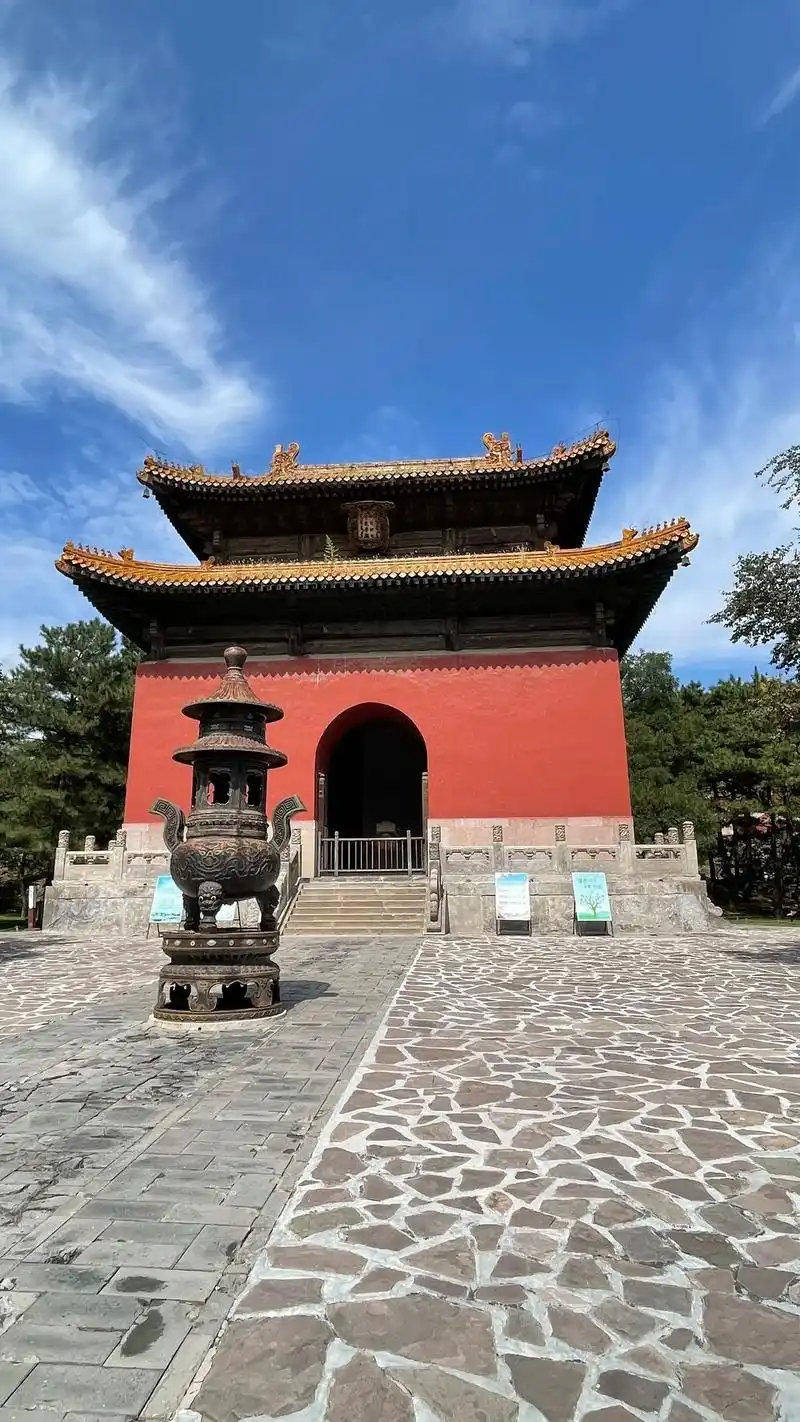 Step back to 1780, when Emperor Qianlong ordered a lavish Tibetan-style temple erected in just one year to host the Sixth Panchen Lama, who had traveled from Tashilhunpo to celebrate the emperor's seventieth birthday. Think of it as the Qing dynasty's answer to Peterhof Palace near St Petersburg, a monumental statement of imperial prestige designed to dazzle a distinguished foreign guest. The temple later served as a key diplomatic meeting place between Beijing and Tibet, and was inscribed as a UNESCO World Heritage Site in 1994 alongside the nearby Mountain Resort.
The temple's layout cleverly divides into two halves: a forward section of traditional Han Chinese arched ceremonial gates and stele pavilions, followed by a sprawling Tibetan-style Great Red Terrace dominating the rear. This blending of four architectural traditions, Han, Manchu, Mongolian, and Tibetan, makes it unlike any other religious building in China, somewhat reminiscent of how Venice's Basilica di San Marco fuses European and Byzantine elements into a unique hybrid masterpiece.
At the heart of the Great Red Terrace rises the magnificent Miaogao Zhuangyan Hall, whose roof gleams with over 10,000 taels of gold-leafed fish-scale tiles and eight gilded dragons along its ridges. Inside the three-tiered podium, more than 400 original chambers once housed precious Buddhist statuary and mandala shrines. To the north stands the temple's visual climax: an octagonal seven-storey green-glazed Longevity Pagoda, intricately carved with Amitayus Buddha reliefs and rising as the site's tallest landmark.
The pavilion inscriptions add rich historical depth: Qianlong's commemorative steles are carved in four scripts, Manchu, Han, Mongolian, and Tibetan, offering rare first-hand documentation of Qing religious and ethnic policy. The pavilion's plaque, declaring this a "Realm of Universal Buddhist Wisdom," reveals just how central the temple was to the court's political and spiritual strategy.
For visitors, the temple sits in Chengde's Shuangqiao District on Shiziyuan Road, east of the sister-site Puning Temple. Adult tickets cost 80 yuan in peak season or 60 yuan off-peak, though a combined ticket with neighboring Puning Temple offers better value. Buses 6 and 118 from the city center drop you nearby. Plan a relaxed half-day visit: the central axis is only 350 metres long, easily covered in one to one-and-a-half hours of gentle strolling.
Aim for early morning or late afternoon, when warm light brings the red walls and gilded rooftop to glowing life, ideal for photography. Note that interior halls prohibit photography and video, so dress modestly, speak softly, and treat the Buddhist treasures with respect. Few sites so vividly capture the cultural crossroads of imperial China, making this an unmissable highlight of any Chengde itinerary.
Step back to 1780, when Emperor Qianlong ordered a lavish Tibetan-style temple erected in just one year to host the Sixth Panchen Lama, who had traveled from Tashilhunpo to celebrate the emperor's seventieth birthday. Think of it as the Qing dynasty's answer to Peterhof Palace near St Petersburg, a monumental statement of imperial prestige designed to dazzle a distinguished foreign guest. The temple later served as a key diplomatic meeting place between Beijing and Tibet, and was inscribed as a UNESCO World Heritage Site in 1994 alongside the nearby Mountain Resort.
The temple's layout cleverly divides into two halves: a forward section of traditional Han Chinese arched ceremonial gates and stele pavilions, followed by a sprawling Tibetan-style Great Red Terrace dominating the rear. This blending of four architectural traditions, Han, Manchu, Mongolian, and Tibetan, makes it unlike any other religious building in China, somewhat reminiscent of how Venice's Basilica di San Marco fuses European and Byzantine elements into a unique hybrid masterpiece.
At the heart of the Great Red Terrace rises the magnificent Miaogao Zhuangyan Hall, whose roof gleams with over 10,000 taels of gold-leafed fish-scale tiles and eight gilded dragons along its ridges. Inside the three-tiered podium, more than 400 original chambers once housed precious Buddhist statuary and mandala shrines. To the north stands the temple's visual climax: an octagonal seven-storey green-glazed Longevity Pagoda, intricately carved with Amitayus Buddha reliefs and rising as the site's tallest landmark.
The pavilion inscriptions add rich historical depth: Qianlong's commemorative steles are carved in four scripts, Manchu, Han, Mongolian, and Tibetan, offering rare first-hand documentation of Qing religious and ethnic policy. The pavilion's plaque, declaring this a "Realm of Universal Buddhist Wisdom," reveals just how central the temple was to the court's political and spiritual strategy.
For visitors, the temple sits in Chengde's Shuangqiao District on Shiziyuan Road, east of the sister-site Puning Temple. Adult tickets cost 80 yuan in peak season or 60 yuan off-peak, though a combined ticket with neighboring Puning Temple offers better value. Buses 6 and 118 from the city center drop you nearby. Plan a relaxed half-day visit: the central axis is only 350 metres long, easily covered in one to one-and-a-half hours of gentle strolling.
Aim for early morning or late afternoon, when warm light brings the red walls and gilded rooftop to glowing life, ideal for photography. Note that interior halls prohibit photography and video, so dress modestly, speak softly, and treat the Buddhist treasures with respect. Few sites so vividly capture the cultural crossroads of imperial China, making this an unmissable highlight of any Chengde itinerary.