Putuo Zongcheng Temple
⭐ 4.70
Putuo Zongcheng Temple, Shuangqiao District, Chengde City, Hebei Province, China
 Built in 1771—the same year Beethoven was born and only five years before American independence—Putuo Zongcheng Temple was conceived as a political and spiritual showpiece by Emperor Qianlong at the height of Qing power. Modeled on the Dalai Lama's Potala Palace in distant Lhasa, it projected Beijing's reach into Tibet while celebrating the emperor's own glory. The site also served a diplomatic purpose: welcoming the Torghut Mongols, who after nearly a century under Russian rule made one of history's most extraordinary migrations back to Qing territory—an exodus of roughly 170,000 souls across 18,000 kilometers of punishing steppe and desert.
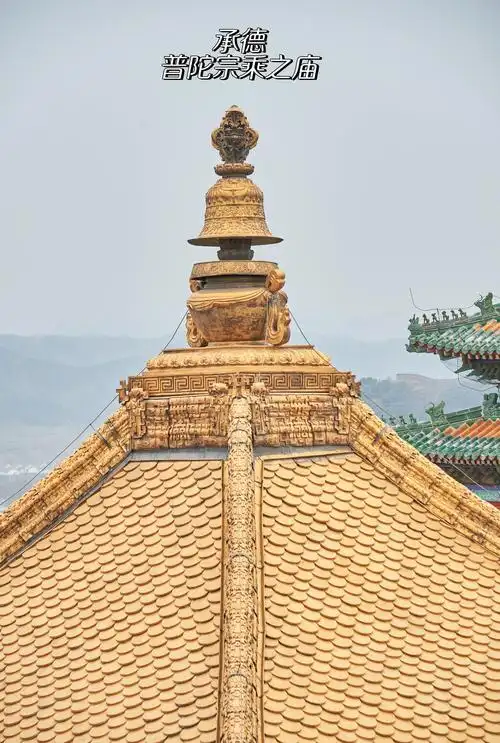
The temple climbs the mountainside in tiered terraces reminiscent of a Himalayan citadel or a Habsburg-era pilgrimage church crowning a Tyrolean hillside. At its heart stands the Red Terrace, soaring 43 meters and capped with gleaming gilded fish-scale copper tiles—reportedly consuming some 750 kilograms of pure gold. Around it cluster more than 40 white Tibetan-style fortress buildings, their stark walls offsetting the crimson masonry and golden roofs below. The design fuses Tibetan flat-roofed dzong architecture with Qing-dynasty glazed-tile ornament, creating a hybrid masterpiece unmatched anywhere in China.
Along the central axis lie the temple's most symbolic monuments. The Five-Lama Pagoda Gate displays red, green, yellow, white, and black stupas representing the principal schools of Tibetan Buddhism. Beyond it rises a three-arched, seven-tiered glazed-tile memorial gate inscribed "Universal Gate of Manifestations," echoing the bodhisattva Avalokiteshvara. Three steles within the pavilion—carved in Manchu, Han, Mongolian, and Tibetan scripts—commemorate the Torghut's epic return and stand as priceless primary sources for scholars of Qing frontier policy and ethnic relations, rivaling in importance any European diplomatic archive of the same era.
Located in Shizigou Town, just north of the Mountain Resort, the temple opens daily from 8:00 a.m. to 5:00 p.m., with the main halls closing around 5 p.m. in peak season. Admission is 80 yuan in summer and 60 yuan in winter; combined tickets with the neighboring Xumi Fushou Temple are usually available. A taxi from central Chengde takes roughly 20 minutes, or take bus 118 directly to the gate. Allow two to three hours, wear grippy shoes for the hundred-plus steps (an electric shuttle covers part of the climb), and bring sun protection plus water.
This is among the few places where Western travelers can experience the visual drama of Tibetan sacred architecture without flying to Lhasa, all within an easy day trip from Beijing. Photographers will find magic-hour light around dawn and dusk, when the red walls and gilded roofs blaze against the surrounding green mountains. As an active Tibetan Buddhist site, visitors should walk prayer wheels clockwise and maintain silence inside halls. Sadly, Japanese troops scraped gold tiles from the Red Terrace during the 1930s occupation—visible scars that lend the site an added layer of poignant history.
Built in 1771—the same year Beethoven was born and only five years before American independence—Putuo Zongcheng Temple was conceived as a political and spiritual showpiece by Emperor Qianlong at the height of Qing power. Modeled on the Dalai Lama's Potala Palace in distant Lhasa, it projected Beijing's reach into Tibet while celebrating the emperor's own glory. The site also served a diplomatic purpose: welcoming the Torghut Mongols, who after nearly a century under Russian rule made one of history's most extraordinary migrations back to Qing territory—an exodus of roughly 170,000 souls across 18,000 kilometers of punishing steppe and desert.
The temple climbs the mountainside in tiered terraces reminiscent of a Himalayan citadel or a Habsburg-era pilgrimage church crowning a Tyrolean hillside. At its heart stands the Red Terrace, soaring 43 meters and capped with gleaming gilded fish-scale copper tiles—reportedly consuming some 750 kilograms of pure gold. Around it cluster more than 40 white Tibetan-style fortress buildings, their stark walls offsetting the crimson masonry and golden roofs below. The design fuses Tibetan flat-roofed dzong architecture with Qing-dynasty glazed-tile ornament, creating a hybrid masterpiece unmatched anywhere in China.
Along the central axis lie the temple's most symbolic monuments. The Five-Lama Pagoda Gate displays red, green, yellow, white, and black stupas representing the principal schools of Tibetan Buddhism. Beyond it rises a three-arched, seven-tiered glazed-tile memorial gate inscribed "Universal Gate of Manifestations," echoing the bodhisattva Avalokiteshvara. Three steles within the pavilion—carved in Manchu, Han, Mongolian, and Tibetan scripts—commemorate the Torghut's epic return and stand as priceless primary sources for scholars of Qing frontier policy and ethnic relations, rivaling in importance any European diplomatic archive of the same era.
Located in Shizigou Town, just north of the Mountain Resort, the temple opens daily from 8:00 a.m. to 5:00 p.m., with the main halls closing around 5 p.m. in peak season. Admission is 80 yuan in summer and 60 yuan in winter; combined tickets with the neighboring Xumi Fushou Temple are usually available. A taxi from central Chengde takes roughly 20 minutes, or take bus 118 directly to the gate. Allow two to three hours, wear grippy shoes for the hundred-plus steps (an electric shuttle covers part of the climb), and bring sun protection plus water.
This is among the few places where Western travelers can experience the visual drama of Tibetan sacred architecture without flying to Lhasa, all within an easy day trip from Beijing. Photographers will find magic-hour light around dawn and dusk, when the red walls and gilded roofs blaze against the surrounding green mountains. As an active Tibetan Buddhist site, visitors should walk prayer wheels clockwise and maintain silence inside halls. Sadly, Japanese troops scraped gold tiles from the Red Terrace during the 1930s occupation—visible scars that lend the site an added layer of poignant history.