Enshi Earth Heart Valley
⭐ 4.40
Enshi Earth Heart Valley Scenic Area, Gaoping Town, Jianshi County, Enshi Autonomous Prefecture, Hubei Province, China
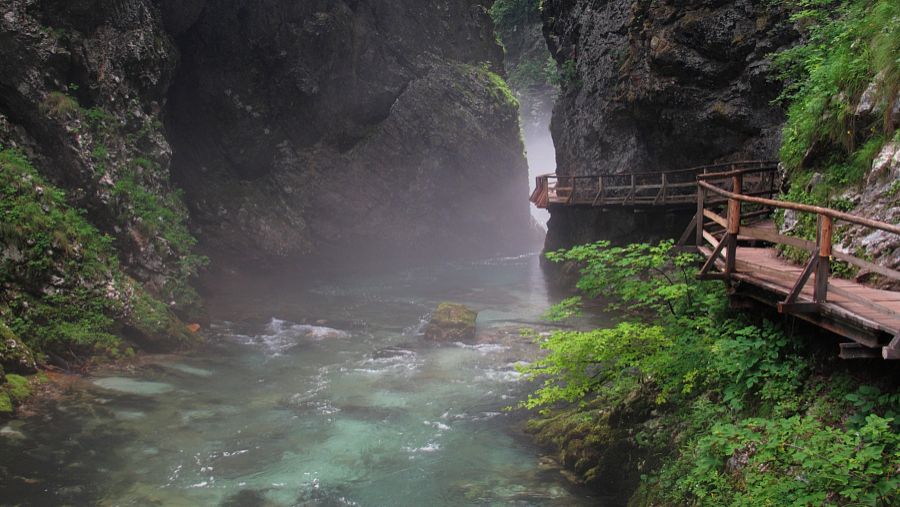 Deep in the folds of Hubei Province lies Enshi Dixin Valley, a karst masterpiece sculpted over 250 million years—roughly the same epoch when the first dinosaurs began roaming Earth. The gorge ranks among Asia's most spectacular examples of "zhànggǔ" cliff-gorge geology, a formation comparable to Norway's dramatic Romsdalen or Switzerland's Lauterbrunnen Valley, though crowned here by subtropical cloud forest. Eons of water erosion have sliced nearly vertical limestone walls, creating a 5.8-kilometer route where nearly five kilometers cling to the cliff face as suspended boardwalks. The signature feature is the "Heart of the Earth," a perfectly heart-shaped emerald pool at the valley floor—a natural formation so striking it has become the park's iconic photo spot.
Adventure reaches new heights on the 200-meter-high glass suspension bridge, stretching 286 meters across the gorge with nothing but transparent floor and vertiginous air below. This sky-high thrill rivals Spain's Royal Bridge in Ronda or the Cloudbridge in Costa Rica, but adds distinctly Chinese engineering bravado. The "water-land-air" integrated system continues with a gravity-defying glass cabin perched on the cliff, a moving "magic carpet" conveyor, and a pulse-quickening 48-second vertical elevator that rockets visitors between elevations. During warmer months, kayaking and glass-bottom boats allow intimate encounters with the canyon's turquoise waters.
History runs deep here. The valley cradles a 5,000-year-old section of the ancient Ba salt road, a vital trade artery that once carried precious salt from the mountains toward the Yangtze—a commerce as old as Egypt's Old Kingdom. Stone bridges and a thousand-year-old crape myrtle tree still stand witness along this route. Throughout the year, visitors can encounter traditional Nuo dance performances, a mystical theatrical tradition recognized as intangible cultural heritage, performed by Tujia and Miao peoples whose ancestors have inhabited these mountains for millennia.
The climate alone justifies the journey. While cities swelter above 32°C in July, the canyon floor maintains a blissful average of 22°C, with cool breezes funneling through the narrow walls. After rain, low-lying clouds rise through the gorge, transforming the cliffs into floating islands—an atmospheric spectacle reminiscent of Huangshan or even the cloud-wrapped peaks of the Scottish Highlands. Photographers should target late afternoon, when soft golden light paints the heart-shaped pool and mist dances between the summits.
Practical details make visiting straightforward. The park sits in Gaoping Township, Jianshi County, just 5 kilometers off the Shanghai-Chongqing Expressway (G50) and only five minutes from the high-speed rail station. Entry costs 120 yuan, with shuttle buses adding 30 yuan; the comprehensive 210-yuan pass includes the glass bridge, magic carpet, elevator, and boat ride, and pays for itself in convenience. The park opens 07:00 to 16:30 in peak season, and most visitors complete the circuit in three to four hours. The "boat-in, boat-out" route is strongly recommended, creating a seamless water-land-air loop without backtracking.
For an unforgettable two-day adventure, pair Dixin Valley with the nearby Suobuya Stone Forest, another karst wonder where 460 million years of geology have sculpted an alien landscape of stone columns. Together, they reveal the full spectrum of Enshi's limestone heritage—a region still largely undiscovered by Western travelers, but offering the same scale and wonder as more famous destinations like Zhangjiajie or Guilin, with only a fraction of the crowds.
Deep in the folds of Hubei Province lies Enshi Dixin Valley, a karst masterpiece sculpted over 250 million years—roughly the same epoch when the first dinosaurs began roaming Earth. The gorge ranks among Asia's most spectacular examples of "zhànggǔ" cliff-gorge geology, a formation comparable to Norway's dramatic Romsdalen or Switzerland's Lauterbrunnen Valley, though crowned here by subtropical cloud forest. Eons of water erosion have sliced nearly vertical limestone walls, creating a 5.8-kilometer route where nearly five kilometers cling to the cliff face as suspended boardwalks. The signature feature is the "Heart of the Earth," a perfectly heart-shaped emerald pool at the valley floor—a natural formation so striking it has become the park's iconic photo spot.
Adventure reaches new heights on the 200-meter-high glass suspension bridge, stretching 286 meters across the gorge with nothing but transparent floor and vertiginous air below. This sky-high thrill rivals Spain's Royal Bridge in Ronda or the Cloudbridge in Costa Rica, but adds distinctly Chinese engineering bravado. The "water-land-air" integrated system continues with a gravity-defying glass cabin perched on the cliff, a moving "magic carpet" conveyor, and a pulse-quickening 48-second vertical elevator that rockets visitors between elevations. During warmer months, kayaking and glass-bottom boats allow intimate encounters with the canyon's turquoise waters.
History runs deep here. The valley cradles a 5,000-year-old section of the ancient Ba salt road, a vital trade artery that once carried precious salt from the mountains toward the Yangtze—a commerce as old as Egypt's Old Kingdom. Stone bridges and a thousand-year-old crape myrtle tree still stand witness along this route. Throughout the year, visitors can encounter traditional Nuo dance performances, a mystical theatrical tradition recognized as intangible cultural heritage, performed by Tujia and Miao peoples whose ancestors have inhabited these mountains for millennia.
The climate alone justifies the journey. While cities swelter above 32°C in July, the canyon floor maintains a blissful average of 22°C, with cool breezes funneling through the narrow walls. After rain, low-lying clouds rise through the gorge, transforming the cliffs into floating islands—an atmospheric spectacle reminiscent of Huangshan or even the cloud-wrapped peaks of the Scottish Highlands. Photographers should target late afternoon, when soft golden light paints the heart-shaped pool and mist dances between the summits.
Practical details make visiting straightforward. The park sits in Gaoping Township, Jianshi County, just 5 kilometers off the Shanghai-Chongqing Expressway (G50) and only five minutes from the high-speed rail station. Entry costs 120 yuan, with shuttle buses adding 30 yuan; the comprehensive 210-yuan pass includes the glass bridge, magic carpet, elevator, and boat ride, and pays for itself in convenience. The park opens 07:00 to 16:30 in peak season, and most visitors complete the circuit in three to four hours. The "boat-in, boat-out" route is strongly recommended, creating a seamless water-land-air loop without backtracking.
For an unforgettable two-day adventure, pair Dixin Valley with the nearby Suobuya Stone Forest, another karst wonder where 460 million years of geology have sculpted an alien landscape of stone columns. Together, they reveal the full spectrum of Enshi's limestone heritage—a region still largely undiscovered by Western travelers, but offering the same scale and wonder as more famous destinations like Zhangjiajie or Guilin, with only a fraction of the crowds.