Tusi City
⭐ 3.80
South End of Wuyang Avenue, Enshi City, Enshi Tujia and Miao Autonomous Prefecture, Hubei Province, China
 The Tusi system functioned much like the European feudal vassalage of the Middle Ages, granting hereditary local leaders in remote frontier regions autonomy in exchange for loyalty and tribute. Across roughly 450 years of Yuan, Ming, and Qing rule, it shaped the political life of southwestern China. Enshi, cradled in the misty mountains where the Yangtze's tributaries carve deep gorges, emerged as a heartland of this tradition. The modern complex, completed in 1998 and opened to visitors in 2002, brings this vanished world to vivid life across more than 300 acres.
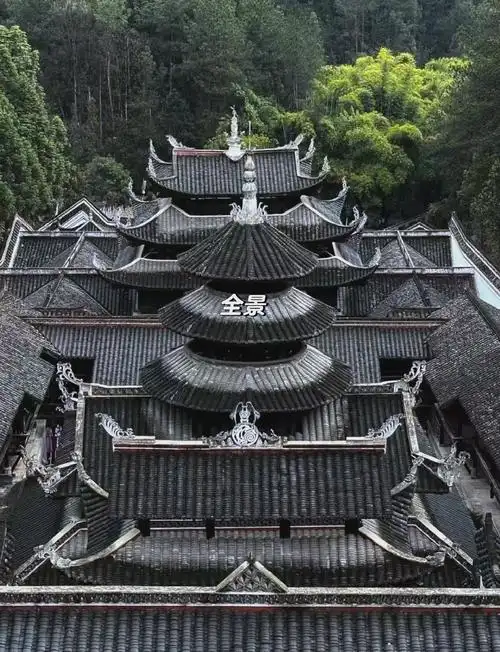
The architectural showpiece is the Nine-Entry Hall, a soaring timber palace stretching nearly 100 meters deep and supported by 333 wooden columns. Notably, not a single iron nail was used—instead, traditional mortise-and-tenon joinery, a craft perfected in East Asia centuries before similar techniques appeared in European carpentry, holds the entire structure together. Surrounding the hall are a 25-meter gate tower, a 2,320-meter-long defensive wall, a temple to the Tujia ancestor Lin Jun, and an elegant covered bridge, all featuring upturned eaves and intricate painted beams that rival the ornamental richness of Bavaria's fairy-tale castles.
Culturally, the site serves as the primary showcase for the Tujia people's devotion to the white tiger, their sacred totem believed to have guided their ancestors through the mountains. The white tiger motif prowls across carved lintels, mural paintings, and ceremonial objects throughout the complex. Architecture also weaves together influences from neighboring Dong drum towers and Miao building traditions, reflecting centuries of cultural exchange in this multiethnic borderland where Han, Tujia, Dong, and Miao communities have long traded goods, brides, and beliefs.
For visitors, the site is remarkably accessible: located on Tusi Road just 1.5 kilometers from Enshi's city center, it charges around 45 yuan for entry and welcomes guests from 7:30 a.m. to 6:00 p.m. in peak season (slightly shorter hours in winter). Allow 1.5 to 2 hours for a thorough visit, and time your arrival to catch the scheduled Tujia song-and-dance performances—typically held at 10 a.m. and 3 p.m.—featuring the hypnotic hand-waving Baishou Dance, emotional bridal laments, and ancient Nuo theater rituals. Sturdy shoes are recommended for the hilly terrain, and a light jacket will help against mountain temperature swings.
Photography enthusiasts should arrive between 9 and 11 a.m., when morning light slants through the eaves and illuminates painted carvings in warm tones ideal for capturing architectural detail and performers' embroidered costumes. An important note for history-minded travelers: this is a thoughtfully constructed recreation rather than an archaeological ruin, so visitors expecting weathered authenticity should recalibrate their expectations accordingly. Those with extra time should pair the visit with the free evening folk shows at nearby Tujia Daughter's City for a more rambunctious, street-level immersion into living regional culture.
[BRIEF]
Enshi Tusi City, located in western Hubei Province, is the largest architectural complex in China dedicated to the heritage of the Tujia people and the fascinating Tusi system—a feudal governance model used by Chinese emperors to administer ethnic minority regions from the 13th to 18th centuries. Centered on the magnificent Nine-Entry Hall, a pure mortise-and-tenon timber palace reminiscent of grand European chateaux in scale, the site blends Tujia stilt-house architecture with imperial palace aesthetics. With lively daily song-and-dance performances, it offers an accessible window into one of China's most distinctive cultural traditions.
[DETAILED]
The Tusi system functioned much like the European feudal vassalage of the Middle Ages, granting hereditary local leaders in remote frontier regions autonomy in exchange for loyalty and tribute. Across roughly 450 years of Yuan, Ming, and Qing rule, it shaped the political life of southwestern China. Enshi, cradled in the misty mountains where the Yangtze's tributaries carve deep gorges, emerged as a heartland of this tradition. The modern complex, completed in 1998 and opened to visitors in 2002, brings this vanished world to vivid life across more than 300 acres.
The architectural showpiece is the Nine-Entry Hall, a soaring timber palace stretching nearly 100 meters deep and supported by 333 wooden columns. Notably, not a single iron nail was used—instead, traditional mortise-and-tenon joinery, a craft perfected in East Asia centuries before similar techniques appeared in European carpentry, holds the entire structure together. Surrounding the hall are a 25-meter gate tower, a 2,320-meter-long defensive wall, a temple to the Tujia ancestor Lin Jun, and an elegant covered bridge, all featuring upturned eaves and intricate painted beams that rival the ornamental richness of Bavaria's fairy-tale castles.
Culturally, the site serves as the primary showcase for the Tujia people's devotion to the white tiger, their sacred totem believed to have guided their ancestors through the mountains. The white tiger motif prowls across carved lintels, mural paintings, and ceremonial objects throughout the complex. Architecture also weaves together influences from neighboring Dong drum towers and Miao building traditions, reflecting centuries of cultural exchange in this multiethnic borderland where Han, Tujia, Dong, and Miao communities have long traded goods, brides, and beliefs.
For visitors, the site is remarkably accessible: located on Tusi Road just 1.5 kilometers from Enshi's city center, it charges around 45 yuan for entry and welcomes guests from 7:30 a.m. to 6:00 p.m. in peak season (slightly shorter hours in winter). Allow 1.5 to 2 hours for a thorough visit, and time your arrival to catch the scheduled Tujia song-and-dance performances—typically held at 10 a.m. and 3 p.m.—featuring the hypnotic hand-waving Baishou Dance, emotional bridal laments, and ancient Nuo theater rituals. Sturdy shoes are recommended for the hilly terrain, and a light jacket will help against mountain temperature swings.
Photography enthusiasts should arrive between 9 and 11 a.m., when morning light slants through the eaves and illuminates painted carvings in warm tones ideal for capturing architectural detail and performers' embroidered costumes. An important note for history-minded travelers: this is a thoughtfully constructed recreation rather than an archaeological ruin, so visitors expecting weathered authenticity should recalibrate their expectations accordingly. Those with extra time should pair the visit with the free evening folk shows at nearby Tujia Daughter's City for a more rambunctious, street-level immersion into living regional culture.
The Tusi system functioned much like the European feudal vassalage of the Middle Ages, granting hereditary local leaders in remote frontier regions autonomy in exchange for loyalty and tribute. Across roughly 450 years of Yuan, Ming, and Qing rule, it shaped the political life of southwestern China. Enshi, cradled in the misty mountains where the Yangtze's tributaries carve deep gorges, emerged as a heartland of this tradition. The modern complex, completed in 1998 and opened to visitors in 2002, brings this vanished world to vivid life across more than 300 acres.
The architectural showpiece is the Nine-Entry Hall, a soaring timber palace stretching nearly 100 meters deep and supported by 333 wooden columns. Notably, not a single iron nail was used—instead, traditional mortise-and-tenon joinery, a craft perfected in East Asia centuries before similar techniques appeared in European carpentry, holds the entire structure together. Surrounding the hall are a 25-meter gate tower, a 2,320-meter-long defensive wall, a temple to the Tujia ancestor Lin Jun, and an elegant covered bridge, all featuring upturned eaves and intricate painted beams that rival the ornamental richness of Bavaria's fairy-tale castles.
Culturally, the site serves as the primary showcase for the Tujia people's devotion to the white tiger, their sacred totem believed to have guided their ancestors through the mountains. The white tiger motif prowls across carved lintels, mural paintings, and ceremonial objects throughout the complex. Architecture also weaves together influences from neighboring Dong drum towers and Miao building traditions, reflecting centuries of cultural exchange in this multiethnic borderland where Han, Tujia, Dong, and Miao communities have long traded goods, brides, and beliefs.
For visitors, the site is remarkably accessible: located on Tusi Road just 1.5 kilometers from Enshi's city center, it charges around 45 yuan for entry and welcomes guests from 7:30 a.m. to 6:00 p.m. in peak season (slightly shorter hours in winter). Allow 1.5 to 2 hours for a thorough visit, and time your arrival to catch the scheduled Tujia song-and-dance performances—typically held at 10 a.m. and 3 p.m.—featuring the hypnotic hand-waving Baishou Dance, emotional bridal laments, and ancient Nuo theater rituals. Sturdy shoes are recommended for the hilly terrain, and a light jacket will help against mountain temperature swings.
Photography enthusiasts should arrive between 9 and 11 a.m., when morning light slants through the eaves and illuminates painted carvings in warm tones ideal for capturing architectural detail and performers' embroidered costumes. An important note for history-minded travelers: this is a thoughtfully constructed recreation rather than an archaeological ruin, so visitors expecting weathered authenticity should recalibrate their expectations accordingly. Those with extra time should pair the visit with the free evening folk shows at nearby Tujia Daughter's City for a more rambunctious, street-level immersion into living regional culture.
[BRIEF]
Enshi Tusi City, located in western Hubei Province, is the largest architectural complex in China dedicated to the heritage of the Tujia people and the fascinating Tusi system—a feudal governance model used by Chinese emperors to administer ethnic minority regions from the 13th to 18th centuries. Centered on the magnificent Nine-Entry Hall, a pure mortise-and-tenon timber palace reminiscent of grand European chateaux in scale, the site blends Tujia stilt-house architecture with imperial palace aesthetics. With lively daily song-and-dance performances, it offers an accessible window into one of China's most distinctive cultural traditions.
[DETAILED]
The Tusi system functioned much like the European feudal vassalage of the Middle Ages, granting hereditary local leaders in remote frontier regions autonomy in exchange for loyalty and tribute. Across roughly 450 years of Yuan, Ming, and Qing rule, it shaped the political life of southwestern China. Enshi, cradled in the misty mountains where the Yangtze's tributaries carve deep gorges, emerged as a heartland of this tradition. The modern complex, completed in 1998 and opened to visitors in 2002, brings this vanished world to vivid life across more than 300 acres.
The architectural showpiece is the Nine-Entry Hall, a soaring timber palace stretching nearly 100 meters deep and supported by 333 wooden columns. Notably, not a single iron nail was used—instead, traditional mortise-and-tenon joinery, a craft perfected in East Asia centuries before similar techniques appeared in European carpentry, holds the entire structure together. Surrounding the hall are a 25-meter gate tower, a 2,320-meter-long defensive wall, a temple to the Tujia ancestor Lin Jun, and an elegant covered bridge, all featuring upturned eaves and intricate painted beams that rival the ornamental richness of Bavaria's fairy-tale castles.
Culturally, the site serves as the primary showcase for the Tujia people's devotion to the white tiger, their sacred totem believed to have guided their ancestors through the mountains. The white tiger motif prowls across carved lintels, mural paintings, and ceremonial objects throughout the complex. Architecture also weaves together influences from neighboring Dong drum towers and Miao building traditions, reflecting centuries of cultural exchange in this multiethnic borderland where Han, Tujia, Dong, and Miao communities have long traded goods, brides, and beliefs.
For visitors, the site is remarkably accessible: located on Tusi Road just 1.5 kilometers from Enshi's city center, it charges around 45 yuan for entry and welcomes guests from 7:30 a.m. to 6:00 p.m. in peak season (slightly shorter hours in winter). Allow 1.5 to 2 hours for a thorough visit, and time your arrival to catch the scheduled Tujia song-and-dance performances—typically held at 10 a.m. and 3 p.m.—featuring the hypnotic hand-waving Baishou Dance, emotional bridal laments, and ancient Nuo theater rituals. Sturdy shoes are recommended for the hilly terrain, and a light jacket will help against mountain temperature swings.
Photography enthusiasts should arrive between 9 and 11 a.m., when morning light slants through the eaves and illuminates painted carvings in warm tones ideal for capturing architectural detail and performers' embroidered costumes. An important note for history-minded travelers: this is a thoughtfully constructed recreation rather than an archaeological ruin, so visitors expecting weathered authenticity should recalibrate their expectations accordingly. Those with extra time should pair the visit with the free evening folk shows at nearby Tujia Daughter's City for a more rambunctious, street-level immersion into living regional culture.