Dezhou Yellow River National Park
⭐ 3.80
Yellow River National Park, Decheng District, Dezhou City, Shandong Province, China
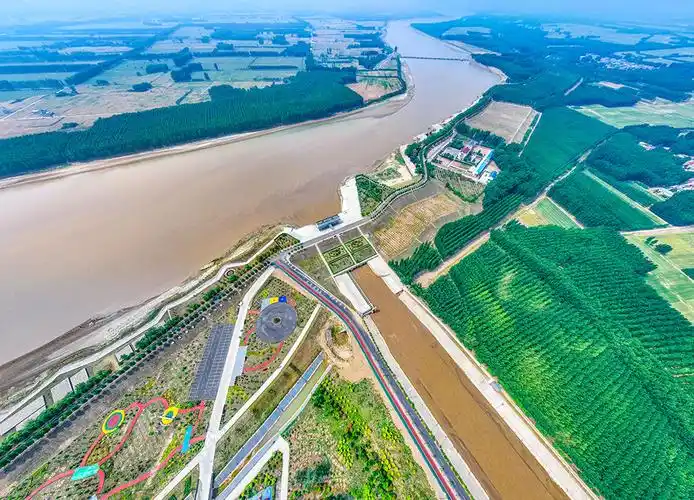 The Yellow River has shaped human civilization for roughly four millennia, and its lower reaches tell a quieter, more pastoral chapter of that story. Dezou sits on the river's old northern bank, in a region once known as the "Land of Nine Tributaries" during the Han dynasty. When the Yellow River shifted course dramatically in 1855, it abandoned channels that had watered the North China Plain for centuries, leaving behind the rippling terrain, fertile soils, and isolated wetlands that define this landscape today. Comparable in spirit to the Rhine floodplains of western Germany or the Camargue delta in southern France, the area blends ecological recovery with deep agricultural memory.
The Xiajin Old Yellow River Course National Forest Park is the cultural centerpiece. Sprawling across ancient silt deposits, the park shelters more than 30,000 century-old mulberry, pear, and pagoda trees, with the oldest specimens exceeding a thousand years. Wandering these orchards feels like stepping into a living agricultural archive, where traditional sericulture and fruit cultivation are still practiced. Seasonal mulberry picking draws families in early summer, while autumn brings pear harvests and golden foliage reminiscent of Tuscany's harvest season.
In contrast, the Qihe Yellow River Water Town National Wetland Park delivers sweeping, almost minimalist vistas. Vast reed beds, cypress-lined waterways, and elevated boardwalks invite slow exploration and excellent birdwatching. The wetland supports migratory species along the East Asian–Australasian Flyway, a route of global conservation importance akin to the Danube delta or the Spanish Coto Doñana. Evening light across the marshes ranks among North China's most photogenic natural spectacles.
Both parks emphasize education, with interpretive panels, guided ecology walks, and dedicated science centers explaining Yellow River hydrology, wetland formation, and conservation efforts. The adjoining Yellow River International Eco-City bundles theme-park thrills, mineral-rich hot springs, and a regional food street into a convenient half-day extension, useful for travelers seeking variety beyond pure nature tourism.
Visiting is straightforward and budget-friendly. Self-driving is recommended, as public transport between the two parks is limited, with navigation set directly to either park name. The prime season runs May through October, when summer greenery and autumn colors shine, while winter is comparatively bare. Most sections charge modest or no entry fees, with operating hours generally 08:30–18:00. Bring insect repellent, drinking water, and snacks, as facilities inside the wetland and forest zones can be sparse.
The Yellow River has shaped human civilization for roughly four millennia, and its lower reaches tell a quieter, more pastoral chapter of that story. Dezou sits on the river's old northern bank, in a region once known as the "Land of Nine Tributaries" during the Han dynasty. When the Yellow River shifted course dramatically in 1855, it abandoned channels that had watered the North China Plain for centuries, leaving behind the rippling terrain, fertile soils, and isolated wetlands that define this landscape today. Comparable in spirit to the Rhine floodplains of western Germany or the Camargue delta in southern France, the area blends ecological recovery with deep agricultural memory.
The Xiajin Old Yellow River Course National Forest Park is the cultural centerpiece. Sprawling across ancient silt deposits, the park shelters more than 30,000 century-old mulberry, pear, and pagoda trees, with the oldest specimens exceeding a thousand years. Wandering these orchards feels like stepping into a living agricultural archive, where traditional sericulture and fruit cultivation are still practiced. Seasonal mulberry picking draws families in early summer, while autumn brings pear harvests and golden foliage reminiscent of Tuscany's harvest season.
In contrast, the Qihe Yellow River Water Town National Wetland Park delivers sweeping, almost minimalist vistas. Vast reed beds, cypress-lined waterways, and elevated boardwalks invite slow exploration and excellent birdwatching. The wetland supports migratory species along the East Asian–Australasian Flyway, a route of global conservation importance akin to the Danube delta or the Spanish Coto Doñana. Evening light across the marshes ranks among North China's most photogenic natural spectacles.
Both parks emphasize education, with interpretive panels, guided ecology walks, and dedicated science centers explaining Yellow River hydrology, wetland formation, and conservation efforts. The adjoining Yellow River International Eco-City bundles theme-park thrills, mineral-rich hot springs, and a regional food street into a convenient half-day extension, useful for travelers seeking variety beyond pure nature tourism.
Visiting is straightforward and budget-friendly. Self-driving is recommended, as public transport between the two parks is limited, with navigation set directly to either park name. The prime season runs May through October, when summer greenery and autumn colors shine, while winter is comparatively bare. Most sections charge modest or no entry fees, with operating hours generally 08:30–18:00. Bring insect repellent, drinking water, and snacks, as facilities inside the wetland and forest zones can be sparse.