Dezhou Forest Park
⭐ 4.50
Dezhou Forest Park, Decheng District, Dezhou City, Shandong Province, China
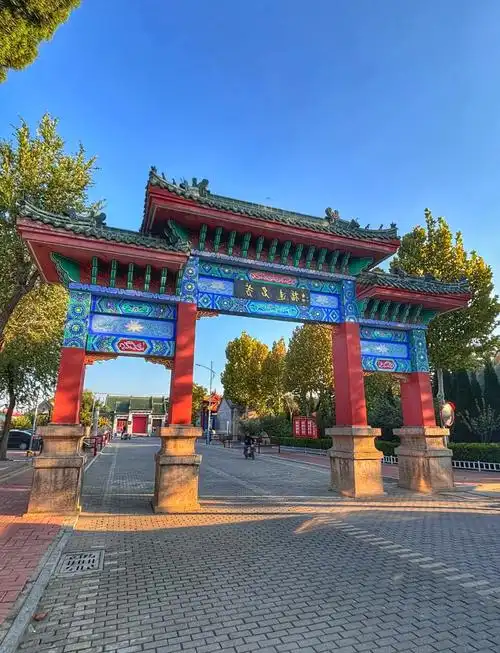 **An Ancient River's Legacy**
The Yellow River—often called the cradle of Chinese civilization, much like the Nile cradled ancient Egypt—once carved its path through this region before shifting course centuries ago, leaving behind dramatic dunes of sand. Locals began planting mulberry and pear trees here as early as the Han dynasty to anchor the shifting soils, gradually nurturing one of China's oldest surviving orchards. Comparable in spirit to the ancient chestnut groves of Tuscany or the heritage orchards of England's National Trust, this landscape is now protected as a Globally Important Agricultural Heritage System.
**A Living Museum of Fruit Trees**
Forest cover blankets 61.8 percent of the park, with towering mulberries and pears—some over a century old—forming a layered canopy that resembles a natural cathedral. In late April and May, pear blossoms erupt like pale snow, while June brings the deep purple bounty of mulberries that visitors can pick directly from the branches. Autumn paints the leaves crimson and gold, offering hiking trails that climb the dunes for sweeping vistas over the ancient woodland sea.
**Echoes of Dynasties Past**
Beyond its horticultural treasures, the park shelters layers of human history. Ruins of Dayun Temple date back to the Tang and Song dynasties, while the elegant Ming- and Qing-era Xingwu Academy and the commemorative Zhu Gong Shrine honor local scholars and officials. Grey brick walls and dark-tiled roofs nestled beneath ancient boughs create scenes reminiscent of a Chinese landscape painting, inviting travelers to pause and contemplate the region's cultural depth.
**Modern Comforts Amid Ancient Trees**
The park has evolved into a versatile resort without sacrificing its rural soul. The Debai Hot Spring Resort offers restorative mineral pools and a summer water park, while the whimsical Hobbit-themed family farm delights children with berry picking and friendly animals. Cycling paths, fishing ponds, and forest walkways round out the experience, ensuring that couples, families, and solo travelers alike find their own rhythm among the trees.
**Planning Your Visit**
The park sits roughly 60 to 70 kilometers northeast of Dezhou city, best reached by car or chartered vehicle—set your GPS for "Xiajin Yellow River Old Course National Forest Park." Entry and parking are free, and nearby village restaurants serve hearty meals for around 30 to 50 yuan per person. Allow three to four hours for a comfortable visit, ideally between May and June for mulberry season or in October for autumn color, and pair your walk with an evening soak in the hot springs.
**Why It's Worth the Detour**
For Western travelers seeking experiences far beyond the Great Wall or Terracotta Warriors, this park offers an intimate encounter with a slower, agricultural China—one where ancient silk-route mulberries still fruit, dynasty-era temples still stand, and the Yellow River's wandering legacy has been quietly redeemed by generations of farmers. It is a rare and rewarding stop that rewards curiosity with both natural beauty and historical resonance.
**An Ancient River's Legacy**
The Yellow River—often called the cradle of Chinese civilization, much like the Nile cradled ancient Egypt—once carved its path through this region before shifting course centuries ago, leaving behind dramatic dunes of sand. Locals began planting mulberry and pear trees here as early as the Han dynasty to anchor the shifting soils, gradually nurturing one of China's oldest surviving orchards. Comparable in spirit to the ancient chestnut groves of Tuscany or the heritage orchards of England's National Trust, this landscape is now protected as a Globally Important Agricultural Heritage System.
**A Living Museum of Fruit Trees**
Forest cover blankets 61.8 percent of the park, with towering mulberries and pears—some over a century old—forming a layered canopy that resembles a natural cathedral. In late April and May, pear blossoms erupt like pale snow, while June brings the deep purple bounty of mulberries that visitors can pick directly from the branches. Autumn paints the leaves crimson and gold, offering hiking trails that climb the dunes for sweeping vistas over the ancient woodland sea.
**Echoes of Dynasties Past**
Beyond its horticultural treasures, the park shelters layers of human history. Ruins of Dayun Temple date back to the Tang and Song dynasties, while the elegant Ming- and Qing-era Xingwu Academy and the commemorative Zhu Gong Shrine honor local scholars and officials. Grey brick walls and dark-tiled roofs nestled beneath ancient boughs create scenes reminiscent of a Chinese landscape painting, inviting travelers to pause and contemplate the region's cultural depth.
**Modern Comforts Amid Ancient Trees**
The park has evolved into a versatile resort without sacrificing its rural soul. The Debai Hot Spring Resort offers restorative mineral pools and a summer water park, while the whimsical Hobbit-themed family farm delights children with berry picking and friendly animals. Cycling paths, fishing ponds, and forest walkways round out the experience, ensuring that couples, families, and solo travelers alike find their own rhythm among the trees.
**Planning Your Visit**
The park sits roughly 60 to 70 kilometers northeast of Dezhou city, best reached by car or chartered vehicle—set your GPS for "Xiajin Yellow River Old Course National Forest Park." Entry and parking are free, and nearby village restaurants serve hearty meals for around 30 to 50 yuan per person. Allow three to four hours for a comfortable visit, ideally between May and June for mulberry season or in October for autumn color, and pair your walk with an evening soak in the hot springs.
**Why It's Worth the Detour**
For Western travelers seeking experiences far beyond the Great Wall or Terracotta Warriors, this park offers an intimate encounter with a slower, agricultural China—one where ancient silk-route mulberries still fruit, dynasty-era temples still stand, and the Yellow River's wandering legacy has been quietly redeemed by generations of farmers. It is a rare and rewarding stop that rewards curiosity with both natural beauty and historical resonance.