Dezhou Braised Chicken Cultural Park
⭐ 3.20
No. 88, Dexing Street, Decheng District, Dezhou City, Shandong Province, China
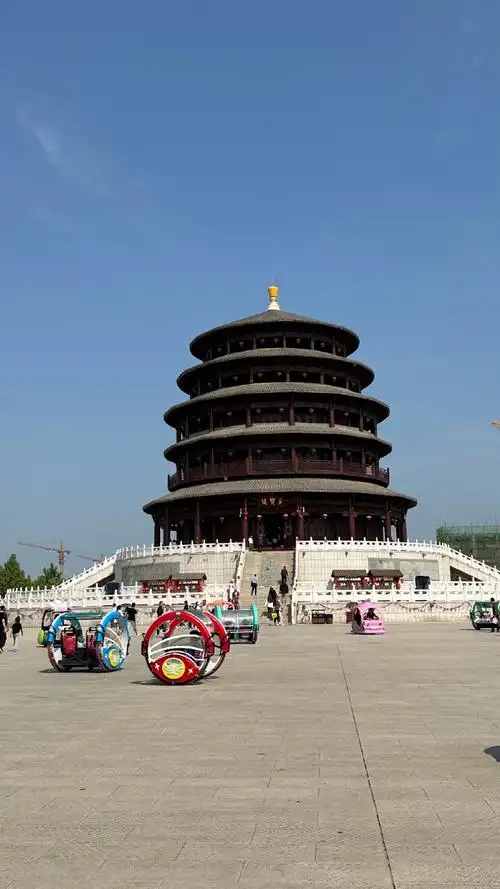 The year 1692 resonates across continents: Louis XIV was resplendent at Versailles, coffeehouses were reshaping London's intellectual life, and in the Shandong town of Dezhou, the Che family at a canal dock perfected what would become a culinary icon. Five-spice, deboned, and engineered for long journeys, Dezhou braised chicken fed Grand Canal boatmen threading the waterway that links Hangzhou to Beijing—a 1,794-kilometer artery older than any navigable canal in Europe. The museum charts this "born of the river, raised by the road" saga through period murals, Qing-era trade signage, and a recreated cooperative storefront. Visitors leave understanding how a humble poultry dish became a 300-year ambassador for northern Shandong's distinctive culinary school.
Spanning roughly 3,000 square meters—comparable in scale to a small European regional gallery—the park arranges its narrative across four themed halls covering history, development, achievements, and the Debao collection. Canals, railways, and commerce form three interpretive threads, with displays ranging from Song-dynasty kiln shards excavated locally to Republican-era brand plaques and mid-century production equipment. The standout is a glass-walled production floor where guests watch workers transform live poultry through sixteen-herb braising, deep-frying for color, and atmospheric-pressure stewing. This juxtaposition of ancient pottery and live-factory viewing distinguishes the site from Europe's more static food heritage centers, such as those at Lyon or Modena.
Dezhou braised chicken production technique ranks on Shandong's Intangible Cultural Heritage list, the provincial equivalent of an Italian Denominazione d'Origine safeguard. Its signature form—wings tucked into the neck, legs crossed—paired with a sixteen-herb pharmacopoeia delivers the famed "flesh-falls-from-bone" texture. A dedicated demonstration zone invites visitors to watch inheritors perform the precise "boning cut," revealing why a single shake releases meat cleanly from the skeleton. Pairing artisan handwork against mechanized mass production creates a vivid classroom experience for school groups, a format visitors to food-themed European sites—from Belgium's chocolate museums to Normandy's Camembert shrines—will find pleasantly familiar yet distinctly Shandong.
Reachable at 1389 Shangmao Avenue in Decheng District, the park opens 9:00 to 17:00 daily, though Mondays may see closures and holiday schedules vary. Admission is typically free or nominal, with school research groups requiring advance booking. To avoid an unwelcome arrival, check current hours via the official "Dezhou Wenlv" platform or the 0534-12345 government hotline before setting out. Plan 1.5 to 2.5 hours for a thorough visit—longer if joining a heritage demonstration. The on-site shop sells vacuum-sealed birds, but for authenticity look for the "Dezhou Braised Chicken Co." anti-counterfeit seal to sidestep the many copycats across town.
The park's appeal rests squarely on curiosity rather than thrills—there are few rides or games—so it rewards food enthusiasts, family learners, and corporate cultural outings rather than adrenaline seekers. Travelers with limited time can pair it with the neighboring Dongzi Garden, a complimentary classical garden honoring the Han-dynasty philosopher Dong Zhongshu, or with the China Post Food Culture Town, a culinary theme park nearby. Together they form a satisfying half-day circuit tracing Shandong's scholarly heritage and canal-trade gastronomy, an itinerary rarely offered by mainstream tour routes and a refreshing change from China's temple-and-museum mainstream.
The year 1692 resonates across continents: Louis XIV was resplendent at Versailles, coffeehouses were reshaping London's intellectual life, and in the Shandong town of Dezhou, the Che family at a canal dock perfected what would become a culinary icon. Five-spice, deboned, and engineered for long journeys, Dezhou braised chicken fed Grand Canal boatmen threading the waterway that links Hangzhou to Beijing—a 1,794-kilometer artery older than any navigable canal in Europe. The museum charts this "born of the river, raised by the road" saga through period murals, Qing-era trade signage, and a recreated cooperative storefront. Visitors leave understanding how a humble poultry dish became a 300-year ambassador for northern Shandong's distinctive culinary school.
Spanning roughly 3,000 square meters—comparable in scale to a small European regional gallery—the park arranges its narrative across four themed halls covering history, development, achievements, and the Debao collection. Canals, railways, and commerce form three interpretive threads, with displays ranging from Song-dynasty kiln shards excavated locally to Republican-era brand plaques and mid-century production equipment. The standout is a glass-walled production floor where guests watch workers transform live poultry through sixteen-herb braising, deep-frying for color, and atmospheric-pressure stewing. This juxtaposition of ancient pottery and live-factory viewing distinguishes the site from Europe's more static food heritage centers, such as those at Lyon or Modena.
Dezhou braised chicken production technique ranks on Shandong's Intangible Cultural Heritage list, the provincial equivalent of an Italian Denominazione d'Origine safeguard. Its signature form—wings tucked into the neck, legs crossed—paired with a sixteen-herb pharmacopoeia delivers the famed "flesh-falls-from-bone" texture. A dedicated demonstration zone invites visitors to watch inheritors perform the precise "boning cut," revealing why a single shake releases meat cleanly from the skeleton. Pairing artisan handwork against mechanized mass production creates a vivid classroom experience for school groups, a format visitors to food-themed European sites—from Belgium's chocolate museums to Normandy's Camembert shrines—will find pleasantly familiar yet distinctly Shandong.
Reachable at 1389 Shangmao Avenue in Decheng District, the park opens 9:00 to 17:00 daily, though Mondays may see closures and holiday schedules vary. Admission is typically free or nominal, with school research groups requiring advance booking. To avoid an unwelcome arrival, check current hours via the official "Dezhou Wenlv" platform or the 0534-12345 government hotline before setting out. Plan 1.5 to 2.5 hours for a thorough visit—longer if joining a heritage demonstration. The on-site shop sells vacuum-sealed birds, but for authenticity look for the "Dezhou Braised Chicken Co." anti-counterfeit seal to sidestep the many copycats across town.
The park's appeal rests squarely on curiosity rather than thrills—there are few rides or games—so it rewards food enthusiasts, family learners, and corporate cultural outings rather than adrenaline seekers. Travelers with limited time can pair it with the neighboring Dongzi Garden, a complimentary classical garden honoring the Han-dynasty philosopher Dong Zhongshu, or with the China Post Food Culture Town, a culinary theme park nearby. Together they form a satisfying half-day circuit tracing Shandong's scholarly heritage and canal-trade gastronomy, an itinerary rarely offered by mainstream tour routes and a refreshing change from China's temple-and-museum mainstream.