Nanjing Yuhuatai Scenic Area
⭐ 4.20
Yuhuatai Scenic Area, Nanjing, Jiangsu Province, China
 Yuhuatai, or "Rain Flower Terrace," takes its evocative name from a Southern Dynasty legend in which the monk Yun Guang of Gaozuo Temple preached so movingly that celestial flowers rained down from the heavens. Centuries later, the same hilltop acquired a far more somber significance: from 1927 onward, it became a place of execution for communist revolutionaries and patriots resisting first warlord rule and then the Nationalist government. Comparable in gravity to Père Lachaise Cemetery in Paris or London's Tower Hill Memorial, Yuhuatai today stands as China's principal national site of revolutionary remembrance, where the sacrifices of the early 20th-century struggle for national renewal are solemnly honored.
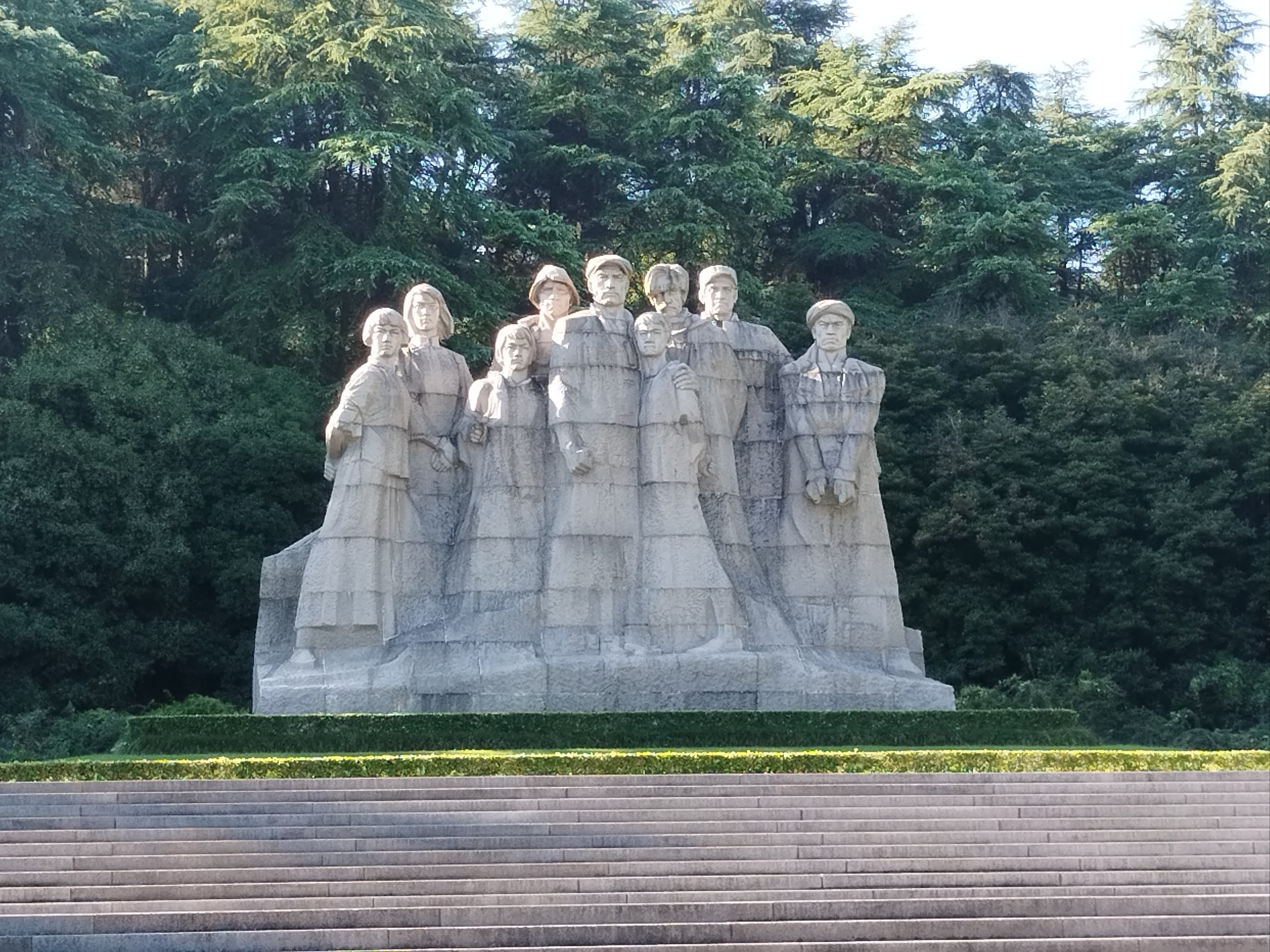
The park's monumental architecture is both imposing and thought-provoking. The Martyrs' Group Sculpture, carved from a single granite massif, is the largest of its kind in China and depicts heroic figures with stirring realism. Crowning the hill, the 42.3-meter-tall Revolutionary Martyrs' Memorial Tower offers sweeping views reminiscent of the viewpoints at Sacré-Cœur in Montmartre. Below, the Yuhuatai Martyrs' Memorial Museum, a nationally ranked first-class museum, houses an extensive collection of revolutionary artifacts, manuscripts, and personal effects of martyrs such as Deng Zhongxia and Yun Daiying, bringing their stories vividly to life.
Beyond its revolutionary heritage, the park preserves a remarkable layered history. The tomb of Fang Xiaoru, a Ming-dynasty scholar martyred for defying an emperor, recalls the moral courage of figures like Thomas More in Tudor England. Ancient Gaozuo Temple, the second-ranked Jiangnan Spring (which the Song poet Lu You famously praised), and pavilions such as Yuhua Pavilion reveal the artistic and literary traditions of old Nanjing. Together they form an open-air museum spanning two millennia, where imperial, religious, and modern revolutionary histories converge in a single contemplative landscape.
A genuinely local flavor runs through the park's cultural offerings. The Nanjing Rain Flower Pebble Museum displays the famous five-colored yuhua stones—smooth, patterned pebbles long prized by Chinese scholars as natural miniature landscapes, somewhat akin to the Japanese fascination with suiseki stones. Nearby, the Yuhua Tea Museum and Erquan Tea House invite visitors to taste Yuhua tea, a non-heritage green tea native to the Nanjing hills, while learning about traditional leaf-picking and processing techniques passed down through generations.
Practical details make a visit straightforward. The park is free and open daily from 6:30 to 17:30 in peak season (closing Mondays except on public holidays), with the memorial museum requiring advance online booking. Reaching it is easy via Metro Line 1 to either Zhonghuamen or Yuhuatai South Gate stations; foreign visitors need only a passport for entry. The recommended route begins at the South Gate and follows the north-south central axis past the Loyalty Soul Square, the museum, the memorial tower, and the northern execution-site sculptures—roughly two to three hours of walking. Spring and autumn are particularly rewarding, with plum blossoms at Meigang and osmanthus fragrance in the Osmanthus Garden, while the park's 90-percent greenery guarantees a peaceful, contemplative atmosphere year-round.
Yuhuatai is, in essence, a place where China's modern political awakening meets its ancient cultural soul. Few sites in the country compress so much history and emotion into a single accessible landscape, and for Western travelers seeking to understand 20th-century China beyond the usual imperial monuments, it offers a moving and deeply authentic encounter.
Yuhuatai, or "Rain Flower Terrace," takes its evocative name from a Southern Dynasty legend in which the monk Yun Guang of Gaozuo Temple preached so movingly that celestial flowers rained down from the heavens. Centuries later, the same hilltop acquired a far more somber significance: from 1927 onward, it became a place of execution for communist revolutionaries and patriots resisting first warlord rule and then the Nationalist government. Comparable in gravity to Père Lachaise Cemetery in Paris or London's Tower Hill Memorial, Yuhuatai today stands as China's principal national site of revolutionary remembrance, where the sacrifices of the early 20th-century struggle for national renewal are solemnly honored.
The park's monumental architecture is both imposing and thought-provoking. The Martyrs' Group Sculpture, carved from a single granite massif, is the largest of its kind in China and depicts heroic figures with stirring realism. Crowning the hill, the 42.3-meter-tall Revolutionary Martyrs' Memorial Tower offers sweeping views reminiscent of the viewpoints at Sacré-Cœur in Montmartre. Below, the Yuhuatai Martyrs' Memorial Museum, a nationally ranked first-class museum, houses an extensive collection of revolutionary artifacts, manuscripts, and personal effects of martyrs such as Deng Zhongxia and Yun Daiying, bringing their stories vividly to life.
Beyond its revolutionary heritage, the park preserves a remarkable layered history. The tomb of Fang Xiaoru, a Ming-dynasty scholar martyred for defying an emperor, recalls the moral courage of figures like Thomas More in Tudor England. Ancient Gaozuo Temple, the second-ranked Jiangnan Spring (which the Song poet Lu You famously praised), and pavilions such as Yuhua Pavilion reveal the artistic and literary traditions of old Nanjing. Together they form an open-air museum spanning two millennia, where imperial, religious, and modern revolutionary histories converge in a single contemplative landscape.
A genuinely local flavor runs through the park's cultural offerings. The Nanjing Rain Flower Pebble Museum displays the famous five-colored yuhua stones—smooth, patterned pebbles long prized by Chinese scholars as natural miniature landscapes, somewhat akin to the Japanese fascination with suiseki stones. Nearby, the Yuhua Tea Museum and Erquan Tea House invite visitors to taste Yuhua tea, a non-heritage green tea native to the Nanjing hills, while learning about traditional leaf-picking and processing techniques passed down through generations.
Practical details make a visit straightforward. The park is free and open daily from 6:30 to 17:30 in peak season (closing Mondays except on public holidays), with the memorial museum requiring advance online booking. Reaching it is easy via Metro Line 1 to either Zhonghuamen or Yuhuatai South Gate stations; foreign visitors need only a passport for entry. The recommended route begins at the South Gate and follows the north-south central axis past the Loyalty Soul Square, the museum, the memorial tower, and the northern execution-site sculptures—roughly two to three hours of walking. Spring and autumn are particularly rewarding, with plum blossoms at Meigang and osmanthus fragrance in the Osmanthus Garden, while the park's 90-percent greenery guarantees a peaceful, contemplative atmosphere year-round.
Yuhuatai is, in essence, a place where China's modern political awakening meets its ancient cultural soul. Few sites in the country compress so much history and emotion into a single accessible landscape, and for Western travelers seeking to understand 20th-century China beyond the usual imperial monuments, it offers a moving and deeply authentic encounter.