Dezhou Ancient City Wall
⭐ 2.00
Dezhou Ancient City Wall, Decheng District, Dezhou City, Shandong Province, China
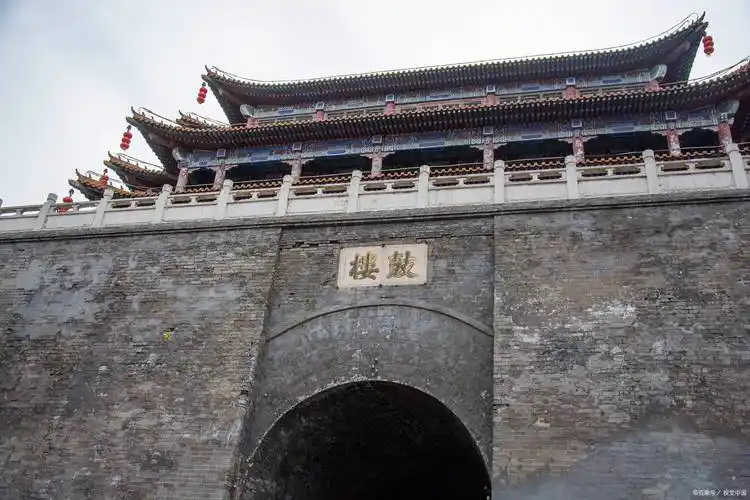 Dezhou's city wall rose in 1397 during the early Ming dynasty under Emperor Hongwu, when a string of fortified outposts guarded the imperial corridor between Beijing and the south. Its distinctive outline, resembling a mandarin's boot, gave the city its enduring nickname, much like how Toledo's horseshoe bend or Carcassonne's star-shaped silhouette still define those European medieval towns. The wall later became a frontline in modern Chinese history: in 1937, anti-Japanese resistance fighters fired Shandong's opening shots here, and in 1946 the East China Field Army used this very section as their breach point to liberate Dezhou, making it both an imperial relic and a revolutionary landmark.
Architecturally, the surviving fragment is built from pounded loam, a technique once standard across northern China and comparable to the earthworks of Crusader-era Palestine or medieval Iberian fortifications. Measuring roughly 10 meters high, 10 meters wide, and only 15 meters long, it is enclosed by protective barriers that have helped slow erosion since a 2020 conservation project. The compact dimensions make it less a monument to admire and more a tactile fragment to study, offering scholars rare insight into how provincial Ming garrisons were actually constructed.
Beyond its military past, the wall anchors Dezhou's collective memory. While European visitors might compare it to a lone surviving turret of a once-great castle wall, the site's deeper resonance lies in its layered testimony, from imperial frontier defense to national liberation struggle. Locals regard it not as a scenic attraction but as a sober reminder that this quiet stretch of earth witnessed both border skirmishes in the Ming era and the violent birth pangs of modern China. A small plaque is the only interpretive marker, leaving the imagination to do much of the work.
For practical planning, the site sits in Decheng District at the southwest corner of Qingnian Road and Yingbin Avenue, right beside the Beijing-Shanghai railway line. There is no entrance fee, no guided service, and no shade, so bring water, sun protection, and comfortable shoes. Visitors are asked to respect provincial heritage rules: no climbing, no graffiti, and no commercial filming. The easiest access is by taxi or ride-hailing directly to "Dezhou City Wall Ruins," as the site is not a developed scenic zone.
A visit is best timed for late afternoon, around 5 p.m., when the slanting light warms the earthen tones and the heat of the day has passed. Travelers with extra hours can pair the wall with the nearby Sulu King Tomb, a stretch of the UNESCO-listed Grand Canal greenway, and the Dezhou Museum for a fuller portrait of the city. Come expecting a brief, reflective stop rather than a grand tour, and this humble fragment will reward you with one of the more quietly powerful moments in northern China's historical landscape.
Dezhou's city wall rose in 1397 during the early Ming dynasty under Emperor Hongwu, when a string of fortified outposts guarded the imperial corridor between Beijing and the south. Its distinctive outline, resembling a mandarin's boot, gave the city its enduring nickname, much like how Toledo's horseshoe bend or Carcassonne's star-shaped silhouette still define those European medieval towns. The wall later became a frontline in modern Chinese history: in 1937, anti-Japanese resistance fighters fired Shandong's opening shots here, and in 1946 the East China Field Army used this very section as their breach point to liberate Dezhou, making it both an imperial relic and a revolutionary landmark.
Architecturally, the surviving fragment is built from pounded loam, a technique once standard across northern China and comparable to the earthworks of Crusader-era Palestine or medieval Iberian fortifications. Measuring roughly 10 meters high, 10 meters wide, and only 15 meters long, it is enclosed by protective barriers that have helped slow erosion since a 2020 conservation project. The compact dimensions make it less a monument to admire and more a tactile fragment to study, offering scholars rare insight into how provincial Ming garrisons were actually constructed.
Beyond its military past, the wall anchors Dezhou's collective memory. While European visitors might compare it to a lone surviving turret of a once-great castle wall, the site's deeper resonance lies in its layered testimony, from imperial frontier defense to national liberation struggle. Locals regard it not as a scenic attraction but as a sober reminder that this quiet stretch of earth witnessed both border skirmishes in the Ming era and the violent birth pangs of modern China. A small plaque is the only interpretive marker, leaving the imagination to do much of the work.
For practical planning, the site sits in Decheng District at the southwest corner of Qingnian Road and Yingbin Avenue, right beside the Beijing-Shanghai railway line. There is no entrance fee, no guided service, and no shade, so bring water, sun protection, and comfortable shoes. Visitors are asked to respect provincial heritage rules: no climbing, no graffiti, and no commercial filming. The easiest access is by taxi or ride-hailing directly to "Dezhou City Wall Ruins," as the site is not a developed scenic zone.
A visit is best timed for late afternoon, around 5 p.m., when the slanting light warms the earthen tones and the heat of the day has passed. Travelers with extra hours can pair the wall with the nearby Sulu King Tomb, a stretch of the UNESCO-listed Grand Canal greenway, and the Dezhou Museum for a fuller portrait of the city. Come expecting a brief, reflective stop rather than a grand tour, and this humble fragment will reward you with one of the more quietly powerful moments in northern China's historical landscape.