Delingha City Museum
⭐ 3.00
No. 15, Jiefang Road, Delingha City, Haixi Prefecture, Qinghai Province, China
 **Historical Context**
The Qaidam Basin, often called China's "treasure bowl" for its mineral wealth, served as a crucial southern corridor of the Silk Road during the Tang dynasty (618–907 CE). The museum's crown jewels—silk fragments, a gilded crown, and turquoise-set gold cups excavated from the Dulan Reshui tombs—belonged to high-ranking Tibetan nobles who controlled these trade arteries, comparable in significance to the Sasanian and Tang treasures held at the British Museum's Sir Percival David Collection. Together with Bronze Age pottery from the Nuomihong culture, they trace a continuous civilizational thread rarely seen outside major capital museums.
**Architecture and Layout**
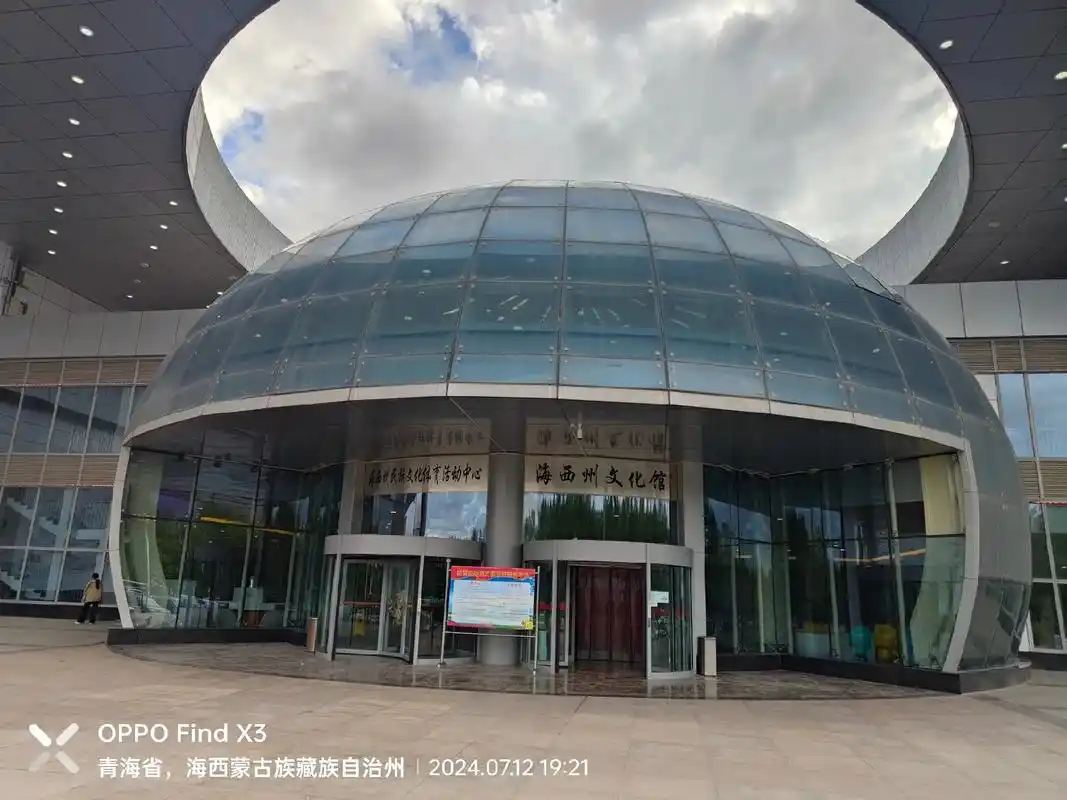
The 2024-opened new building covers approximately 2,000 square meters and ranks among Qinghai's most ambitious regional museums. While far smaller than Europe's grand national institutions—think of Berlin's Museum für Asiatische Kunst or London's Victoria and Albert—the compact design follows a clear four-section narrative: historical artifacts, natural resources, Kunlun culture, and modern development. The mountain-facing façade echoes the snow-capped Kunlun range visible from the city, an architectural gesture reminiscent of how alpine museums in Innsbruck reflect their surrounding peaks.
**Cultural Significance**
Beyond archaeology, the museum embodies the multiethnic fabric of one of China's most diverse autonomous regions. Displays on Mongol and Tibetan folk traditions illustrate the cultural pluralism that flourished along the northern Tibetan Plateau—much as the ethnographic halls of Vienna's Weltmuseum or Stockholm's Etnografiska museet preserve the heritage of Europe's minority peoples. The Kunlun Culture section ties these regional traditions to the sacred Kunlun mountain range, revered in Chinese cosmology and central to contemporary cultural revival across western China.
**Practical Visit Information**
Admission is free, with opening hours Tuesday through Sunday, 9:00 to 17:00 (last entry 16:30); the museum closes on Mondays. Visitors must present valid identification—foreigners should bring their passport for on-site registration. Most signage is in Chinese only, so downloading a translation app or arranging a Mandarin-speaking guide is strongly recommended. Allow 1.5 to 2 hours for a thorough visit following the recommended route. Flash photography and tripods are prohibited throughout, and certain sensitive display areas ban all photography.
**Why Visit**
At roughly 2,980 meters above sea level, Delingha demands acclimatization—avoid strenuous activity on arrival, dress warmly against strong winds, and stay hydrated. A free parking lot serves self-drivers, though roadwork around the new building may require extra navigation time. For travelers seeking a richer itinerary, the nearby Delingha Astronomy Science Museum pairs beautifully with the cultural visit, linking the area's ancient Silk Road legacy with its modern role as a premier stargazing destination on the Tibetan Plateau.
**Historical Context**
The Qaidam Basin, often called China's "treasure bowl" for its mineral wealth, served as a crucial southern corridor of the Silk Road during the Tang dynasty (618–907 CE). The museum's crown jewels—silk fragments, a gilded crown, and turquoise-set gold cups excavated from the Dulan Reshui tombs—belonged to high-ranking Tibetan nobles who controlled these trade arteries, comparable in significance to the Sasanian and Tang treasures held at the British Museum's Sir Percival David Collection. Together with Bronze Age pottery from the Nuomihong culture, they trace a continuous civilizational thread rarely seen outside major capital museums.
**Architecture and Layout**
The 2024-opened new building covers approximately 2,000 square meters and ranks among Qinghai's most ambitious regional museums. While far smaller than Europe's grand national institutions—think of Berlin's Museum für Asiatische Kunst or London's Victoria and Albert—the compact design follows a clear four-section narrative: historical artifacts, natural resources, Kunlun culture, and modern development. The mountain-facing façade echoes the snow-capped Kunlun range visible from the city, an architectural gesture reminiscent of how alpine museums in Innsbruck reflect their surrounding peaks.
**Cultural Significance**
Beyond archaeology, the museum embodies the multiethnic fabric of one of China's most diverse autonomous regions. Displays on Mongol and Tibetan folk traditions illustrate the cultural pluralism that flourished along the northern Tibetan Plateau—much as the ethnographic halls of Vienna's Weltmuseum or Stockholm's Etnografiska museet preserve the heritage of Europe's minority peoples. The Kunlun Culture section ties these regional traditions to the sacred Kunlun mountain range, revered in Chinese cosmology and central to contemporary cultural revival across western China.
**Practical Visit Information**
Admission is free, with opening hours Tuesday through Sunday, 9:00 to 17:00 (last entry 16:30); the museum closes on Mondays. Visitors must present valid identification—foreigners should bring their passport for on-site registration. Most signage is in Chinese only, so downloading a translation app or arranging a Mandarin-speaking guide is strongly recommended. Allow 1.5 to 2 hours for a thorough visit following the recommended route. Flash photography and tripods are prohibited throughout, and certain sensitive display areas ban all photography.
**Why Visit**
At roughly 2,980 meters above sea level, Delingha demands acclimatization—avoid strenuous activity on arrival, dress warmly against strong winds, and stay hydrated. A free parking lot serves self-drivers, though roadwork around the new building may require extra navigation time. For travelers seeking a richer itinerary, the nearby Delingha Astronomy Science Museum pairs beautifully with the cultural visit, linking the area's ancient Silk Road legacy with its modern role as a premier stargazing destination on the Tibetan Plateau.