Jiuli Mountain Forest Park
⭐ 3.60
Shifeng District, Zhuzhou, Hunan, China
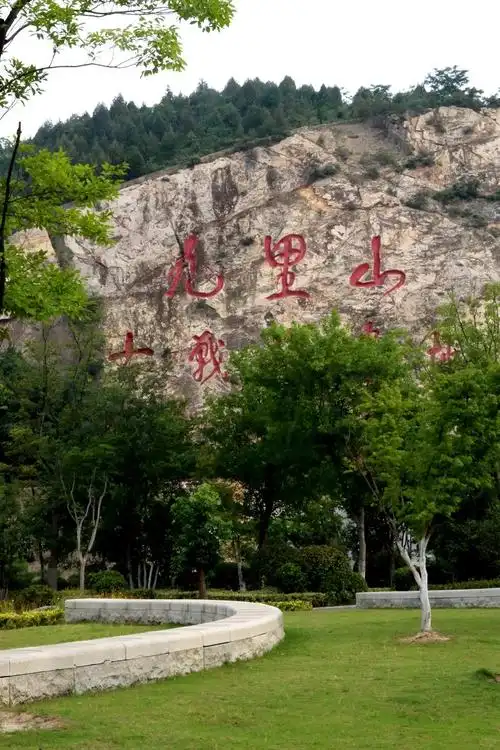 Jiulang Mountain has drawn pilgrims and travelers for centuries, taking its name from the legendary Jiulang Temple that reportedly sheltered nine wandering monks. The park carries a particularly poignant chapter of Chinese revolutionary history through "Huai Ting," the childhood home of Qiu Jin (1875–1907), one of modern China's most celebrated feminist martyrs. Comparable to figures like France's Madame Roland or Poland's Rosa Luxemburg, Qiu Jin campaigned for women's education, gender equality, and the overthrow of the Qing dynasty before her execution at just 31 years old. Her memory lends the mountain a solemn dignity rarely found in suburban parks.
The mountain's Buddhist heritage centers on two striking temples—Jiulang Temple and Shanglin Temple—whose vermilion walls and glazed yellow roof tiles echo the imperial color palette of Beijing's Forbidden City, though on a more intimate scale reminiscent of Kyoto's hillside temples. Nearby, the Huai Ting residence follows the classic three-courtyard layout typical of central Hunan vernacular architecture, with whitewashed walls, dark timber beams, and tiled roofs harmonizing with surrounding camphor and maple forests. Inside, a wedding customs museum preserves regional marriage traditions alongside exhibits on Qiu Jin's remarkable life, creating a layered dialogue between folk heritage and revolutionary history.
Functioning as the ecological "green heart" of the Changsha-Zhuzhou-Xiangtan urban agglomeration—a concept echoing London's metropolitan green belt—the park plays a vital role in regional biodiversity and air quality, with dense forest cover earning it the local nickname "natural oxygen bar." Beyond its environmental role, the site weaves together three distinct cultural threads: Buddhist devotional practice still active in the temple courtyards, patriotic education through Qiu Jin's legacy, and rural Hunan village traditions preserved in surrounding settlements. This rare synthesis of nature, faith, and revolutionary memory makes Jiulang Mountain unusually rich for a peripheral urban park.
The park welcomes visitors free of charge throughout the year, with no entrance gates or admission tickets required. From Zhuzhou's city center, travelers can take Bus 19 or 47 to the Hehua Village stop, or drive directly using GPS navigation; ample free parking is available at the entrance. Allow two to four hours for a meaningful visit covering the residence, temple complex, and summit hike. Importantly, there are no vending machines, restaurants, or restrooms inside the park proper, so visitors should bring sufficient water, snacks, and any needed supplies. Checking the opening status of the Qiu Jin residence in advance is also advisable.
The ascent to Maple Stockade Peak follows the well-maintained Red-Green Eco Trail, a gently graded path suitable for families, casual walkers, and light outdoor enthusiasts—comparable in spirit to gentle British National Trust walks or the rolling Tuscan foothills. Sturdy non-slip hiking shoes are essential, along with sun protection and mosquito repellent during warmer months. Early morning or late afternoon visits are recommended to avoid midday heat and harsh sunlight, while clear weather offers the rare reward of seeing the skylines of both Changsha and Zhuzhou, with landmarks like the Changsha IFS tower and Zhuzhou's Shennong Pagoda visible in the distance. Visitors should descend well before dark for safety.
For Western travelers seeking an authentic, uncrowded glimpse into central Hunan's layered identity, Jiulang Mountain offers a rare convergence of imperial-era Buddhism, early-twentieth-century revolutionary fervor, and lush subtropical forest—all within easy reach of three major cities. Unlike the heavily touristed peaks of Guilin or Huangshan, this local-favorite park remains refreshingly authentic, visited primarily by Zhuzhou residents on weekends rather than packaged tour groups. It rewards curious visitors with quiet contemplation, refreshing air, unexpectedly grand horizons over the Xiang River plain, and a tangible connection to Qiu Jin's courageous legacy.
Jiulang Mountain has drawn pilgrims and travelers for centuries, taking its name from the legendary Jiulang Temple that reportedly sheltered nine wandering monks. The park carries a particularly poignant chapter of Chinese revolutionary history through "Huai Ting," the childhood home of Qiu Jin (1875–1907), one of modern China's most celebrated feminist martyrs. Comparable to figures like France's Madame Roland or Poland's Rosa Luxemburg, Qiu Jin campaigned for women's education, gender equality, and the overthrow of the Qing dynasty before her execution at just 31 years old. Her memory lends the mountain a solemn dignity rarely found in suburban parks.
The mountain's Buddhist heritage centers on two striking temples—Jiulang Temple and Shanglin Temple—whose vermilion walls and glazed yellow roof tiles echo the imperial color palette of Beijing's Forbidden City, though on a more intimate scale reminiscent of Kyoto's hillside temples. Nearby, the Huai Ting residence follows the classic three-courtyard layout typical of central Hunan vernacular architecture, with whitewashed walls, dark timber beams, and tiled roofs harmonizing with surrounding camphor and maple forests. Inside, a wedding customs museum preserves regional marriage traditions alongside exhibits on Qiu Jin's remarkable life, creating a layered dialogue between folk heritage and revolutionary history.
Functioning as the ecological "green heart" of the Changsha-Zhuzhou-Xiangtan urban agglomeration—a concept echoing London's metropolitan green belt—the park plays a vital role in regional biodiversity and air quality, with dense forest cover earning it the local nickname "natural oxygen bar." Beyond its environmental role, the site weaves together three distinct cultural threads: Buddhist devotional practice still active in the temple courtyards, patriotic education through Qiu Jin's legacy, and rural Hunan village traditions preserved in surrounding settlements. This rare synthesis of nature, faith, and revolutionary memory makes Jiulang Mountain unusually rich for a peripheral urban park.
The park welcomes visitors free of charge throughout the year, with no entrance gates or admission tickets required. From Zhuzhou's city center, travelers can take Bus 19 or 47 to the Hehua Village stop, or drive directly using GPS navigation; ample free parking is available at the entrance. Allow two to four hours for a meaningful visit covering the residence, temple complex, and summit hike. Importantly, there are no vending machines, restaurants, or restrooms inside the park proper, so visitors should bring sufficient water, snacks, and any needed supplies. Checking the opening status of the Qiu Jin residence in advance is also advisable.
The ascent to Maple Stockade Peak follows the well-maintained Red-Green Eco Trail, a gently graded path suitable for families, casual walkers, and light outdoor enthusiasts—comparable in spirit to gentle British National Trust walks or the rolling Tuscan foothills. Sturdy non-slip hiking shoes are essential, along with sun protection and mosquito repellent during warmer months. Early morning or late afternoon visits are recommended to avoid midday heat and harsh sunlight, while clear weather offers the rare reward of seeing the skylines of both Changsha and Zhuzhou, with landmarks like the Changsha IFS tower and Zhuzhou's Shennong Pagoda visible in the distance. Visitors should descend well before dark for safety.
For Western travelers seeking an authentic, uncrowded glimpse into central Hunan's layered identity, Jiulang Mountain offers a rare convergence of imperial-era Buddhism, early-twentieth-century revolutionary fervor, and lush subtropical forest—all within easy reach of three major cities. Unlike the heavily touristed peaks of Guilin or Huangshan, this local-favorite park remains refreshingly authentic, visited primarily by Zhuzhou residents on weekends rather than packaged tour groups. It rewards curious visitors with quiet contemplation, refreshing air, unexpectedly grand horizons over the Xiang River plain, and a tangible connection to Qiu Jin's courageous legacy.