Xuzhou Museum
⭐ 4.60
No. 1, Pengzu Avenue, Yunlong District, Xuzhou City, Jiangsu Province, China
 Xuzhou Museum, founded in 1959, occupies the former rest stop where the Qianlong Emperor lodged during his 1751 southern progress—a tradition echoing the grand royal progresses of European monarchs like Louis XIV. Yet the site's deeper significance reaches back two millennia: Xuzhou, anciently called Pengcheng, was the birthplace of Liu Bang, founder of the Han Dynasty (202 BCE–220 CE), and the decisive battlefield where he defeated rival Xiang Yu. Standing roughly contemporary with the late Roman Republic and the reign of Augustus, the Han Dynasty oversaw one of history's great civilizations, and Xuzhou's archaeological riches offer one of the most complete windows into that vanished world.
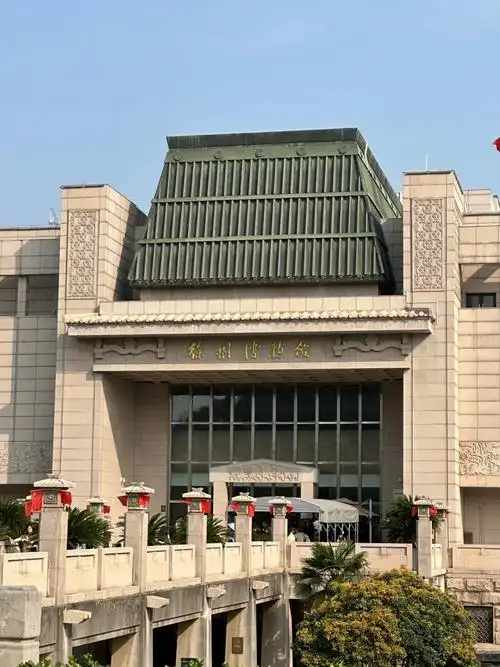
The main exhibition hall masterfully fuses Han architectural grandeur with contemporary museum design, its dignified silhouette echoing the vaulted ambition of Rome's ancient temples. Visitors approach through a forecourt adorned with monumental stone sculptures and a corridor lined with Han stone reliefs—a sculptural tradition comparable to the narrative friezes of Trajan's Column, but carved in low relief rather than spiraling. To the rear, the surviving pavilions of the Qianlong-era palace gardens create an integrated "museum-garden" complex, where imperial Qing horticulture meets two-thousand-year-old funerary art in a uniquely Chinese landscape dialogue.
The collection exceeds 20,000 pieces, but the undisputed centerpiece is the Western Han gold-threaded jade burial suit excavated from the Tomb of the King of Chu at Lion Hill. Crafted from 4,248 plaques of prized Hetian jade bound with gold wire, it holds four national records: earliest date, greatest number of pieces, finest jade quality, and most exquisite craftsmanship—a funerary extravagance that rivals the gold burial mask of Tutankhamun in both artistry and historical resonance. The suit offers an unparalleled window into Western Han burial customs and the extraordinary skill of ancient Chinese lapidaries.
Beyond the burial suit, the museum unfolds in thematic galleries. The Heavenly Craftsmanship Hall showcases Han jade treasures, including sinuous dragon pendants and ceremonial drinking cups. The Great Han Atmosphere Hall recreates the ritual and musical life of Chu princely courts, while the Golden Weapons Hall displays two centuries of Han military hardware—from bronze swords to crossbow mechanisms—offering insights comparable to studying arms at London's Royal Armouries. The Han Stone Relief Art Gallery, often called "the encyclopedia of Han life," preserves early depictions of kitchen scenes, hunts, and banquets rendered with remarkable narrative vitality.
Admission is free, but visitors must reserve tickets seven days in advance via the museum's official WeChat account or website, with new tickets released every Monday at 8:00 PM. The museum is open Tuesday through Sunday from 9:00 AM to 5:00 PM and closed on Mondays. The most convenient access is via Metro Line 2 to the Normal University Yunlong Campus station, followed by a 400-meter walk; driving is discouraged due to severely limited parking. Children under 14 and seniors over 65 may enter without advance reservation by presenting valid identification.
Plan to spend three to four hours following the recommended route: "Ancient Pengcheng" through "Heavenly Han Jade," "Great Han Atmosphere," and "Golden Weapons." Audio guides are available for rental, while guided tours should be booked in advance. After your visit, consider combining the museum with a hike up nearby Yunlong Mountain and a stroll through the adjoining Qianlong Palace gardens—creating a rewarding half-day "museum, garden, and mountain" immersion into Han culture that transforms a museum stop into a broader historical pilgrimage.
Xuzhou Museum, founded in 1959, occupies the former rest stop where the Qianlong Emperor lodged during his 1751 southern progress—a tradition echoing the grand royal progresses of European monarchs like Louis XIV. Yet the site's deeper significance reaches back two millennia: Xuzhou, anciently called Pengcheng, was the birthplace of Liu Bang, founder of the Han Dynasty (202 BCE–220 CE), and the decisive battlefield where he defeated rival Xiang Yu. Standing roughly contemporary with the late Roman Republic and the reign of Augustus, the Han Dynasty oversaw one of history's great civilizations, and Xuzhou's archaeological riches offer one of the most complete windows into that vanished world.
The main exhibition hall masterfully fuses Han architectural grandeur with contemporary museum design, its dignified silhouette echoing the vaulted ambition of Rome's ancient temples. Visitors approach through a forecourt adorned with monumental stone sculptures and a corridor lined with Han stone reliefs—a sculptural tradition comparable to the narrative friezes of Trajan's Column, but carved in low relief rather than spiraling. To the rear, the surviving pavilions of the Qianlong-era palace gardens create an integrated "museum-garden" complex, where imperial Qing horticulture meets two-thousand-year-old funerary art in a uniquely Chinese landscape dialogue.
The collection exceeds 20,000 pieces, but the undisputed centerpiece is the Western Han gold-threaded jade burial suit excavated from the Tomb of the King of Chu at Lion Hill. Crafted from 4,248 plaques of prized Hetian jade bound with gold wire, it holds four national records: earliest date, greatest number of pieces, finest jade quality, and most exquisite craftsmanship—a funerary extravagance that rivals the gold burial mask of Tutankhamun in both artistry and historical resonance. The suit offers an unparalleled window into Western Han burial customs and the extraordinary skill of ancient Chinese lapidaries.
Beyond the burial suit, the museum unfolds in thematic galleries. The Heavenly Craftsmanship Hall showcases Han jade treasures, including sinuous dragon pendants and ceremonial drinking cups. The Great Han Atmosphere Hall recreates the ritual and musical life of Chu princely courts, while the Golden Weapons Hall displays two centuries of Han military hardware—from bronze swords to crossbow mechanisms—offering insights comparable to studying arms at London's Royal Armouries. The Han Stone Relief Art Gallery, often called "the encyclopedia of Han life," preserves early depictions of kitchen scenes, hunts, and banquets rendered with remarkable narrative vitality.
Admission is free, but visitors must reserve tickets seven days in advance via the museum's official WeChat account or website, with new tickets released every Monday at 8:00 PM. The museum is open Tuesday through Sunday from 9:00 AM to 5:00 PM and closed on Mondays. The most convenient access is via Metro Line 2 to the Normal University Yunlong Campus station, followed by a 400-meter walk; driving is discouraged due to severely limited parking. Children under 14 and seniors over 65 may enter without advance reservation by presenting valid identification.
Plan to spend three to four hours following the recommended route: "Ancient Pengcheng" through "Heavenly Han Jade," "Great Han Atmosphere," and "Golden Weapons." Audio guides are available for rental, while guided tours should be booked in advance. After your visit, consider combining the museum with a hike up nearby Yunlong Mountain and a stroll through the adjoining Qianlong Palace gardens—creating a rewarding half-day "museum, garden, and mountain" immersion into Han culture that transforms a museum stop into a broader historical pilgrimage.