Niushou Mountain Cultural Tourism Area
⭐ 4.70
Niushou Mountain Cultural Tourism Area, Nanjing, Jiangsu, China
 The name "Niushou" literally means "Ox Head," referring to the mountain's twin peaks that resemble bovine horns rising above the Yangtze plain. Long a sacred Buddhist site, it was here in the Tang dynasty that the monk Farong founded the Ox-Head Chan (Zen) school, one of Chinese Buddhism's earliest Chan lineages, predating the more famous Japanese Zen traditions by centuries. Today the mountain houses one of Buddhism's most venerated treasures: a cranial relic of the Buddha himself, drawing pilgrims from across Asia and placing Niushou alongside such storied pilgrimage centers as Bodh Gaya and Lhasa.
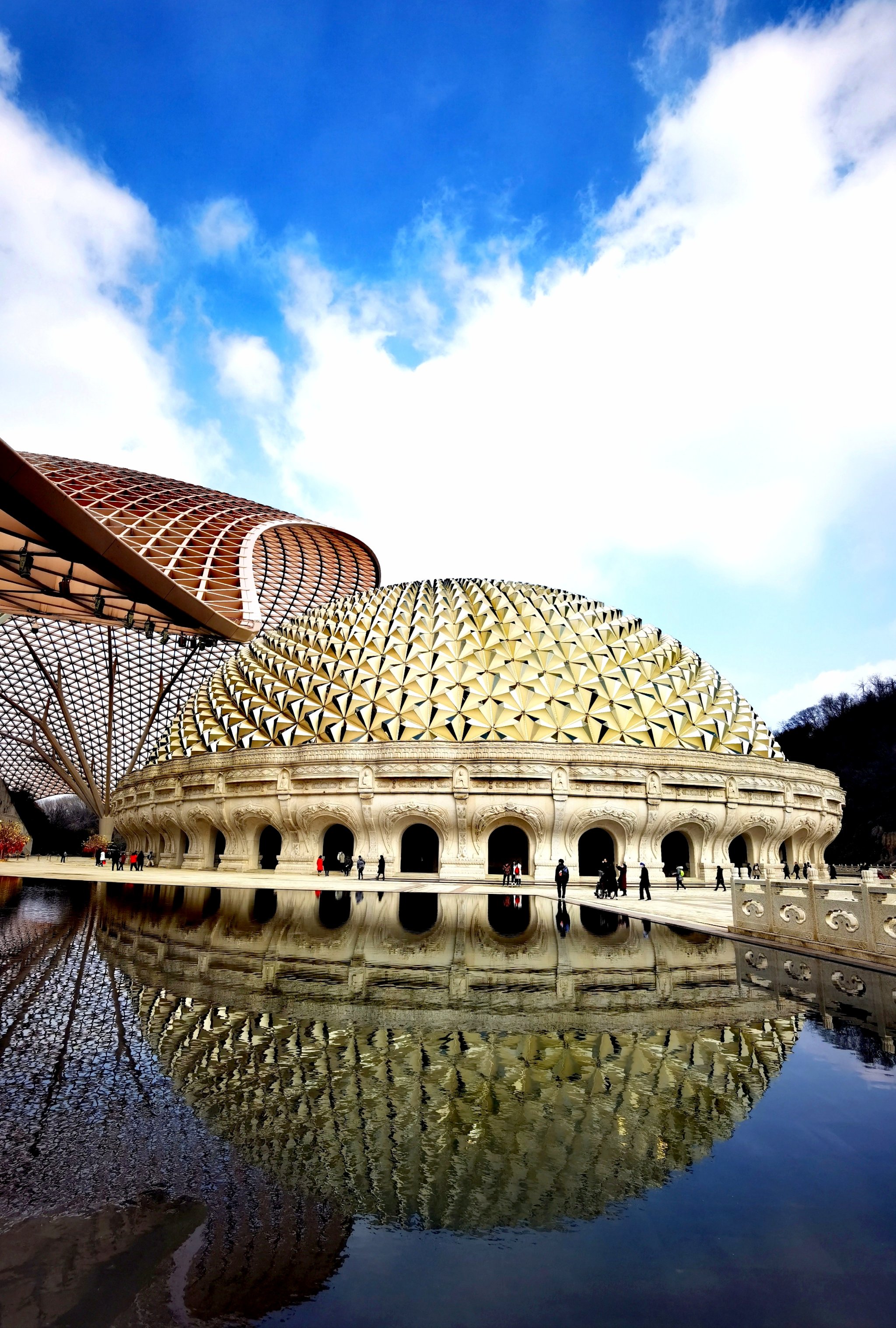
The architectural showpiece is Foding Palace, a futuristic Buddhist monument comparable in audacity to Barcelona's Sagrada Familia or Finland's Temppeliaukio Church. Rising from a vast abandoned limestone quarry, it features a towering outer dome shaped like a monk's robe and a smaller inner dome mimicking the Buddha's topknot. Inside, the upper "Zen Realm" hall showcases a 7.5-meter rotating reclining Buddha, while the subterranean Relic Hall dazzles with a 21.8-meter central stupa surrounded by 1,343 gilded Buddha statues—an opulent visual feast reminiscent of Rome's most lavish basilicas.
Anchoring the site's historic axis, the 88-meter Foding Pagoda offers sweeping Tang-dynasty-inspired elegance and panoramic views of the surrounding forests. Nearby, Foding Temple provides a tranquil counterpoint with its traditional sweeping eaves, peaceful gardens, and serene atmosphere ideal for quiet reflection. Together, these structures form a coherent spiritual journey from contemporary wonder to classical reverence.
Beyond the headline attractions, the mountain rewards the curious wanderer with quieter treasures. Spring brings the celebrated "Spring Niushou" season of peach and apricot blossoms, while Yinlong Lake shimmers below forested ridges. Hidden among the trees lie the tomb of the Ming dynasty's famed Admiral Zheng He—who sailed the Indian Ocean and East Africa—Yue Fei's anti-Jin battle fortifications, and Hongjue Temple Pagoda, Nanjing's oldest surviving brick tower, dating back over 600 years.
Niushou truly comes alive on summer evenings when extended night openings transform Foding Palace into a luminous spectacle, its golden lights mirrored in still pools and accompanied by traditional Chinese performances. Adult tickets run around 145 yuan (discounts common online), with a 20 yuan shuttle bus recommended for navigating the sprawling grounds. Gates open 08:30–17:30, extending to 20:30 on Friday through Sunday in August and holidays. Plan at least three to four hours, entering via the West Gate and following the one-way route from palace to pagoda to temple to fully appreciate this remarkable fusion of nature, history, and architectural wonder.
The name "Niushou" literally means "Ox Head," referring to the mountain's twin peaks that resemble bovine horns rising above the Yangtze plain. Long a sacred Buddhist site, it was here in the Tang dynasty that the monk Farong founded the Ox-Head Chan (Zen) school, one of Chinese Buddhism's earliest Chan lineages, predating the more famous Japanese Zen traditions by centuries. Today the mountain houses one of Buddhism's most venerated treasures: a cranial relic of the Buddha himself, drawing pilgrims from across Asia and placing Niushou alongside such storied pilgrimage centers as Bodh Gaya and Lhasa.
The architectural showpiece is Foding Palace, a futuristic Buddhist monument comparable in audacity to Barcelona's Sagrada Familia or Finland's Temppeliaukio Church. Rising from a vast abandoned limestone quarry, it features a towering outer dome shaped like a monk's robe and a smaller inner dome mimicking the Buddha's topknot. Inside, the upper "Zen Realm" hall showcases a 7.5-meter rotating reclining Buddha, while the subterranean Relic Hall dazzles with a 21.8-meter central stupa surrounded by 1,343 gilded Buddha statues—an opulent visual feast reminiscent of Rome's most lavish basilicas.
Anchoring the site's historic axis, the 88-meter Foding Pagoda offers sweeping Tang-dynasty-inspired elegance and panoramic views of the surrounding forests. Nearby, Foding Temple provides a tranquil counterpoint with its traditional sweeping eaves, peaceful gardens, and serene atmosphere ideal for quiet reflection. Together, these structures form a coherent spiritual journey from contemporary wonder to classical reverence.
Beyond the headline attractions, the mountain rewards the curious wanderer with quieter treasures. Spring brings the celebrated "Spring Niushou" season of peach and apricot blossoms, while Yinlong Lake shimmers below forested ridges. Hidden among the trees lie the tomb of the Ming dynasty's famed Admiral Zheng He—who sailed the Indian Ocean and East Africa—Yue Fei's anti-Jin battle fortifications, and Hongjue Temple Pagoda, Nanjing's oldest surviving brick tower, dating back over 600 years.
Niushou truly comes alive on summer evenings when extended night openings transform Foding Palace into a luminous spectacle, its golden lights mirrored in still pools and accompanied by traditional Chinese performances. Adult tickets run around 145 yuan (discounts common online), with a 20 yuan shuttle bus recommended for navigating the sprawling grounds. Gates open 08:30–17:30, extending to 20:30 on Friday through Sunday in August and holidays. Plan at least three to four hours, entering via the West Gate and following the one-way route from palace to pagoda to temple to fully appreciate this remarkable fusion of nature, history, and architectural wonder.