Zhangjiajie Tujia Folk Culture Park
⭐ 3.60
Zhangjiajie Tujia Folk Culture Park, Zhangjiajie City, Hunan Province, China
 **Historical Context**
The park is organized around the legacy of western Hunan's Tusi system—the hereditary chieftain governance that ruled Tujia territories for centuries, comparable in function to medieval European feudal lordship or Japan's shogunate system. Stone archways, ritual halls, and a reconstructed Tusi fortress evoke the era when local chieftains wielded both military and ceremonial authority, defending the frontier regions of the Ming and Qing dynasties. Read alongside the nearby Yongshun Laosicheng ruins, a separate UNESCO site that shares the same cultural roots, the park offers a more concentrated and accessible interpretation of this fascinating chapter of Chinese minority history.
**Architecture**
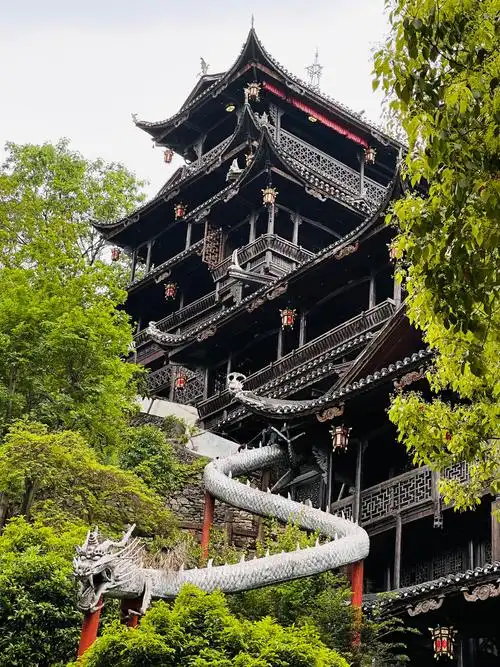
The undisputed star is the Jiuzhongtian Shixitang Hall, a towering 48-meter, twelve-story marvel of interlocking wooden beams that holds the Guinness record for the tallest nail-free timber structure in the world. Enthusiasts of timber-frame architecture will recognize kinship with Norway's medieval stave churches or the soaring rooflines of Japanese pagodas, both of which similarly harness wood's natural flexibility. Stilted houses (diaojiaolou) cascade down the hillside in layered tiers, their upturned eaves and weathered timber glowing warmly in the mountain light, and visitors who climb to the summit are rewarded with sweeping panoramas over both the park and the distant Zhangjiajie's skyline.
**Cultural Significance**
This is effectively a living museum of Tujia identity, where nationally recognized intangible heritage comes alive through daily performances. The Maogusi dance—one of China's oldest ritual dances—is staged alongside the rhythmic Baishou dance, the haunting Tongling dance, and poignant crying-marriage ceremonies that recall the emotional weight of traditional weddings. Interactive programs let guests sample the gate-blocking rice wine ritual, weave colorful brocade on traditional looms, and craft silver ornaments, transforming passive sightseeing into hands-on cultural exchange. Anthropologists and curious travelers alike will find the displays of clan memory, animist belief systems, and rural aesthetics remarkably rich.
**Practical Visit Information**
The park opens daily from 8:30 a.m. to 5:00 p.m., with last entry at 4:30 p.m., and most guests spend three to five hours exploring. Tickets range from roughly ¥50–80 at the gate, occasionally ¥80–120 through online channels, with children under 1.2 meters admitted free. Located just three kilometers from Zhangjiajie Hehua Airport and seven kilometers from the railway station, it is easily reached by taxi or local bus—ideal for filling a leisurely half-day on arrival or departure. Wear sturdy, non-slip footwear: the staircases are wooden and the pathways of flagstone can be slick after rain.
**Why Visit**
While Zhangjiajie's fame rests on its surreal sandstone pillars and glass bridges, the Tujia Folk Custom Park provides essential cultural ballast, revealing the human story that has unfolded beneath those misty peaks for centuries. It is especially rewarding for travelers seeking depth beyond scenery, and the towering timber hall alone justifies the detour. Schedule it on a half-day slot—pair it with a morning arrival or a late afternoon wind-down—and you will leave with a far richer understanding of why this corner of Hunan feels so distinctively its own.
**Historical Context**
The park is organized around the legacy of western Hunan's Tusi system—the hereditary chieftain governance that ruled Tujia territories for centuries, comparable in function to medieval European feudal lordship or Japan's shogunate system. Stone archways, ritual halls, and a reconstructed Tusi fortress evoke the era when local chieftains wielded both military and ceremonial authority, defending the frontier regions of the Ming and Qing dynasties. Read alongside the nearby Yongshun Laosicheng ruins, a separate UNESCO site that shares the same cultural roots, the park offers a more concentrated and accessible interpretation of this fascinating chapter of Chinese minority history.
**Architecture**
The undisputed star is the Jiuzhongtian Shixitang Hall, a towering 48-meter, twelve-story marvel of interlocking wooden beams that holds the Guinness record for the tallest nail-free timber structure in the world. Enthusiasts of timber-frame architecture will recognize kinship with Norway's medieval stave churches or the soaring rooflines of Japanese pagodas, both of which similarly harness wood's natural flexibility. Stilted houses (diaojiaolou) cascade down the hillside in layered tiers, their upturned eaves and weathered timber glowing warmly in the mountain light, and visitors who climb to the summit are rewarded with sweeping panoramas over both the park and the distant Zhangjiajie's skyline.
**Cultural Significance**
This is effectively a living museum of Tujia identity, where nationally recognized intangible heritage comes alive through daily performances. The Maogusi dance—one of China's oldest ritual dances—is staged alongside the rhythmic Baishou dance, the haunting Tongling dance, and poignant crying-marriage ceremonies that recall the emotional weight of traditional weddings. Interactive programs let guests sample the gate-blocking rice wine ritual, weave colorful brocade on traditional looms, and craft silver ornaments, transforming passive sightseeing into hands-on cultural exchange. Anthropologists and curious travelers alike will find the displays of clan memory, animist belief systems, and rural aesthetics remarkably rich.
**Practical Visit Information**
The park opens daily from 8:30 a.m. to 5:00 p.m., with last entry at 4:30 p.m., and most guests spend three to five hours exploring. Tickets range from roughly ¥50–80 at the gate, occasionally ¥80–120 through online channels, with children under 1.2 meters admitted free. Located just three kilometers from Zhangjiajie Hehua Airport and seven kilometers from the railway station, it is easily reached by taxi or local bus—ideal for filling a leisurely half-day on arrival or departure. Wear sturdy, non-slip footwear: the staircases are wooden and the pathways of flagstone can be slick after rain.
**Why Visit**
While Zhangjiajie's fame rests on its surreal sandstone pillars and glass bridges, the Tujia Folk Custom Park provides essential cultural ballast, revealing the human story that has unfolded beneath those misty peaks for centuries. It is especially rewarding for travelers seeking depth beyond scenery, and the towering timber hall alone justifies the detour. Schedule it on a half-day slot—pair it with a morning arrival or a late afternoon wind-down—and you will leave with a far richer understanding of why this corner of Hunan feels so distinctively its own.