Tujia Folk Customs Village
⭐ 4.20
Tianmen Mountain National Forest Park, Tianmenshan Town, Yongding District, Zhangjiajie City, Hunan Province, China
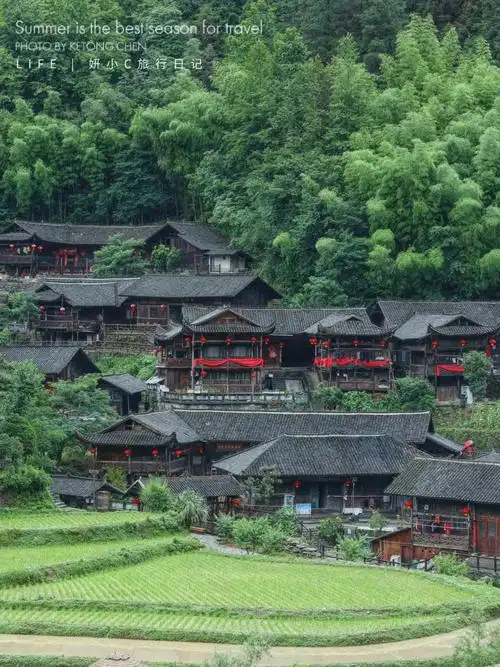 **Shiyanping Village — A Living Museum of Tujia Architecture**
Founded during the Ming Dynasty (1368–1644), Shiyanping in Yongding District is a national cultural heritage site and home to China's largest surviving cluster of stilted houses, or "diaojiaolou"—182 of them still standing. Like the timber-frame villages of Norway's fjord regions or the thatched hamlets of the English Cotswolds, the buildings cascade down the mountainside in organic tiers, with a stream threading the settlement. Residents still farm and weave here, and guests can join rice-drying and brocade-making routines, or stay in farm-stay cottages. Entry is free, but you'll need a car; those prone to motion sickness should prepare for winding mountain roads.
**Kuzhu Zhai — A Song Dynasty Trading Post Frozen in Time**
Tucked along the Maoyan River in Sangzhi County, this riverside village served as a Tujia trading hub during the Tang and Song dynasties (618–1279)—contemporary with Europe's medieval guild towns. Its flagstone lanes, fire-gable walls, and riverfront stilt houses remain largely untouched by modernity, lending the air of a forgotten port. Photographers will adore the afternoon light gilding the wooden facades. Most visitors pair a stop here with the popular Maoyan River rafting excursion, making for a perfect western-route day trip.
**Tujia Folk Culture Park — The Showstopper for First-Time Visitors**
Just ten minutes from Zhangjiajie's airport and railway station, this 4A-rated park is the easiest introduction to Tujia heritage. Its centerpiece, the 48-meter "Nine Heavens" stilted tower, is a Guinness World Record holder—built entirely without nails, using the same mortise-and-tenon joinery found in Japan's ancient temples or Europe's great cathedrals. Daily performances feature the hand-waving dance and Maogusi ritual dance, alongside wedding reenactments and the famous "blocking-gate wine" greeting. Expect tastings of cured pork, three-cook hotpot, and sour fermented fish. Tickets run around 80 yuan, and three to four hours suffice—a smart pick for families and travelers short on time.
**Old Tujia Courtyard — Qing-Era Aristocratic Splendor**
This provincial heritage site in Xixiping once belonged to the Tuan clan, Tujia chieftains who ruled local fiefdoms in much the same way European barons held manors. Though modest in size, the courtyard dazzles with exquisite wood, stone, and brick carvings—a folk-art counterpart to the ornate reliefs of Florence's Renaissance palaces. Visitors can try their hand at weaving "Xilankapu," the celebrated Tujia brocade, and dine on the property's acclaimed three-cook hotpot. At 58 yuan, it's a worthy lunch stop en route to Shiyanping.
**Planning Your Visit**
Quiet seekers and photographers should head first to Shiyanping, allowing half a day to overnight. Those craving spectacle and convenience will find Tujia Folk Culture Park irresistible. The western route rewards those with extra days, combining Kuzhu Zhai and Maoyan River. Foreign visitors are advised to book multilingual guides in advance—essential for deciphering folk rituals and navigating village etiquette. Always ask permission before photographing residents or ceremonies; religious sites demand respectful silence. Tujia cuisine leans heavily on chili, pickled flavors, and cured meats, so sensitive stomachs should request "less spicy" or "less cured" when ordering.
**Shiyanping Village — A Living Museum of Tujia Architecture**
Founded during the Ming Dynasty (1368–1644), Shiyanping in Yongding District is a national cultural heritage site and home to China's largest surviving cluster of stilted houses, or "diaojiaolou"—182 of them still standing. Like the timber-frame villages of Norway's fjord regions or the thatched hamlets of the English Cotswolds, the buildings cascade down the mountainside in organic tiers, with a stream threading the settlement. Residents still farm and weave here, and guests can join rice-drying and brocade-making routines, or stay in farm-stay cottages. Entry is free, but you'll need a car; those prone to motion sickness should prepare for winding mountain roads.
**Kuzhu Zhai — A Song Dynasty Trading Post Frozen in Time**
Tucked along the Maoyan River in Sangzhi County, this riverside village served as a Tujia trading hub during the Tang and Song dynasties (618–1279)—contemporary with Europe's medieval guild towns. Its flagstone lanes, fire-gable walls, and riverfront stilt houses remain largely untouched by modernity, lending the air of a forgotten port. Photographers will adore the afternoon light gilding the wooden facades. Most visitors pair a stop here with the popular Maoyan River rafting excursion, making for a perfect western-route day trip.
**Tujia Folk Culture Park — The Showstopper for First-Time Visitors**
Just ten minutes from Zhangjiajie's airport and railway station, this 4A-rated park is the easiest introduction to Tujia heritage. Its centerpiece, the 48-meter "Nine Heavens" stilted tower, is a Guinness World Record holder—built entirely without nails, using the same mortise-and-tenon joinery found in Japan's ancient temples or Europe's great cathedrals. Daily performances feature the hand-waving dance and Maogusi ritual dance, alongside wedding reenactments and the famous "blocking-gate wine" greeting. Expect tastings of cured pork, three-cook hotpot, and sour fermented fish. Tickets run around 80 yuan, and three to four hours suffice—a smart pick for families and travelers short on time.
**Old Tujia Courtyard — Qing-Era Aristocratic Splendor**
This provincial heritage site in Xixiping once belonged to the Tuan clan, Tujia chieftains who ruled local fiefdoms in much the same way European barons held manors. Though modest in size, the courtyard dazzles with exquisite wood, stone, and brick carvings—a folk-art counterpart to the ornate reliefs of Florence's Renaissance palaces. Visitors can try their hand at weaving "Xilankapu," the celebrated Tujia brocade, and dine on the property's acclaimed three-cook hotpot. At 58 yuan, it's a worthy lunch stop en route to Shiyanping.
**Planning Your Visit**
Quiet seekers and photographers should head first to Shiyanping, allowing half a day to overnight. Those craving spectacle and convenience will find Tujia Folk Culture Park irresistible. The western route rewards those with extra days, combining Kuzhu Zhai and Maoyan River. Foreign visitors are advised to book multilingual guides in advance—essential for deciphering folk rituals and navigating village etiquette. Always ask permission before photographing residents or ceremonies; religious sites demand respectful silence. Tujia cuisine leans heavily on chili, pickled flavors, and cured meats, so sensitive stomachs should request "less spicy" or "less cured" when ordering.