Zhangjiajie Grand Canyon
⭐ 4.70
Zhangjiajie Grand Canyon, Zhangjiajie City, Hunan Province, China
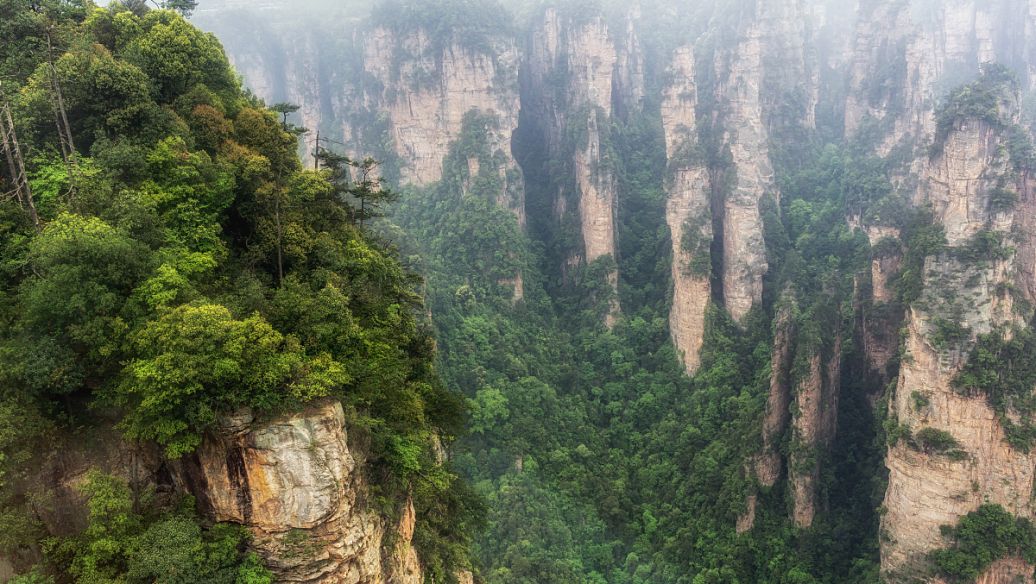 The canyon itself is a textbook example of karst and sandstone erosion, the same geological forces that shaped the dolomite spires of Italy's Dolomites or the limestone defiles of Croatia's Plitvice. Over millennia, the Li River tributary has sliced a narrow corridor between near-vertical cliffs, creating the "One-Skylight" slot, the 100-metre Tianxian Waterfall, and the vivid turquoise pools of Shenquan Lake. Lichen-draped ancient vines and dense subtropical canopy keep the air thick with negative ions—an effect locals liken to an Alpine conifer forest—and summer temperatures rarely climb above 25 °C, making the gorge a welcome refuge from Hunan's humid lowlands.
The Yuntiandu Glass Bridge, designed by Israeli engineer Haim Dotan, is the headline draw. At 536 metres long and 300 metres above the valley floor, it is a peer of the Millau Viaduct in ambition and of Grand Canyon Skywalk in concept, but built to withstand typhoon winds and seismic activity thanks to its innovative cable-stayed engineering. Walking its transparent panels offers a vertigo-inducing panorama that has made it one of the most photographed structures in modern China; for the cautious, the glass-skywalk sections of the cliff-side boardwalk deliver similar drama with fewer nerves.
Beyond the bridge, the park has reinvented itself as an adventure playground. A 260-metre bungee jump ranks among the world's highest, while a high-speed zip-line, a via ferrata bolted directly into the rock face, and even a VR hot-balloon ride let thrill-seekers tailor their day. Most experiences are sold in flexible bundles—typically "pick five from seven"—allowing families or mixed groups to mix gentle boat rides and canyon walks with one or two heart-stoppers.
The site also carries a quieter, more human story. Along the upper cliff walk, traces remain of the "Southern Red Flag Canal," a hand-cut irrigation channel built by local villagers in the 1960s—a regional echo of the better-known Red Flag Canal in Henan, and a moving reminder of pre-mechanised engineering. Nearby, the so-called "Bandit Cave" recalls the rough frontier days of old Xiangxi, when tribal militias controlled these remote hills, adding a layer of folklore familiar to anyone who has hiked the bandit trails of Sardinia or the Andalusian sierras.
Practicalities matter here. Foreign visitors are steered toward Route B, which combines the glass bridge with the full canyon in roughly three hours; Route A is gentler, and Route B1 lets you walk the gorge before finishing at the bridge. Tickets must be booked in advance under your real name, and bridge slots should be reserved one to three days ahead—aim for a pre-9 a.m. entry to beat the queues. The canyon lies about 30 minutes by road from Wulingyuan; public transport is limited, so a taxi or rented car is essential. Wear sturdy, non-slip shoes, bring water and sun protection, and avoid touts at the gate offering "discount" tickets.
The canyon itself is a textbook example of karst and sandstone erosion, the same geological forces that shaped the dolomite spires of Italy's Dolomites or the limestone defiles of Croatia's Plitvice. Over millennia, the Li River tributary has sliced a narrow corridor between near-vertical cliffs, creating the "One-Skylight" slot, the 100-metre Tianxian Waterfall, and the vivid turquoise pools of Shenquan Lake. Lichen-draped ancient vines and dense subtropical canopy keep the air thick with negative ions—an effect locals liken to an Alpine conifer forest—and summer temperatures rarely climb above 25 °C, making the gorge a welcome refuge from Hunan's humid lowlands.
The Yuntiandu Glass Bridge, designed by Israeli engineer Haim Dotan, is the headline draw. At 536 metres long and 300 metres above the valley floor, it is a peer of the Millau Viaduct in ambition and of Grand Canyon Skywalk in concept, but built to withstand typhoon winds and seismic activity thanks to its innovative cable-stayed engineering. Walking its transparent panels offers a vertigo-inducing panorama that has made it one of the most photographed structures in modern China; for the cautious, the glass-skywalk sections of the cliff-side boardwalk deliver similar drama with fewer nerves.
Beyond the bridge, the park has reinvented itself as an adventure playground. A 260-metre bungee jump ranks among the world's highest, while a high-speed zip-line, a via ferrata bolted directly into the rock face, and even a VR hot-balloon ride let thrill-seekers tailor their day. Most experiences are sold in flexible bundles—typically "pick five from seven"—allowing families or mixed groups to mix gentle boat rides and canyon walks with one or two heart-stoppers.
The site also carries a quieter, more human story. Along the upper cliff walk, traces remain of the "Southern Red Flag Canal," a hand-cut irrigation channel built by local villagers in the 1960s—a regional echo of the better-known Red Flag Canal in Henan, and a moving reminder of pre-mechanised engineering. Nearby, the so-called "Bandit Cave" recalls the rough frontier days of old Xiangxi, when tribal militias controlled these remote hills, adding a layer of folklore familiar to anyone who has hiked the bandit trails of Sardinia or the Andalusian sierras.
Practicalities matter here. Foreign visitors are steered toward Route B, which combines the glass bridge with the full canyon in roughly three hours; Route A is gentler, and Route B1 lets you walk the gorge before finishing at the bridge. Tickets must be booked in advance under your real name, and bridge slots should be reserved one to three days ahead—aim for a pre-9 a.m. entry to beat the queues. The canyon lies about 30 minutes by road from Wulingyuan; public transport is limited, so a taxi or rented car is essential. Wear sturdy, non-slip shoes, bring water and sun protection, and avoid touts at the gate offering "discount" tickets.