Tianmen Mountain National Forest Park
⭐ 4.60
Wuxiang Town, Hantai District, Hanzhong City, Shaanxi Province, China
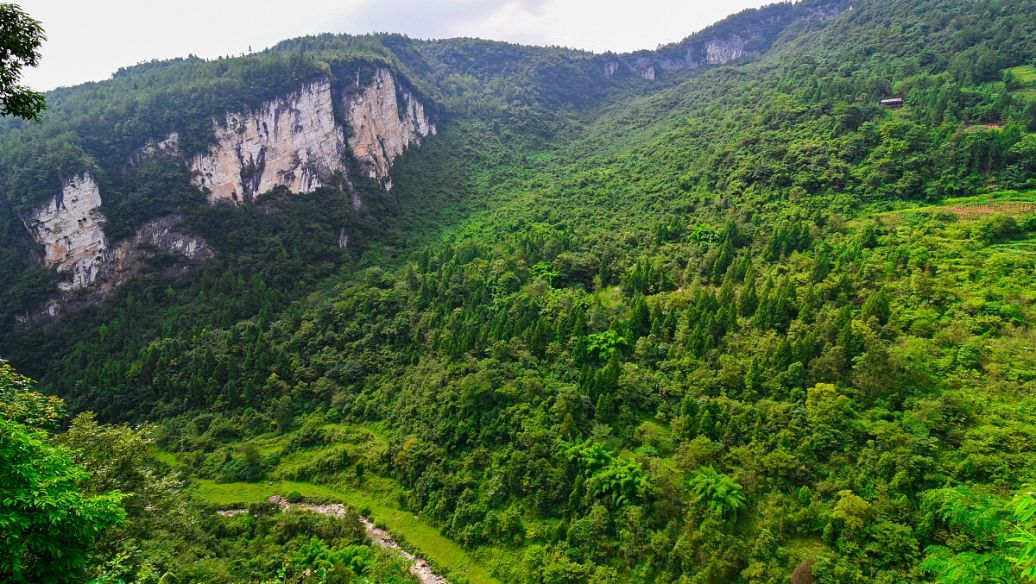 **A Mountain Shaped by Time and Legend**
Known in ancient times as Songliang Mountain, Tianmen's defining feature, the Tianmen Cave, was forged during the Three Kingdoms era—when late Rome still echoed across Europe—when a colossal cliff collapse punched a hole straight through the mountain. The name "Heaven's Gate" was officially bestowed during the Qianlong reign of the Qing Dynasty, contemporary with Mozart's Vienna and the French Enlightenment. At 1,518 meters with a relative relief of 1,300 meters, this isolated karst peak has long attracted pilgrims who climbed the 999-step Heavenly Ladder to offer prayers above the clouds.
**A Geological Marvel Among the World's Great Peaks**
Picture a peak rivaling Montenegro's Lovćen in drama or the Dolomites in vertical relief, then pierced by a 131.5-meter natural arch taller than any cathedral nave on Earth. The Tianmen Cave measures 57 meters wide and 60 meters deep, forming a portal through solid limestone karst. The Guigu Boardwalk stretches 1,600 meters along sheer cliff faces, while the West Line Glass Skywalk projects boldly over yawning chasms. From Yunmeng Peak at the summit, visitors gaze across both Zhangjiajie city and the UNESCO-listed sandstone pillars of Wulingyuan, the landscape that inspired Cameron's floating Hallelujah Mountains in Avatar.
**Two Millennia of Sacred and Cultural Heritage**
Long before modern thrill-seekers arrived, Tianmen Mountain was venerated as a mountain of immortals and Buddhist enlightenment. The Tianmen Mountain Temple, founded during the Tang Dynasty—the age of China's great Buddhist translations when Xuanzang returned from India with sacred texts—has burned incense continuously for over a thousand years, making it one of Xiangxi's most important Buddhist sites. Archaeological finds at Cherry Bay on the summit reveal human activity dating to the Warring States and Han periods, confirming habitation for more than two millennia. Since 1999, when world-champion stunt pilots flew a wingsuit through the cave, the mountain has become a global pilgrimage site for extreme sports and now hosts the annual Wingsuit World Championship.
**Practical Information for Visitors**
The park lies just 8 kilometers from downtown Zhangjiajie, easily reached by city buses 4, 5, and 6 to the cable car station, or by taxi and airport shuttle. Tickets use a real-name reservation system with timed entry; combined passes cost roughly 285 RMB and include admission, cable cars, shuttles, and the through-mountain escalator. Operating hours run 07:00–19:00, with last entry at 16:00. Foreign visitors can buy tickets on-site or online with a passport; signage is bilingual and international services are well established. Route A (city cable car up, Tianmen Cave escalator, fast cable car down) offers the most complete five-hour experience, while Route C is more weather-resistant. Dress in layers for the summit chill, wear non-slip shoes in the rainy season, rent shoe covers for the glass walkways, and always check current operating notices, as maintenance closures can affect upper cable car sections.
**Why Tianmen Mountain Deserves a Place on Your Itinerary**
Few places on Earth compress so many experiences into a single day: a Buddhist temple perched above the clouds, a natural stone arch that dwarfs any cathedral doorway, glass-bottomed walkways suspended over a kilometer drop, and the chance to watch wingsuit pilots hurtle through the sky. Whether you arrive for the geological spectacle, the cultural depth, or simply the thrill of riding one of the world's longest passenger cable cars up a near-vertical cliff, Tianmen Mountain delivers an experience that lingers long after the descent into Xiangxi's green valleys below.
**A Mountain Shaped by Time and Legend**
Known in ancient times as Songliang Mountain, Tianmen's defining feature, the Tianmen Cave, was forged during the Three Kingdoms era—when late Rome still echoed across Europe—when a colossal cliff collapse punched a hole straight through the mountain. The name "Heaven's Gate" was officially bestowed during the Qianlong reign of the Qing Dynasty, contemporary with Mozart's Vienna and the French Enlightenment. At 1,518 meters with a relative relief of 1,300 meters, this isolated karst peak has long attracted pilgrims who climbed the 999-step Heavenly Ladder to offer prayers above the clouds.
**A Geological Marvel Among the World's Great Peaks**
Picture a peak rivaling Montenegro's Lovćen in drama or the Dolomites in vertical relief, then pierced by a 131.5-meter natural arch taller than any cathedral nave on Earth. The Tianmen Cave measures 57 meters wide and 60 meters deep, forming a portal through solid limestone karst. The Guigu Boardwalk stretches 1,600 meters along sheer cliff faces, while the West Line Glass Skywalk projects boldly over yawning chasms. From Yunmeng Peak at the summit, visitors gaze across both Zhangjiajie city and the UNESCO-listed sandstone pillars of Wulingyuan, the landscape that inspired Cameron's floating Hallelujah Mountains in Avatar.
**Two Millennia of Sacred and Cultural Heritage**
Long before modern thrill-seekers arrived, Tianmen Mountain was venerated as a mountain of immortals and Buddhist enlightenment. The Tianmen Mountain Temple, founded during the Tang Dynasty—the age of China's great Buddhist translations when Xuanzang returned from India with sacred texts—has burned incense continuously for over a thousand years, making it one of Xiangxi's most important Buddhist sites. Archaeological finds at Cherry Bay on the summit reveal human activity dating to the Warring States and Han periods, confirming habitation for more than two millennia. Since 1999, when world-champion stunt pilots flew a wingsuit through the cave, the mountain has become a global pilgrimage site for extreme sports and now hosts the annual Wingsuit World Championship.
**Practical Information for Visitors**
The park lies just 8 kilometers from downtown Zhangjiajie, easily reached by city buses 4, 5, and 6 to the cable car station, or by taxi and airport shuttle. Tickets use a real-name reservation system with timed entry; combined passes cost roughly 285 RMB and include admission, cable cars, shuttles, and the through-mountain escalator. Operating hours run 07:00–19:00, with last entry at 16:00. Foreign visitors can buy tickets on-site or online with a passport; signage is bilingual and international services are well established. Route A (city cable car up, Tianmen Cave escalator, fast cable car down) offers the most complete five-hour experience, while Route C is more weather-resistant. Dress in layers for the summit chill, wear non-slip shoes in the rainy season, rent shoe covers for the glass walkways, and always check current operating notices, as maintenance closures can affect upper cable car sections.
**Why Tianmen Mountain Deserves a Place on Your Itinerary**
Few places on Earth compress so many experiences into a single day: a Buddhist temple perched above the clouds, a natural stone arch that dwarfs any cathedral doorway, glass-bottomed walkways suspended over a kilometer drop, and the chance to watch wingsuit pilots hurtle through the sky. Whether you arrive for the geological spectacle, the cultural depth, or simply the thrill of riding one of the world's longest passenger cable cars up a near-vertical cliff, Tianmen Mountain delivers an experience that lingers long after the descent into Xiangxi's green valleys below.