Zhangjiakou Night Market
⭐ 3.80
Zhangjiakou Night Market, Qiaoxi District, Zhangjiakou City, Hebei Province, China
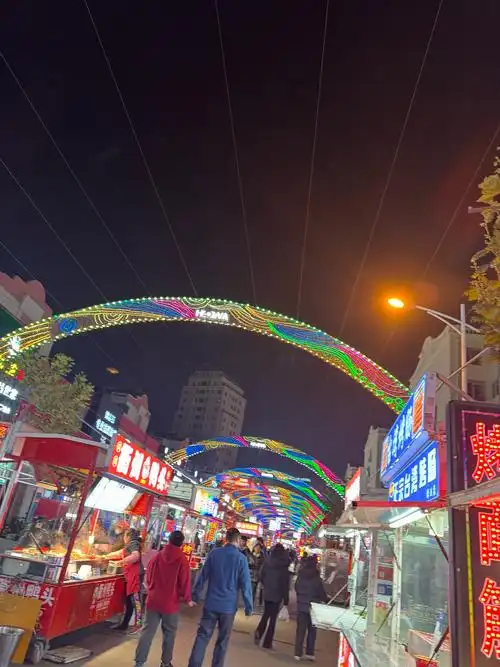 Zhangjiakou has served as a vital gateway between the agrarian Chinese heartland and the steppes of Inner Mongolia since the Han dynasty, when it functioned as a frontier garrison town along routes rivaling the ancient Silk Road's northern branches. The city's night-market culture grew organically from centuries of pastoralist-trader exchanges, and today it thrives in a fascinating dialogue between past and present. The arrival of the Beijing-Zhangjiakou Railway in 1909—engineered by the legendary Zhan Tianyou, sometimes called China's Brunel—added an industrial chapter that now anchors the Old Train Pedestrian Street's retro aesthetic. Like a blend of Berlin's RAW Tempel and Istanbul's street-food bazaars, these zones layer working-class grit with culinary adventure.
The Old Train Pedestrian Street in Qiaodong District sits beside an industrial heritage park, where refurbished green train carriages have been transformed into atmospheric diners and bars. Visitors can sample grilled squid, lamb liver, and smoky dried apricots—savory signatures of the region's cross-cultural cuisine—while posing beside rusted wheels and vintage signage. The combination of steampunk-inspired installations and nostalgic railway romance makes this stretch especially magnetic for younger travelers and photography enthusiasts seeking something distinctly off-the-beaten-path.
Di Guang Snack Street, also in Qiaodong on Desheng Lane, presents a more orderly affair: seventy wooden stalls arranged in neat rows under warm canopy lighting, offering everything from fried yogurt and spicy hot-pot noodles to classic lamb kebabs. With most meals costing between 30 and 50 yuan (roughly $4 to $7), it's an accessible feast for families and groups of friends. The tidy layout and broad menu selection reward unhurried grazing, while the welcoming atmosphere recalls the communal ease of a Spanish tapas crawl or a Belgian food-truck festival.
Wanquan Right Guard City represents the cultural crown of the night-market circuit, having earned national attention after a CCTV feature. Its well-preserved Ming and Qing dynasty fortifications—rivaling the walled charm of Carcassonne in scale and atmosphere, though more weathered—frame lanes where vendors serve intangible-heritage dishes like ma ba chang (spiced horse-intestine sausage) and mung-bean jelly. Diners here double as time travelers, absorbing frontier history between bites. It appeals most to visitors who want their supper seasoned with storytelling.
Most stalls begin opening around 5:30 PM, with full illumination and peak crowds between 7:30 and 9:30 PM; some vendors wind down after 10 PM. All clusters sit within or near the central urban area, accessible by public bus, with parking available at several sites. Visitors should aim for weekday evenings to avoid weekend bottlenecks, link their phones to Alipay or WeChat Pay in advance while keeping small cash reserves, and pack a light jacket—the northern plateau's temperature swings between sunset and late night can be surprisingly sharp. A suggested route: wander the industrial park's retro installations first, then walk to the Old Train Street for dinner, and if energy permits, detour to the 99 Creative Block for indie design vibes.
Zhangjiakou has served as a vital gateway between the agrarian Chinese heartland and the steppes of Inner Mongolia since the Han dynasty, when it functioned as a frontier garrison town along routes rivaling the ancient Silk Road's northern branches. The city's night-market culture grew organically from centuries of pastoralist-trader exchanges, and today it thrives in a fascinating dialogue between past and present. The arrival of the Beijing-Zhangjiakou Railway in 1909—engineered by the legendary Zhan Tianyou, sometimes called China's Brunel—added an industrial chapter that now anchors the Old Train Pedestrian Street's retro aesthetic. Like a blend of Berlin's RAW Tempel and Istanbul's street-food bazaars, these zones layer working-class grit with culinary adventure.
The Old Train Pedestrian Street in Qiaodong District sits beside an industrial heritage park, where refurbished green train carriages have been transformed into atmospheric diners and bars. Visitors can sample grilled squid, lamb liver, and smoky dried apricots—savory signatures of the region's cross-cultural cuisine—while posing beside rusted wheels and vintage signage. The combination of steampunk-inspired installations and nostalgic railway romance makes this stretch especially magnetic for younger travelers and photography enthusiasts seeking something distinctly off-the-beaten-path.
Di Guang Snack Street, also in Qiaodong on Desheng Lane, presents a more orderly affair: seventy wooden stalls arranged in neat rows under warm canopy lighting, offering everything from fried yogurt and spicy hot-pot noodles to classic lamb kebabs. With most meals costing between 30 and 50 yuan (roughly $4 to $7), it's an accessible feast for families and groups of friends. The tidy layout and broad menu selection reward unhurried grazing, while the welcoming atmosphere recalls the communal ease of a Spanish tapas crawl or a Belgian food-truck festival.
Wanquan Right Guard City represents the cultural crown of the night-market circuit, having earned national attention after a CCTV feature. Its well-preserved Ming and Qing dynasty fortifications—rivaling the walled charm of Carcassonne in scale and atmosphere, though more weathered—frame lanes where vendors serve intangible-heritage dishes like ma ba chang (spiced horse-intestine sausage) and mung-bean jelly. Diners here double as time travelers, absorbing frontier history between bites. It appeals most to visitors who want their supper seasoned with storytelling.
Most stalls begin opening around 5:30 PM, with full illumination and peak crowds between 7:30 and 9:30 PM; some vendors wind down after 10 PM. All clusters sit within or near the central urban area, accessible by public bus, with parking available at several sites. Visitors should aim for weekday evenings to avoid weekend bottlenecks, link their phones to Alipay or WeChat Pay in advance while keeping small cash reserves, and pack a light jacket—the northern plateau's temperature swings between sunset and late night can be surprisingly sharp. A suggested route: wander the industrial park's retro installations first, then walk to the Old Train Street for dinner, and if energy permits, detour to the 99 Creative Block for indie design vibes.