Yuan Zhongdu Ruins
⭐ 3.20
Zhangbei County, Zhangjiakou City, Hebei Province, China
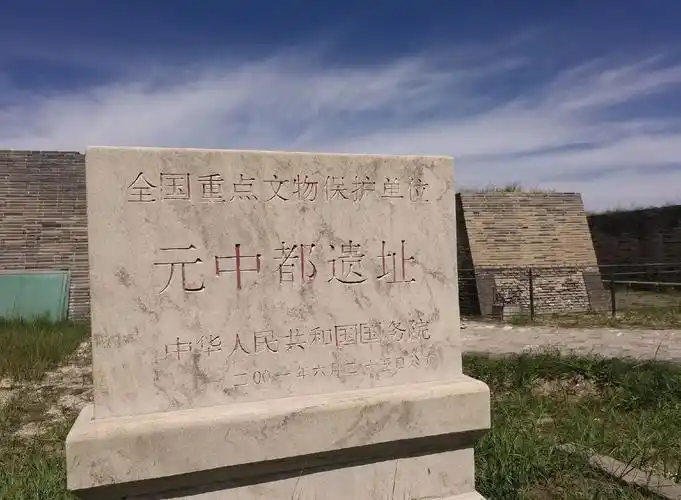 **The Rise and Fall of a Forgotten Capital**
In 1307, Emperor Wuzong (Khayish), fresh from consolidating power over his rivals, ordered a brand-new imperial city raised on the Zhangbei grasslands. Comparable in ambition to Emperor Justinian's Hagia Sophia or Frederick II's grand projects in Sicily, it was meant to be a supreme statement of Mongol authority. Yet the emperor died within months, and his successor halted construction, citing the enormous expense. What survived became the best-preserved physical evidence we have of Yuan Dynasty capital planning—essentially an imperial Pompeii for steppe-history enthusiasts.
**Three Walls and a Palace Built for an Empire**
The site follows a nested, triple-enclosure design—central palace city, imperial city, and outer city—echoing the concentric logic of Constantinople's Theodosian Walls or the layered fortifications of Carcassonne. At its heart lies a monumental T-shaped (gong-zi) hall platform, a hallmark of Yuan palatial architecture. Archaeologists have recovered splendid white-marble chi-dragon heads, glazed tile ornaments, and brick-carved elephant-eye motifs. At the corner towers, the rare "three-entrance que" (阙) pavilions reveal a striking fusion of Chinese ritual formalism with the spatial imagination of the Mongolian yurt.
**Why the Site Matters**
Whereas Dadu (modern Beijing) was rebuilt and Shangdu was largely dismantled, Yuan Zhongdu lay untouched for centuries beneath the grasslands—much like the unlooted tombs of the Valley of the Kings. For scholars of the Mongol Empire, this makes it irreplaceable: it preserves the original blueprint of Yuan imperial urbanism without later intrusions. It stands as the single most authoritative physical source for understanding how the world's largest land empire designed its seat of power.
**Planning Your Visit**
The park sits about a 40-minute drive from Zhangjiakou and 3–4 hours from Beijing; renting a car or hiring a driver is strongly recommended, as public transport is sparse. Entry is around 40 RMB, the site is open daily 09:00–17:00, and you should allow 2–3 hours. Electric shuttles and audio guides are available on-site, and comfortable walking shoes are essential—the paths run directly over earthen ramparts and foundations.
**Making the Most of the Day**
Because the ruins themselves are subtle, reading up on Mongol history beforehand transforms the experience. The best season is June to September, when the highland grasslands are cool and green. Pair your morning visit with the Yuan Zhongdu Museum just 15 km away to view excavated treasures, then continue westward toward the famed "Grassland Sky Road" (草原天路)—a dramatic ridge-top drive that lets you end the day amid sweeping steppe vistas where the empire once held sway.
**The Rise and Fall of a Forgotten Capital**
In 1307, Emperor Wuzong (Khayish), fresh from consolidating power over his rivals, ordered a brand-new imperial city raised on the Zhangbei grasslands. Comparable in ambition to Emperor Justinian's Hagia Sophia or Frederick II's grand projects in Sicily, it was meant to be a supreme statement of Mongol authority. Yet the emperor died within months, and his successor halted construction, citing the enormous expense. What survived became the best-preserved physical evidence we have of Yuan Dynasty capital planning—essentially an imperial Pompeii for steppe-history enthusiasts.
**Three Walls and a Palace Built for an Empire**
The site follows a nested, triple-enclosure design—central palace city, imperial city, and outer city—echoing the concentric logic of Constantinople's Theodosian Walls or the layered fortifications of Carcassonne. At its heart lies a monumental T-shaped (gong-zi) hall platform, a hallmark of Yuan palatial architecture. Archaeologists have recovered splendid white-marble chi-dragon heads, glazed tile ornaments, and brick-carved elephant-eye motifs. At the corner towers, the rare "three-entrance que" (阙) pavilions reveal a striking fusion of Chinese ritual formalism with the spatial imagination of the Mongolian yurt.
**Why the Site Matters**
Whereas Dadu (modern Beijing) was rebuilt and Shangdu was largely dismantled, Yuan Zhongdu lay untouched for centuries beneath the grasslands—much like the unlooted tombs of the Valley of the Kings. For scholars of the Mongol Empire, this makes it irreplaceable: it preserves the original blueprint of Yuan imperial urbanism without later intrusions. It stands as the single most authoritative physical source for understanding how the world's largest land empire designed its seat of power.
**Planning Your Visit**
The park sits about a 40-minute drive from Zhangjiakou and 3–4 hours from Beijing; renting a car or hiring a driver is strongly recommended, as public transport is sparse. Entry is around 40 RMB, the site is open daily 09:00–17:00, and you should allow 2–3 hours. Electric shuttles and audio guides are available on-site, and comfortable walking shoes are essential—the paths run directly over earthen ramparts and foundations.
**Making the Most of the Day**
Because the ruins themselves are subtle, reading up on Mongol history beforehand transforms the experience. The best season is June to September, when the highland grasslands are cool and green. Pair your morning visit with the Yuan Zhongdu Museum just 15 km away to view excavated treasures, then continue westward toward the famed "Grassland Sky Road" (草原天路)—a dramatic ridge-top drive that lets you end the day amid sweeping steppe vistas where the empire once held sway.