Huapi Ridge
⭐ 4.60
Huapi Ridge Scenic Area, Huailai County, Zhangjiakou City, Hebei Province, China
 The ridge's most extraordinary feature lies hidden in its rugged terrain: a rare concentration of six superimposed Great Wall fortifications dating from the Qin (221–206 BC), Han (206 BC–220 AD), Northern Wei, Northern Qi, and Ming dynasties, alongside the Ming-era Weiyuan Gate ruins. Few landscapes on Earth preserve such a layered record of frontier defense, comparable to how Hadrian's Wall and the Antonine Wall stack Roman and pre-Roman archaeology across northern Britain. The beacon towers and crumbling parapets whisper of frontier commanders and mounted raiders from the steppes, lending the landscape a stark poetry familiar to anyone who has walked the battlements of medieval Europe.
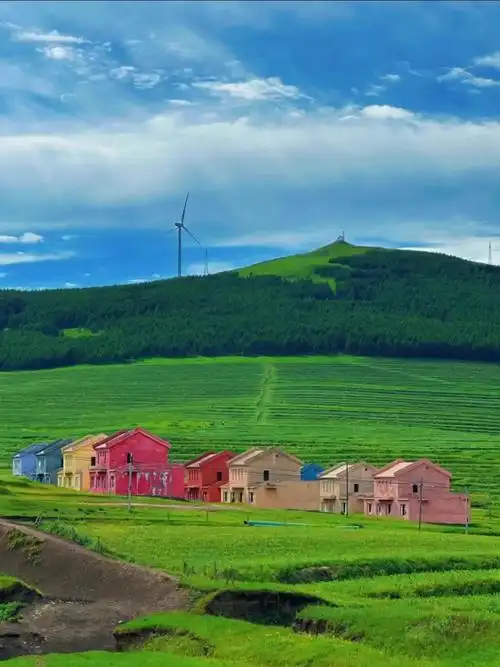
Rising from the Yanshan range's eastern foothills, Huapi Ridge sits where highlands meet valleys, creating dramatic elevation shifts that layer forests, meadows, and mountain streams into distinct ecological bands. Eighty percent of the ridge wears dense vegetation, dominated by a thousand-acre stand of secondary birch forest, an uncommon sight in northern China that recalls the silver-barked woodlands of Scandinavia or the Carpathians. From June through September, wildflowers paint the high pastures while spring-fed creeks thread through the canopy, charging the air with oxygen-rich freshness that earns it the nickname "natural oxygen bar."
The ridge marks the eastern entry to the Tianlu, or "Sky Road," one of China's most celebrated driving routes, threading westward through Inner Mongolian grasslands. For travelers familiar with European alpine passes such as the Stelvio or the Col de l'Iseran, the Sky Road offers a similar combination of hairpin bends and sweeping panoramas, though with the bonus of periodic vistas toward Mongolian steppe. Locals have long used these slopes for summer grazing, and the ridge remains a cultural threshold where Han agricultural valleys dissolve into nomadic pasturelands.
Reaching the ridge requires self-driving or a hired car: from Beijing, take the Zhang-Cheng Expressway to Provincial Road S242, then follow signs toward Chongli. Public transport does not serve the area, and the twisting mountain roads demand an experienced driver. Admission has historically hovered around 50 yuan per person, with periodic free-entry periods, but the site has occasionally closed without notice, so calling ahead is essential. Facilities are minimal, so visitors should pack their own water, food, sunscreen, and windproof jackets, as temperature swings between day and night can exceed 15 degrees.
The prime window runs from late June to early September, when wildflowers bloom and temperatures stay comfortably cool; arriving between 9 and 11 AM helps avoid weekend congestion and catches softer afternoon light ideal for photography. Winter transforms the ridge into a snow-clad wilderness with a 150-day snow season, beautiful but largely inaccessible to casual visitors. Those seeking manicured attractions or theme-park thrills should look elsewhere; Huapi Ridge rewards travelers drawn to ancient stones, mountain winds, and the quiet solitude of high-country frontiers.
The ridge's most extraordinary feature lies hidden in its rugged terrain: a rare concentration of six superimposed Great Wall fortifications dating from the Qin (221–206 BC), Han (206 BC–220 AD), Northern Wei, Northern Qi, and Ming dynasties, alongside the Ming-era Weiyuan Gate ruins. Few landscapes on Earth preserve such a layered record of frontier defense, comparable to how Hadrian's Wall and the Antonine Wall stack Roman and pre-Roman archaeology across northern Britain. The beacon towers and crumbling parapets whisper of frontier commanders and mounted raiders from the steppes, lending the landscape a stark poetry familiar to anyone who has walked the battlements of medieval Europe.
Rising from the Yanshan range's eastern foothills, Huapi Ridge sits where highlands meet valleys, creating dramatic elevation shifts that layer forests, meadows, and mountain streams into distinct ecological bands. Eighty percent of the ridge wears dense vegetation, dominated by a thousand-acre stand of secondary birch forest, an uncommon sight in northern China that recalls the silver-barked woodlands of Scandinavia or the Carpathians. From June through September, wildflowers paint the high pastures while spring-fed creeks thread through the canopy, charging the air with oxygen-rich freshness that earns it the nickname "natural oxygen bar."
The ridge marks the eastern entry to the Tianlu, or "Sky Road," one of China's most celebrated driving routes, threading westward through Inner Mongolian grasslands. For travelers familiar with European alpine passes such as the Stelvio or the Col de l'Iseran, the Sky Road offers a similar combination of hairpin bends and sweeping panoramas, though with the bonus of periodic vistas toward Mongolian steppe. Locals have long used these slopes for summer grazing, and the ridge remains a cultural threshold where Han agricultural valleys dissolve into nomadic pasturelands.
Reaching the ridge requires self-driving or a hired car: from Beijing, take the Zhang-Cheng Expressway to Provincial Road S242, then follow signs toward Chongli. Public transport does not serve the area, and the twisting mountain roads demand an experienced driver. Admission has historically hovered around 50 yuan per person, with periodic free-entry periods, but the site has occasionally closed without notice, so calling ahead is essential. Facilities are minimal, so visitors should pack their own water, food, sunscreen, and windproof jackets, as temperature swings between day and night can exceed 15 degrees.
The prime window runs from late June to early September, when wildflowers bloom and temperatures stay comfortably cool; arriving between 9 and 11 AM helps avoid weekend congestion and catches softer afternoon light ideal for photography. Winter transforms the ridge into a snow-clad wilderness with a 150-day snow season, beautiful but largely inaccessible to casual visitors. Those seeking manicured attractions or theme-park thrills should look elsewhere; Huapi Ridge rewards travelers drawn to ancient stones, mountain winds, and the quiet solitude of high-country frontiers.