Zhangjiakou Museum
⭐ 3.50
No. 16, Mingde South Street, Qiaoxi District, Zhangjiakou City, Hebei Province, China
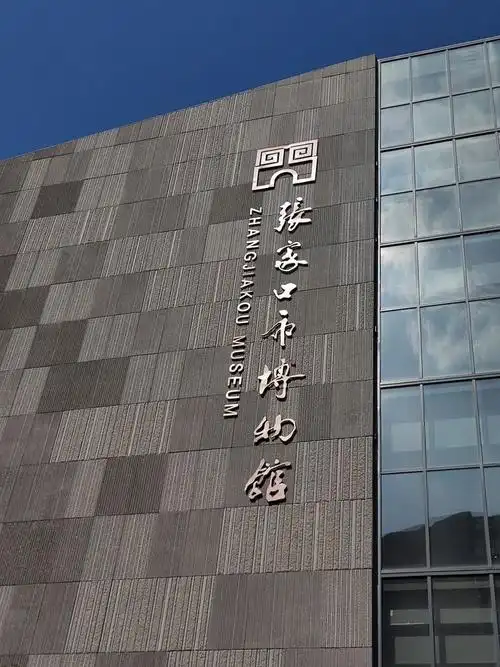 Zhangjiakou Museum opened in 2023 as an 18,800-square-meter national second-level museum in northwest Hebei Province, near the eastern passes of the Great Wall. The city's strategic position—guarding the overland approaches to Beijing for more than a millennium—earned it the historical epithet "Shield of the Capital," a role comparable to medieval European fortress cities such as Carcassonne in France or Luxembourg in the Low Countries. The museum's collections narrate this military, commercial, and cultural significance from the prehistoric era to the modern period, anchoring the visitor's understanding of how northern frontier towns shaped the wider Chinese story.
The new building draws direct inspiration from the stratified Nihewan geological formations, its bold cantilevered volumes evoking layers of sedimentary rock thrust upward over millennia. This geological metaphor links the architecture to the museum's most celebrated collection: paleolithic artifacts from the Nihewan Basin dating back nearly two million years, a UNESCO-recognized cradle of humanity often likened to Africa's Olduvai Gorge or France's Dordogne Valley. Inside, interactive light installations recreate nomadic herding scenes and caravan trading posts, transforming static displays into immersive environments reminiscent of London's Tate Modern or Stockholm's Kulturhus.
Four permanent galleries form the museum's narrative spine. The Ancient History gallery traces human evolution from Nihewan hominins through Bronze Age metallurgy. Red Zhangyuan chronicles the Chahar Anti-Japanese Allied Army's 1930s resistance, a chapter echoing European partisan movements of the same era. Shield of the Capital examines the city's defensive geography, while the standout exhibition "Ten Thousand Li Tea Road" documents the Zhangku trade route—a 19th-century commercial artery linking Beijing to Mongolia and Russia, sometimes called the Silk Road of the North and comparable to Venice's maritime trading networks.
Admission is free; reserve tickets via the museum's official WeChat account up to seven days in advance, as weekend slots fill quickly. Opening hours run Tuesday through Sunday, 9:00–17:00, with last entry at 16:30; the museum closes on Mondays except during Chinese public holidays. Foreign visitors should bring valid passports for registration at the service desk and may request English-language guides. Bus routes 5 and 10 stop at "Museum Station," and free parking welcomes drivers. From Beijing, Zhangjiakou lies 200 km southeast—roughly three hours by car or just 70 minutes via high-speed rail.
Allow two to three hours for a thorough visit, longer for guided tours. Wear comfortable shoes—the galleries unfold across multiple levels—and bring a light jacket in summer, as interiors are kept cool. Flash photography is prohibited, and large bags must be checked. For Western travelers, this museum offers something rare: a freshly curated, technologically sophisticated institution that places northern Chinese history within globally recognizable narratives—paleoanthropology, frontier commerce, revolutionary memory—without the crowds of Beijing's flagship museums. It makes an ideal half-day detour for those visiting the Great Wall at Badaling or the 2022 Winter Olympic venues.
Zhangjiakou Museum opened in 2023 as an 18,800-square-meter national second-level museum in northwest Hebei Province, near the eastern passes of the Great Wall. The city's strategic position—guarding the overland approaches to Beijing for more than a millennium—earned it the historical epithet "Shield of the Capital," a role comparable to medieval European fortress cities such as Carcassonne in France or Luxembourg in the Low Countries. The museum's collections narrate this military, commercial, and cultural significance from the prehistoric era to the modern period, anchoring the visitor's understanding of how northern frontier towns shaped the wider Chinese story.
The new building draws direct inspiration from the stratified Nihewan geological formations, its bold cantilevered volumes evoking layers of sedimentary rock thrust upward over millennia. This geological metaphor links the architecture to the museum's most celebrated collection: paleolithic artifacts from the Nihewan Basin dating back nearly two million years, a UNESCO-recognized cradle of humanity often likened to Africa's Olduvai Gorge or France's Dordogne Valley. Inside, interactive light installations recreate nomadic herding scenes and caravan trading posts, transforming static displays into immersive environments reminiscent of London's Tate Modern or Stockholm's Kulturhus.
Four permanent galleries form the museum's narrative spine. The Ancient History gallery traces human evolution from Nihewan hominins through Bronze Age metallurgy. Red Zhangyuan chronicles the Chahar Anti-Japanese Allied Army's 1930s resistance, a chapter echoing European partisan movements of the same era. Shield of the Capital examines the city's defensive geography, while the standout exhibition "Ten Thousand Li Tea Road" documents the Zhangku trade route—a 19th-century commercial artery linking Beijing to Mongolia and Russia, sometimes called the Silk Road of the North and comparable to Venice's maritime trading networks.
Admission is free; reserve tickets via the museum's official WeChat account up to seven days in advance, as weekend slots fill quickly. Opening hours run Tuesday through Sunday, 9:00–17:00, with last entry at 16:30; the museum closes on Mondays except during Chinese public holidays. Foreign visitors should bring valid passports for registration at the service desk and may request English-language guides. Bus routes 5 and 10 stop at "Museum Station," and free parking welcomes drivers. From Beijing, Zhangjiakou lies 200 km southeast—roughly three hours by car or just 70 minutes via high-speed rail.
Allow two to three hours for a thorough visit, longer for guided tours. Wear comfortable shoes—the galleries unfold across multiple levels—and bring a light jacket in summer, as interiors are kept cool. Flash photography is prohibited, and large bags must be checked. For Western travelers, this museum offers something rare: a freshly curated, technologically sophisticated institution that places northern Chinese history within globally recognizable narratives—paleoanthropology, frontier commerce, revolutionary memory—without the crowds of Beijing's flagship museums. It makes an ideal half-day detour for those visiting the Great Wall at Badaling or the 2022 Winter Olympic venues.