Qingyuan Pavilion
⭐ 3.80
Zhuolu County, Zhangjiakou City, Hebei Province, China
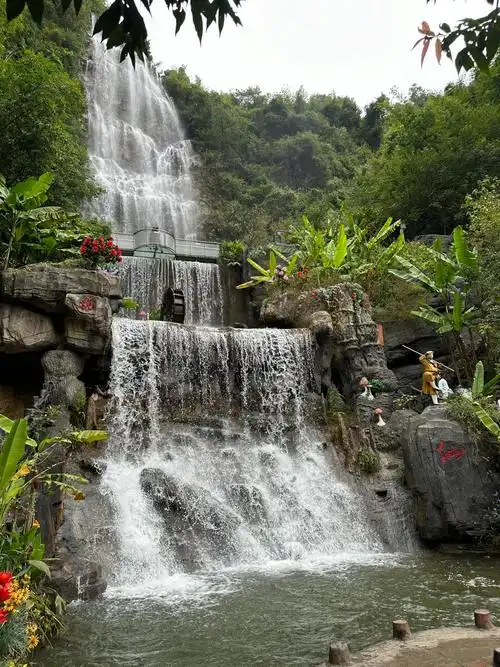 Qingyuan Tower rose in 1482, the same decade Leonardo da Vinci was sketching flying machines in Milan and Christopher Columbus was still preparing his Atlantic crossing. Erected during the Chenghua reign of the Ming Dynasty, it anchored the central axis of Xuanhua—ancient Xuanfu—one of the empire's most vital northern military garrisons, shielding the approaches to Beijing against Mongol raids. Contemporary with Europe's Wars of the Roses and the fading echoes of Constantinople, the tower served simultaneously as town clock, alarm bell, and watchtower—a multipurpose civic landmark typical of Ming frontier urbanism.
Standing 25 meters tall atop an eight-meter cross-vaulted plinth, the tower is a striking exercise in Ming official style. Twenty-four stout columns frame five bays across and three deep, while elaborate interlocking dougong brackets and painted plaques crown the unusual double-eaved polygonal hip roof—a configuration so distinctive that architectural historians compare its experimental flair to that of late Gothic European cathedrals. Beneath the structure, the original cross-arched passageway still bears iron-rutted cart tracks pressed deep into the stone by five centuries of military supply wagons.
The tower's beating heart is the Xuanfu Garrison Bell, a 2.5-meter bronze colossus weighing over five tons, recast in 1539 during the Jiajing reign. Tradition claims its voice carried more than twenty kilometers across the steppe, signaling dawn, dusk, and alarm to soldiers and farmers alike. Such thunderous bells once rang across Eurasia—from Moscow's Tsar Bell to medieval Florence—but few survive still hanging in their original towers. The pavilion's soaring elegance earned it the enduring epithet "the Second Yellow Crane Tower."
Reach Qingyuan Tower via high-speed rail from central Zhangjiakou to Xuanhua Station in roughly twenty minutes, then a short taxi or ride-hail to the intersection of Qingyuan Road and Zhonglou Street. Entry is usually free or nominal (around ten yuan), with doors typically open 8:30 a.m. to 5:30 p.m., though a midday maintenance closure between noon and 2 p.m. is common—call ahead to confirm. Visitors should refrain from touching the bell or climbing the balustrades; tripod photography should avoid obstructing other guests in the compact interior.
Plan a leisurely half-day along the town's historic spine: walk Qingyuan Tower to Zhenshuo Tower to Gongji Tower, just four hundred meters end to end, to grasp the full medieval urban plan. Morning light (9:00–11:30) or the golden late afternoon (2:30–4:30) is ideal for photography, with sunset casting dramatic silhouettes against the bell gable. After your climb, wander nearby snack alleys for warming lamb offal soup and crisp hanging-oven flatbreads—local staples for centuries. With extra time, combine the visit with Zhangjiakou's ancient fortress and Dajing Gate for a sweeping "Historic Zhangjiakou" day route.
Qingyuan Tower rose in 1482, the same decade Leonardo da Vinci was sketching flying machines in Milan and Christopher Columbus was still preparing his Atlantic crossing. Erected during the Chenghua reign of the Ming Dynasty, it anchored the central axis of Xuanhua—ancient Xuanfu—one of the empire's most vital northern military garrisons, shielding the approaches to Beijing against Mongol raids. Contemporary with Europe's Wars of the Roses and the fading echoes of Constantinople, the tower served simultaneously as town clock, alarm bell, and watchtower—a multipurpose civic landmark typical of Ming frontier urbanism.
Standing 25 meters tall atop an eight-meter cross-vaulted plinth, the tower is a striking exercise in Ming official style. Twenty-four stout columns frame five bays across and three deep, while elaborate interlocking dougong brackets and painted plaques crown the unusual double-eaved polygonal hip roof—a configuration so distinctive that architectural historians compare its experimental flair to that of late Gothic European cathedrals. Beneath the structure, the original cross-arched passageway still bears iron-rutted cart tracks pressed deep into the stone by five centuries of military supply wagons.
The tower's beating heart is the Xuanfu Garrison Bell, a 2.5-meter bronze colossus weighing over five tons, recast in 1539 during the Jiajing reign. Tradition claims its voice carried more than twenty kilometers across the steppe, signaling dawn, dusk, and alarm to soldiers and farmers alike. Such thunderous bells once rang across Eurasia—from Moscow's Tsar Bell to medieval Florence—but few survive still hanging in their original towers. The pavilion's soaring elegance earned it the enduring epithet "the Second Yellow Crane Tower."
Reach Qingyuan Tower via high-speed rail from central Zhangjiakou to Xuanhua Station in roughly twenty minutes, then a short taxi or ride-hail to the intersection of Qingyuan Road and Zhonglou Street. Entry is usually free or nominal (around ten yuan), with doors typically open 8:30 a.m. to 5:30 p.m., though a midday maintenance closure between noon and 2 p.m. is common—call ahead to confirm. Visitors should refrain from touching the bell or climbing the balustrades; tripod photography should avoid obstructing other guests in the compact interior.
Plan a leisurely half-day along the town's historic spine: walk Qingyuan Tower to Zhenshuo Tower to Gongji Tower, just four hundred meters end to end, to grasp the full medieval urban plan. Morning light (9:00–11:30) or the golden late afternoon (2:30–4:30) is ideal for photography, with sunset casting dramatic silhouettes against the bell gable. After your climb, wander nearby snack alleys for warming lamb offal soup and crisp hanging-oven flatbreads—local staples for centuries. With extra time, combine the visit with Zhangjiakou's ancient fortress and Dajing Gate for a sweeping "Historic Zhangjiakou" day route.