Kaifeng Jewish Cemetery
⭐ 3.20
Kaifeng Jewish Cemetery, Longting District, Kaifeng City, Henan Province, China
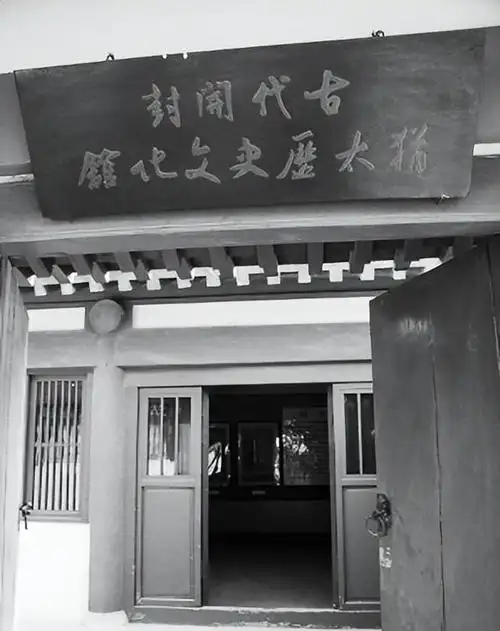 The Kaifeng Jewish community traces its origins to the late Northern Song Dynasty, around the early 12th century, when Jewish merchants from Persia and Central Asia traveled the Silk Road and settled in the imperial capital known as Dongjing. This makes Kaifeng one of the oldest continuously documented Jewish settlements outside the Middle East, comparable in historical significance to the medieval Jewish communities of Prague, Toledo, or Cochin in India. Over seven centuries, the community—known locally as the "Yicileye Jiao" (Israelite Religion)—built seven synagogues, maintained kosher practices, and gradually integrated into Chinese society through intermarriage and adoption of Confucian customs.
Three inscribed stone steles from the Ming and Qing eras (dated 1489, 1512, and 1663) form the heart of the surviving documentary record. These tablets—comparatively akin to the memorial plaques found in European ghettoes—detail community origins, religious laws, and the gradual process of cultural assimilation. The original steles are preserved in Kaifeng City Museum, where high-quality rubbings and interpretive exhibits help visitors understand this singular chapter of Sino-Jewish history. Scholars worldwide regard these inscriptions as invaluable primary sources, alongside the famous Cairo Geniza documents, for studying pre-modern Jewish life along trade routes.
Architecturally, almost nothing remains above ground. The synagogue site in Zhuxian Town's Laohudong Street exists only as a marked location with archaeological traces; the original buildings were long ago destroyed, leaving no structure comparable to the surviving wooden synagogues of Europe. References to a "Jin family cemetery" appear in older scholarship, but these are now scattered family burial plots in rural woodland, unmarked and inaccessible to visitors. The absence of physical remains means this heritage must be experienced through documents and imagination rather than monuments, much like visiting the vanished Jewish quarters of medieval European cities.
The cultural significance of Kaifeng's Jewish community lies in its extraordinary testimony to religious pluralism in imperial China. For centuries, Confucian, Buddhist, Daoist, Muslim, and Jewish traditions coexisted within the same urban landscape—a reminder that Kaifeng functioned as one of medieval Asia's most cosmopolitan centers, much as cosmopolitan Baghdad, Constantinople, or Cordoba did in their respective eras. Modern descendants of the community, numbering perhaps a few hundred, largely no longer practice Judaism, making the surviving inscriptions and traditions the primary link to this heritage. Visitors seeking to engage with Jewish history in China will find a powerful but poignant story of cultural memory and loss.
Practical planning requires realistic expectations. Begin at Kaifeng City Museum, which houses the three steles and offers dedicated exhibitions on the Yicileye Jiao community. From there, travelers can visit the Zhuxian Town synagogue site for a contemplative stop, though signage is minimal and there is no visitor center. Before traveling, contact the Kaifeng Cultural Relics Bureau or the Xiangfu District Cultural Tourism Office to confirm current access conditions. Dress modestly, respect all barriers, and avoid touching or climbing on any historical stones. Sites are protected cultural heritage, and there are no admission fees, though guided interpretation is essentially absent.
For travelers prioritizing Jewish heritage in China, Shanghai and Harbin offer far better-preserved and more visually engaging alternatives—from the restored Ohel Moshe Synagogue and Shanghai Jewish Refugees Museum to Harbin's former Jewish hospital and schools. Kaifeng's value is intellectual and emotional rather than aesthetic. It works best as a knowledge-enhancing stop combined with other Song Dynasty landmarks: the soaring Iron Pagoda, the ancient Fan Pagoda, and the ornately carved Shanshan-Gan Guild Hall. Approach it as a pilgrimage to absence itself, where the power of the story far outweighs the modest physical remains.
The Kaifeng Jewish community traces its origins to the late Northern Song Dynasty, around the early 12th century, when Jewish merchants from Persia and Central Asia traveled the Silk Road and settled in the imperial capital known as Dongjing. This makes Kaifeng one of the oldest continuously documented Jewish settlements outside the Middle East, comparable in historical significance to the medieval Jewish communities of Prague, Toledo, or Cochin in India. Over seven centuries, the community—known locally as the "Yicileye Jiao" (Israelite Religion)—built seven synagogues, maintained kosher practices, and gradually integrated into Chinese society through intermarriage and adoption of Confucian customs.
Three inscribed stone steles from the Ming and Qing eras (dated 1489, 1512, and 1663) form the heart of the surviving documentary record. These tablets—comparatively akin to the memorial plaques found in European ghettoes—detail community origins, religious laws, and the gradual process of cultural assimilation. The original steles are preserved in Kaifeng City Museum, where high-quality rubbings and interpretive exhibits help visitors understand this singular chapter of Sino-Jewish history. Scholars worldwide regard these inscriptions as invaluable primary sources, alongside the famous Cairo Geniza documents, for studying pre-modern Jewish life along trade routes.
Architecturally, almost nothing remains above ground. The synagogue site in Zhuxian Town's Laohudong Street exists only as a marked location with archaeological traces; the original buildings were long ago destroyed, leaving no structure comparable to the surviving wooden synagogues of Europe. References to a "Jin family cemetery" appear in older scholarship, but these are now scattered family burial plots in rural woodland, unmarked and inaccessible to visitors. The absence of physical remains means this heritage must be experienced through documents and imagination rather than monuments, much like visiting the vanished Jewish quarters of medieval European cities.
The cultural significance of Kaifeng's Jewish community lies in its extraordinary testimony to religious pluralism in imperial China. For centuries, Confucian, Buddhist, Daoist, Muslim, and Jewish traditions coexisted within the same urban landscape—a reminder that Kaifeng functioned as one of medieval Asia's most cosmopolitan centers, much as cosmopolitan Baghdad, Constantinople, or Cordoba did in their respective eras. Modern descendants of the community, numbering perhaps a few hundred, largely no longer practice Judaism, making the surviving inscriptions and traditions the primary link to this heritage. Visitors seeking to engage with Jewish history in China will find a powerful but poignant story of cultural memory and loss.
Practical planning requires realistic expectations. Begin at Kaifeng City Museum, which houses the three steles and offers dedicated exhibitions on the Yicileye Jiao community. From there, travelers can visit the Zhuxian Town synagogue site for a contemplative stop, though signage is minimal and there is no visitor center. Before traveling, contact the Kaifeng Cultural Relics Bureau or the Xiangfu District Cultural Tourism Office to confirm current access conditions. Dress modestly, respect all barriers, and avoid touching or climbing on any historical stones. Sites are protected cultural heritage, and there are no admission fees, though guided interpretation is essentially absent.
For travelers prioritizing Jewish heritage in China, Shanghai and Harbin offer far better-preserved and more visually engaging alternatives—from the restored Ohel Moshe Synagogue and Shanghai Jewish Refugees Museum to Harbin's former Jewish hospital and schools. Kaifeng's value is intellectual and emotional rather than aesthetic. It works best as a knowledge-enhancing stop combined with other Song Dynasty landmarks: the soaring Iron Pagoda, the ancient Fan Pagoda, and the ornately carved Shanshan-Gan Guild Hall. Approach it as a pilgrimage to absence itself, where the power of the story far outweighs the modest physical remains.