Jianshui Ancient Town
⭐ 4.60
Honghe Prefecture, Yunnan Province, China
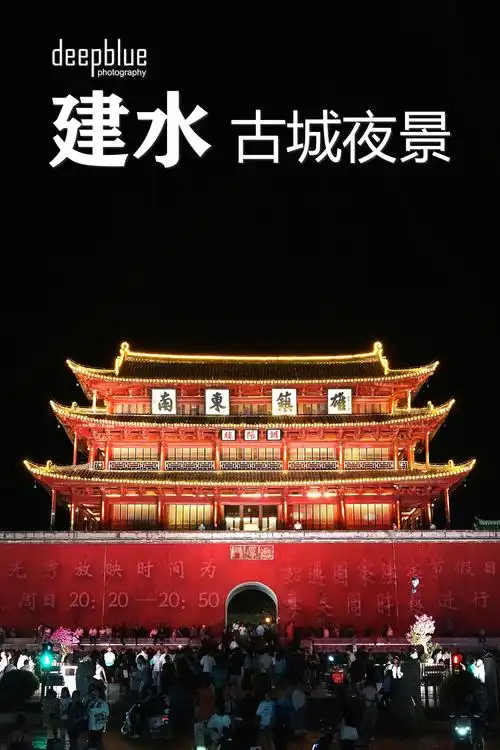 Jianshui's history stretches back to the Nanzhao kingdom era around 810 AD, when it was founded as a frontier trading post. By the Mongol Yuan dynasty, it had risen to become Lin'an Prefecture, the administrative capital of southern Yunnan, a role it retained through the Ming and Qing dynasties until the early twentieth century. This continuity of urban use for over a millennium is reminiscent of cities like Florence or Bruges, where medieval street patterns still guide daily life. The city's Ming-era Chaoyang Gate predates Beijing's Tiananmen by twenty-eight years, and in 2015 Jianshui was placed on China's tentative list for UNESCO World Heritage status, recognition long overdue for such an exceptionally intact historical ensemble.
The architectural treasures within Jianshui's old walls form what locals call an open-air museum of imperial-era craftsmanship. The towering Chaoyang Gate, with its upturned eaves and intricate dougong bracket system, rivals provincial gate towers found in medieval European capitals. Just outside the city stands the spectacular Shuanglong Bridge, a Qing-era seventeen-arch stone span often compared to a miniature Ponte Vecchio stretching across rice fields. Within the lanes, the Zhu Family Garden, a late-Qing merchant mansion with pavilions, artificial hills, and lotus ponds, has earned the moniker "Grand View Garden of Southern Yunnan," a nod to the literary classic Dream of the Red Chamber. Equally impressive, the Confucian Temple is the second-largest in all of China after the revered one in Qufu.
Beyond its monuments, Jianshui pulses with traditions that have survived the upheavals of modern China. The restored Examination Hall offers visitors a vivid recreation of the imperial civil service examination system, an institution that, like European classical academies, shaped bureaucratic elites for centuries. In the pottery quarter, master craftspeople continue producing Jianshui purple pottery, a national intangible cultural heritage, and visitors can try their hand at the potter's wheel. On weekends, the Confucius Temple hosts performances of ancient court music, evoking the Confucian ceremonial culture that defined Chinese literary life for two millennia, much as a Baroque concert might recall the religious heritage of Salzburg.
Reaching Jianshui is straightforward: a high-speed train from Kunming takes roughly two hours, putting this remote-feeling town within easy reach of the provincial capital. The old town's cobbled lanes, Chaoyang Gate, Shuanglong Bridge, Daban Well, and surrounding tofu workshops are open free of charge around the clock. Ticketed sites include the Confucian Temple (around ¥40), Zhu Family Garden (around ¥35), and the Examination Hall. The narrow-gauge train, which runs limited daily departures to the village of Tuanshan, must be booked in advance. Two to three days is ideal: explore the core lanes and snack on grilled tofu on day one, visit the temple and ride the train on day two, then venture to Tuanshan or try a pottery workshop on day three.
Spring and autumn, from March to May and September to November, bring the most comfortable weather for wandering the stone-paved streets. Flat, non-slip shoes are essential on the often uneven flagstones, and an electric scooter rental is the most convenient way to cover the wider old town. Local specialties worth seeking out include steam-pot chicken, a Yunnanese delicacy cooked in a unique clay vessel, and yansuo pastries, flaky sweets said to have once pleased imperial palates. For travelers weary of China's most trodden tourist circuits, Jianshui offers something rare: an authentic, unhurried slice of provincial life framed by extraordinary architecture and living tradition.
Jianshui's history stretches back to the Nanzhao kingdom era around 810 AD, when it was founded as a frontier trading post. By the Mongol Yuan dynasty, it had risen to become Lin'an Prefecture, the administrative capital of southern Yunnan, a role it retained through the Ming and Qing dynasties until the early twentieth century. This continuity of urban use for over a millennium is reminiscent of cities like Florence or Bruges, where medieval street patterns still guide daily life. The city's Ming-era Chaoyang Gate predates Beijing's Tiananmen by twenty-eight years, and in 2015 Jianshui was placed on China's tentative list for UNESCO World Heritage status, recognition long overdue for such an exceptionally intact historical ensemble.
The architectural treasures within Jianshui's old walls form what locals call an open-air museum of imperial-era craftsmanship. The towering Chaoyang Gate, with its upturned eaves and intricate dougong bracket system, rivals provincial gate towers found in medieval European capitals. Just outside the city stands the spectacular Shuanglong Bridge, a Qing-era seventeen-arch stone span often compared to a miniature Ponte Vecchio stretching across rice fields. Within the lanes, the Zhu Family Garden, a late-Qing merchant mansion with pavilions, artificial hills, and lotus ponds, has earned the moniker "Grand View Garden of Southern Yunnan," a nod to the literary classic Dream of the Red Chamber. Equally impressive, the Confucian Temple is the second-largest in all of China after the revered one in Qufu.
Beyond its monuments, Jianshui pulses with traditions that have survived the upheavals of modern China. The restored Examination Hall offers visitors a vivid recreation of the imperial civil service examination system, an institution that, like European classical academies, shaped bureaucratic elites for centuries. In the pottery quarter, master craftspeople continue producing Jianshui purple pottery, a national intangible cultural heritage, and visitors can try their hand at the potter's wheel. On weekends, the Confucius Temple hosts performances of ancient court music, evoking the Confucian ceremonial culture that defined Chinese literary life for two millennia, much as a Baroque concert might recall the religious heritage of Salzburg.
Reaching Jianshui is straightforward: a high-speed train from Kunming takes roughly two hours, putting this remote-feeling town within easy reach of the provincial capital. The old town's cobbled lanes, Chaoyang Gate, Shuanglong Bridge, Daban Well, and surrounding tofu workshops are open free of charge around the clock. Ticketed sites include the Confucian Temple (around ¥40), Zhu Family Garden (around ¥35), and the Examination Hall. The narrow-gauge train, which runs limited daily departures to the village of Tuanshan, must be booked in advance. Two to three days is ideal: explore the core lanes and snack on grilled tofu on day one, visit the temple and ride the train on day two, then venture to Tuanshan or try a pottery workshop on day three.
Spring and autumn, from March to May and September to November, bring the most comfortable weather for wandering the stone-paved streets. Flat, non-slip shoes are essential on the often uneven flagstones, and an electric scooter rental is the most convenient way to cover the wider old town. Local specialties worth seeking out include steam-pot chicken, a Yunnanese delicacy cooked in a unique clay vessel, and yansuo pastries, flaky sweets said to have once pleased imperial palates. For travelers weary of China's most trodden tourist circuits, Jianshui offers something rare: an authentic, unhurried slice of provincial life framed by extraordinary architecture and living tradition.