Lujiang River
⭐ 3.20
Lujiang River Scenic Area, Jianshui County, Honghe Hani and Yi Autonomous Prefecture, Yunnan Province, China
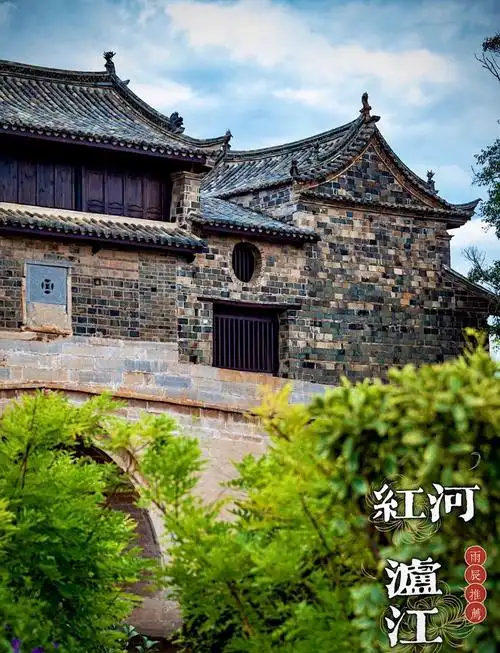 The Lujiang River has served as a vital waterway in southern Yunnan's Honghe Prefecture for centuries, its waters eventually feeding the Pearl River system that reaches the Pearl River Delta—one of the world's most historic maritime trading corridors since the Tang Dynasty. The river's modern character was shaped in 1983, when the Kaiyuan stretch underwent an ambitious urban renewal project that converted a flood-prone channel into a landscaped public park. Comparable to Haussmann's 19th-century embankment projects along the Seine in Paris or the riverside regenerations of London's Thames, this transformation reflects China's late-20th-century pivot toward civic green spaces in industrial border towns.
Lujiang Park juxtaposes two design vocabularies with striking confidence. Classical Chinese pavilions—echoing the elegant garden follies found at Suzhou's UNESCO-listed Humble Administrator's Garden—rise beside modernist sculptures celebrating the region's paleoanthropological heritage, including a striking monument honoring Ramapithecus, the prehistoric primate whose fossils were discovered nearby. This visual dialogue mirrors the east-meets-west aesthetic of Hong Kong's Victoria Peak or Singapore's Gardens by the Bay. A wooden boardwalk winds along the riverbank, with strategically placed viewing platforms offering panoramic vantage points of the surrounding karst mountains, whose jagged silhouettes recall the dolomitic landscapes of northern Italy or the limestone towers of Halong Bay.
The park carries deep cultural resonance as the home of the Honghe Go (Weiqi) Academy, earning Kaiyuan the distinguished title of "Hometown of Go"—a strategy game as revered in China as chess is in Western traditions, with roots stretching back over four millennia. Locals gather at dawn and dusk to play, fish, or stroll along the riverbank, embodying a slower pace of life increasingly rare in modern China. The seasonal blooms of jacaranda and flame trees lend a Mediterranean character to the experience, painting the riverbanks in vibrant purples and fiery oranges from spring through autumn.
Lujiang Park is open daily and free of charge to all visitors, with no reservation required—though a nominal fee of approximately 20 yuan applies to certain viewing platforms or temporary exhibitions. The East Gate and South Gate serve as the main entrances, with park facilities operating from 7:00 AM to 7:00 PM. Spring and autumn mornings or late afternoons are ideal, when temperatures are mild, mosquitoes minimal, and golden light bathes the karst peaks beyond the river. Plan for one to two hours to fully absorb the atmosphere.
For travelers seeking an off-the-beaten-path slice of authentic Chinese life, Lujiang Park delivers an experience far removed from the crowded tourist circuits of Lijiang or Dali. Extend your visit to nearby Hero Dam, Shuang'an Pavilion, or the Phoenix Ecological Park, or journey downstream to Jianshui to admire the Qing Dynasty-era Shuanglong Bridge—a 17-arch stone masterpiece often compared to Florence's Ponte Vecchio or Prague's Charles Bridge. Within the park itself, refreshment options are limited, so bring water and snacks; venture into Kaiyuan's old town to sample Yunnan specialties like Crossing-the-Bridge Noodles or tangy sour soup fish.
The Lujiang River has served as a vital waterway in southern Yunnan's Honghe Prefecture for centuries, its waters eventually feeding the Pearl River system that reaches the Pearl River Delta—one of the world's most historic maritime trading corridors since the Tang Dynasty. The river's modern character was shaped in 1983, when the Kaiyuan stretch underwent an ambitious urban renewal project that converted a flood-prone channel into a landscaped public park. Comparable to Haussmann's 19th-century embankment projects along the Seine in Paris or the riverside regenerations of London's Thames, this transformation reflects China's late-20th-century pivot toward civic green spaces in industrial border towns.
Lujiang Park juxtaposes two design vocabularies with striking confidence. Classical Chinese pavilions—echoing the elegant garden follies found at Suzhou's UNESCO-listed Humble Administrator's Garden—rise beside modernist sculptures celebrating the region's paleoanthropological heritage, including a striking monument honoring Ramapithecus, the prehistoric primate whose fossils were discovered nearby. This visual dialogue mirrors the east-meets-west aesthetic of Hong Kong's Victoria Peak or Singapore's Gardens by the Bay. A wooden boardwalk winds along the riverbank, with strategically placed viewing platforms offering panoramic vantage points of the surrounding karst mountains, whose jagged silhouettes recall the dolomitic landscapes of northern Italy or the limestone towers of Halong Bay.
The park carries deep cultural resonance as the home of the Honghe Go (Weiqi) Academy, earning Kaiyuan the distinguished title of "Hometown of Go"—a strategy game as revered in China as chess is in Western traditions, with roots stretching back over four millennia. Locals gather at dawn and dusk to play, fish, or stroll along the riverbank, embodying a slower pace of life increasingly rare in modern China. The seasonal blooms of jacaranda and flame trees lend a Mediterranean character to the experience, painting the riverbanks in vibrant purples and fiery oranges from spring through autumn.
Lujiang Park is open daily and free of charge to all visitors, with no reservation required—though a nominal fee of approximately 20 yuan applies to certain viewing platforms or temporary exhibitions. The East Gate and South Gate serve as the main entrances, with park facilities operating from 7:00 AM to 7:00 PM. Spring and autumn mornings or late afternoons are ideal, when temperatures are mild, mosquitoes minimal, and golden light bathes the karst peaks beyond the river. Plan for one to two hours to fully absorb the atmosphere.
For travelers seeking an off-the-beaten-path slice of authentic Chinese life, Lujiang Park delivers an experience far removed from the crowded tourist circuits of Lijiang or Dali. Extend your visit to nearby Hero Dam, Shuang'an Pavilion, or the Phoenix Ecological Park, or journey downstream to Jianshui to admire the Qing Dynasty-era Shuanglong Bridge—a 17-arch stone masterpiece often compared to Florence's Ponte Vecchio or Prague's Charles Bridge. Within the park itself, refreshment options are limited, so bring water and snacks; venture into Kaiyuan's old town to sample Yunnan specialties like Crossing-the-Bridge Noodles or tangy sour soup fish.