Jianshui Confucius Temple
⭐ 4.60
No. 1, Wenmiao Road, Lin'an Town, Jianshui County, Honghe Prefecture, Yunnan Province, China
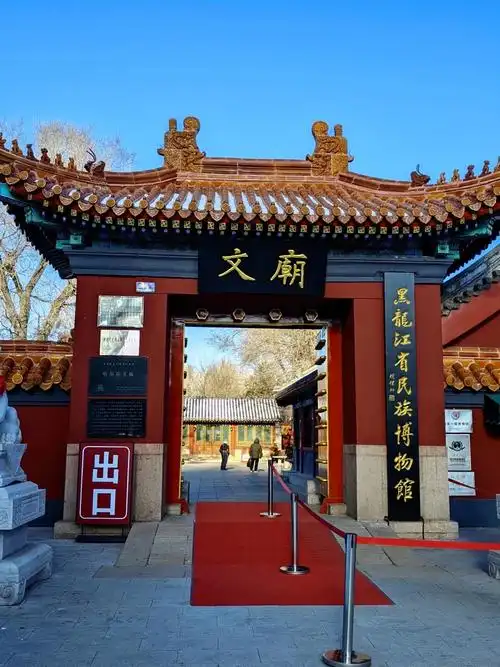 Founded during the Ming Hongwu reign in the late 14th century, the Jianshui Confucian Temple evolved over seven centuries through successive Ming and Qing expansions. Its remarkably preserved central ritual axis—from the Pan Pool to the Chongsheng Shrine—stands among the most complete surviving witnesses to how Confucian orthodoxy spread from China's Central Plains into the southwestern frontier. Designated a National Key Cultural Relics Protection Site in 2001, the temple rivals Europe's great medieval cathedrals as a monument to faith, learning, and civic identity. Like Westminster Abbey or Notre-Dame, it served not merely as a sanctuary but as the ceremonial heart of an entire region's intellectual life.
Sprawling across 114 mu (roughly 19 acres) with a north-south depth of 625 meters, the temple unfolds across six sequential courtyards housing 31 original Ming and Qing structures. Visitors pass through the Lingxing Gate, the Pan Pool, the Dacheng Gate, and the imposing Dacheng Hall before reaching the Chongsheng Shrine, flanked by symmetrically arranged stele corridors and side halls. While modeled on the canonical layout of Confucius's birthplace temple in Qufu, the architecture incorporates distinctly southern frontier flourishes. The result evokes the grandeur of European baroque palace complexes such as Versailles, yet retains the contemplative serenity of a sacred space.
Several extraordinary details reward careful observation. The temple's Pan Pool covers 45 mu—the largest oval "Sea of Learning" among all Confucian temples in China. The Lingxing Gate is uniquely decorated with inlaid fragments of Yuan dynasty blue-and-white porcelain, an inventive touch unseen elsewhere. Inside the Dacheng Hall, 22 monolithic stone columns feature breathtaking openwork carvings of dragons embracing the pillars, a virtuoso technique of southern stonemasonry. Eight Qing imperial calligraphy plaques, awarded by emperors themselves, hang within the hall. The transom screens bear the opulent "Six Dragons Saluting the Sage" motif, exemplifying the lavish craftsmanship of the period.
As both a Confucian ritual space and a former examination hall, the Jianshui temple was the spiritual center where generations of southern Yunnan scholars came to pay homage to Confucius, study ritual, and prepare for imperial examinations. It embodies the living memory of Jianshui's reputation as a "City of Literature and Civilization." Today, the temple continues to pulse with cultural life: on weekends and holidays, visitors can witness authentic Confucius ceremonies, traditional "First Writing" rituals for children, and performances of ancient court music. This continuity offers a rare window into how multi-ethnic frontier communities have absorbed and adapted Central Plains traditions.
The temple is open daily from 8:00 AM to 6:00 PM, with admission around 60 RMB. Combination tickets with the nearby Zhu Family Garden offer good value. Located at 268 Lin'an Road in Jianshui County, the site fits perfectly into a one-day itinerary that includes the Chaoyang Tower and the historic narrow-gauge "Miniature Train" ride. Allow two to three hours for a relaxed visit. The two smaller Confucian temples in Luxi and Shiping are quieter alternatives, ideal for travelers seeking uncrowded encounters with classical architecture.
For the best experience, arrive in early morning or late afternoon when soft light bathes the stone courtyards and crowds thin out—a tactic familiar to visitors of Rome's ancient sites or Kyoto's temples. Check the official website or on-site announcements for upcoming ritual performances or concerts. Slow your pace to absorb the stone carvings and imperial inscriptions; hiring a guide or using an audio tour unlocks deeper historical layers. Bring water, wear sturdy non-slip shoes for the flagstone paths, and prepare for one of China's most beautifully preserved cultural treasures.
Founded during the Ming Hongwu reign in the late 14th century, the Jianshui Confucian Temple evolved over seven centuries through successive Ming and Qing expansions. Its remarkably preserved central ritual axis—from the Pan Pool to the Chongsheng Shrine—stands among the most complete surviving witnesses to how Confucian orthodoxy spread from China's Central Plains into the southwestern frontier. Designated a National Key Cultural Relics Protection Site in 2001, the temple rivals Europe's great medieval cathedrals as a monument to faith, learning, and civic identity. Like Westminster Abbey or Notre-Dame, it served not merely as a sanctuary but as the ceremonial heart of an entire region's intellectual life.
Sprawling across 114 mu (roughly 19 acres) with a north-south depth of 625 meters, the temple unfolds across six sequential courtyards housing 31 original Ming and Qing structures. Visitors pass through the Lingxing Gate, the Pan Pool, the Dacheng Gate, and the imposing Dacheng Hall before reaching the Chongsheng Shrine, flanked by symmetrically arranged stele corridors and side halls. While modeled on the canonical layout of Confucius's birthplace temple in Qufu, the architecture incorporates distinctly southern frontier flourishes. The result evokes the grandeur of European baroque palace complexes such as Versailles, yet retains the contemplative serenity of a sacred space.
Several extraordinary details reward careful observation. The temple's Pan Pool covers 45 mu—the largest oval "Sea of Learning" among all Confucian temples in China. The Lingxing Gate is uniquely decorated with inlaid fragments of Yuan dynasty blue-and-white porcelain, an inventive touch unseen elsewhere. Inside the Dacheng Hall, 22 monolithic stone columns feature breathtaking openwork carvings of dragons embracing the pillars, a virtuoso technique of southern stonemasonry. Eight Qing imperial calligraphy plaques, awarded by emperors themselves, hang within the hall. The transom screens bear the opulent "Six Dragons Saluting the Sage" motif, exemplifying the lavish craftsmanship of the period.
As both a Confucian ritual space and a former examination hall, the Jianshui temple was the spiritual center where generations of southern Yunnan scholars came to pay homage to Confucius, study ritual, and prepare for imperial examinations. It embodies the living memory of Jianshui's reputation as a "City of Literature and Civilization." Today, the temple continues to pulse with cultural life: on weekends and holidays, visitors can witness authentic Confucius ceremonies, traditional "First Writing" rituals for children, and performances of ancient court music. This continuity offers a rare window into how multi-ethnic frontier communities have absorbed and adapted Central Plains traditions.
The temple is open daily from 8:00 AM to 6:00 PM, with admission around 60 RMB. Combination tickets with the nearby Zhu Family Garden offer good value. Located at 268 Lin'an Road in Jianshui County, the site fits perfectly into a one-day itinerary that includes the Chaoyang Tower and the historic narrow-gauge "Miniature Train" ride. Allow two to three hours for a relaxed visit. The two smaller Confucian temples in Luxi and Shiping are quieter alternatives, ideal for travelers seeking uncrowded encounters with classical architecture.
For the best experience, arrive in early morning or late afternoon when soft light bathes the stone courtyards and crowds thin out—a tactic familiar to visitors of Rome's ancient sites or Kyoto's temples. Check the official website or on-site announcements for upcoming ritual performances or concerts. Slow your pace to absorb the stone carvings and imperial inscriptions; hiring a guide or using an audio tour unlocks deeper historical layers. Bring water, wear sturdy non-slip shoes for the flagstone paths, and prepare for one of China's most beautifully preserved cultural treasures.