China-North Korea Border Road
⭐ 3.50
China-North Korea Border Road, Tumen City, Yanbian Korean Autonomous Prefecture, Jilin Province, China
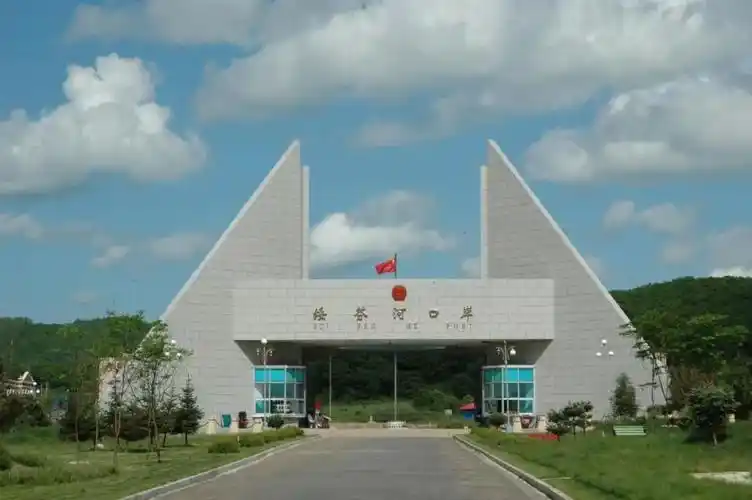 Stretching roughly 1,240 kilometres through Yanbian, the border highway forms the Jilin stretch of G331, China's ambitious "Open Border Tourism Corridor"—a modern counterpart to America's Route 66, yet threading through one of the most politically charged landscapes on earth. Following the sinuous course of the Yalu and Tumen Rivers, the route has served as a lifeline for cross-border trade and cultural exchange for over a century, making it as historically resonant as Berlin's Cold War corridors or the Iron Curtain routes through former Eastern Europe.
At Tumen Port, visitors step onto a 100-year-old gateway uniquely fitted with both road and rail crossings into North Korea—the only such dual facility along the entire Sino–North Korean frontier. Climbing the observation platform here rewards travellers with sweeping views across the river to Nanyang County in North Korea, while the weathered Nos. 86 and 87 boundary stones serve as poignant reminders of how rivers have divided, and occasionally united, empires since the era of the Qing dynasty and Russian imperial expansion.
The route's most iconic stop is Fangchuan, where the soaring Longhu Pavilion rises at the tri-border junction of China, Russia, and North Korea. This "One Glance, Three Nations" vantage point has drawn comparisons to the legendary Three-Border Points of Europe's Rhine—though here the spectacle is amplified by the stark ideological contrast between the brightly lit Chinese town, the silent Russian outpost, and the quiet North Korean countryside beyond. Photographs capture a surreal tableau that feels plucked from a Graham Greene novel.
Yanbian is China's largest Korean autonomous prefecture, and the highway functions as a living cultural corridor where Korean traditions flourish far from the Han majority heartland. Travellers will encounter traditional folk villages where elders still wear hanbok-inspired attire, sample regional staples such as tteok (chewy rice cakes), naengmyeon (cold buckwheat noodles), and kimchi, and perhaps join a folk-dance performance—a cultural immersion as vivid as exploring Brittany in France or Bavaria in Germany.
For Western visitors, Yanji serves as the ideal launchpad for a 3–5 day self-drive adventure. Bring valid passports for all border viewpoints; some restricted zones additionally require a border-area permit obtainable in advance from local authorities. The optimal season runs May through October, when summer's emerald forests give way to autumn's russet and gold tapestry. The road is well-maintained, with scenic lookouts, visitor centres, and reliable lodging, fuel, and dining at regular intervals—making this frontier journey as comfortable as it is unforgettable.
Self-driving remains the definitive way to experience the highway. Begin in Yanji, detour first to Tumen Port to photograph its twin national gates, then press eastward along G331 toward Hunchun. Allow ample time at Fangchuan's Longhu Pavilion—the climb rewards you with what many travellers call Asia's most extraordinary geopolitical panorama. Resist the urge to rush: pause at the riverside lookouts where stillness hangs over the border waters, and linger at dusk, when the setting sun paints the gates in amber—a closing image worthy of any grand overland journey.
Stretching roughly 1,240 kilometres through Yanbian, the border highway forms the Jilin stretch of G331, China's ambitious "Open Border Tourism Corridor"—a modern counterpart to America's Route 66, yet threading through one of the most politically charged landscapes on earth. Following the sinuous course of the Yalu and Tumen Rivers, the route has served as a lifeline for cross-border trade and cultural exchange for over a century, making it as historically resonant as Berlin's Cold War corridors or the Iron Curtain routes through former Eastern Europe.
At Tumen Port, visitors step onto a 100-year-old gateway uniquely fitted with both road and rail crossings into North Korea—the only such dual facility along the entire Sino–North Korean frontier. Climbing the observation platform here rewards travellers with sweeping views across the river to Nanyang County in North Korea, while the weathered Nos. 86 and 87 boundary stones serve as poignant reminders of how rivers have divided, and occasionally united, empires since the era of the Qing dynasty and Russian imperial expansion.
The route's most iconic stop is Fangchuan, where the soaring Longhu Pavilion rises at the tri-border junction of China, Russia, and North Korea. This "One Glance, Three Nations" vantage point has drawn comparisons to the legendary Three-Border Points of Europe's Rhine—though here the spectacle is amplified by the stark ideological contrast between the brightly lit Chinese town, the silent Russian outpost, and the quiet North Korean countryside beyond. Photographs capture a surreal tableau that feels plucked from a Graham Greene novel.
Yanbian is China's largest Korean autonomous prefecture, and the highway functions as a living cultural corridor where Korean traditions flourish far from the Han majority heartland. Travellers will encounter traditional folk villages where elders still wear hanbok-inspired attire, sample regional staples such as tteok (chewy rice cakes), naengmyeon (cold buckwheat noodles), and kimchi, and perhaps join a folk-dance performance—a cultural immersion as vivid as exploring Brittany in France or Bavaria in Germany.
For Western visitors, Yanji serves as the ideal launchpad for a 3–5 day self-drive adventure. Bring valid passports for all border viewpoints; some restricted zones additionally require a border-area permit obtainable in advance from local authorities. The optimal season runs May through October, when summer's emerald forests give way to autumn's russet and gold tapestry. The road is well-maintained, with scenic lookouts, visitor centres, and reliable lodging, fuel, and dining at regular intervals—making this frontier journey as comfortable as it is unforgettable.
Self-driving remains the definitive way to experience the highway. Begin in Yanji, detour first to Tumen Port to photograph its twin national gates, then press eastward along G331 toward Hunchun. Allow ample time at Fangchuan's Longhu Pavilion—the climb rewards you with what many travellers call Asia's most extraordinary geopolitical panorama. Resist the urge to rush: pause at the riverside lookouts where stillness hangs over the border waters, and linger at dusk, when the setting sun paints the gates in amber—a closing image worthy of any grand overland journey.