Chaoyangchuan Wetland
⭐ 3.80
Chaoyangchuan Town, Yanji City, Yanbian Korean Autonomous Prefecture, Jilin Province, China
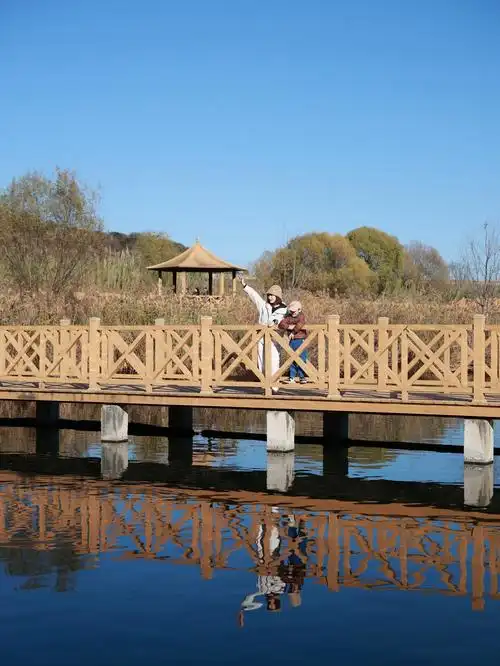 The name Chaoyangchuan, meaning "sun-facing valley," derives from Manchu, the language of the imperial Qing dynasty that ruled China from 1644 to 1911. Long before Qing roads were cut through the area, the trough's natural spring water had drawn farmers and fishermen, and it became a vital transit corridor linking Yanji to the border outposts of Hunchun and Helong. The wetlands irrigated surrounding rice paddies and stocked village fish traps, making them the agricultural heartbeat of the valley for generations, much like the marsh-driven farmsteads of Italy's Po Plain in earlier centuries.
Fed by mountain runoff and tributary streams that eventually reach the Tumen River—the waterway famously tracing the China–North Korea border—this mosaic of reed marsh, wet meadow, and seasonal pools recalls in miniature the great wetland complexes of Europe's Camargue in southern France or the Norfolk Broads in eastern England. Spring snowmelt floods the lowlands, summer brings drifts of wildflowers, autumn sends golden reed plumes rippling across the water, and winter reduces the whole scene to austere northern stillness. Herons, wild ducks, and migratory waders use the area as a seasonal staging ground.
Ethnic Korean villagers have farmed the wetland's edges for centuries, planting rice paddies right up against the marsh and gathering wild greens from the margins in a centuries-old "paddy-wetland-village" symbiosis. This reciprocity between people and water echoes the ancient rice-fish traditions once common across pre-industrial Europe and Southeast Asia, where communities both shaped and were shaped by their local ecosystems. A walk through the wetland offers a rare window into the rural Korean-Chinese way of life, very different from the neon-lit streets of downtown Yanji just half an hour to the north.
There is no formal park entrance, no ticket, no visitor center, no designated parking, and no boardwalks or interpretive signage of any kind. Travelers must drive themselves or hire a car from Yanji, allowing roughly thirty minutes for the journey. Download offline maps before departure, since mobile coverage can be patchy on the rural approach. Roads may be unsurfaced or muddy after rain, so an SUV or high-clearance vehicle is advisable, and visitors should arrive in daylight as there is no lighting.
For travelers who have already ticked off China's headline sites—the Great Wall, the Forbidden City, the Terracotta Army—Chaoyangchuan offers something rarer: an undeveloped natural space where the older rhythms of the borderland still set the day's pace. The landscape is most rewarding in spring and autumn, when migrating birds pass through and the reeds turn gold. Pack water, food, rain gear, and patience. Mosquitoes can be fierce in summer, and farm tractors work the surrounding fields. Show respect for the villagers—then settle in to watch herons lift off over the water at dusk.
The name Chaoyangchuan, meaning "sun-facing valley," derives from Manchu, the language of the imperial Qing dynasty that ruled China from 1644 to 1911. Long before Qing roads were cut through the area, the trough's natural spring water had drawn farmers and fishermen, and it became a vital transit corridor linking Yanji to the border outposts of Hunchun and Helong. The wetlands irrigated surrounding rice paddies and stocked village fish traps, making them the agricultural heartbeat of the valley for generations, much like the marsh-driven farmsteads of Italy's Po Plain in earlier centuries.
Fed by mountain runoff and tributary streams that eventually reach the Tumen River—the waterway famously tracing the China–North Korea border—this mosaic of reed marsh, wet meadow, and seasonal pools recalls in miniature the great wetland complexes of Europe's Camargue in southern France or the Norfolk Broads in eastern England. Spring snowmelt floods the lowlands, summer brings drifts of wildflowers, autumn sends golden reed plumes rippling across the water, and winter reduces the whole scene to austere northern stillness. Herons, wild ducks, and migratory waders use the area as a seasonal staging ground.
Ethnic Korean villagers have farmed the wetland's edges for centuries, planting rice paddies right up against the marsh and gathering wild greens from the margins in a centuries-old "paddy-wetland-village" symbiosis. This reciprocity between people and water echoes the ancient rice-fish traditions once common across pre-industrial Europe and Southeast Asia, where communities both shaped and were shaped by their local ecosystems. A walk through the wetland offers a rare window into the rural Korean-Chinese way of life, very different from the neon-lit streets of downtown Yanji just half an hour to the north.
There is no formal park entrance, no ticket, no visitor center, no designated parking, and no boardwalks or interpretive signage of any kind. Travelers must drive themselves or hire a car from Yanji, allowing roughly thirty minutes for the journey. Download offline maps before departure, since mobile coverage can be patchy on the rural approach. Roads may be unsurfaced or muddy after rain, so an SUV or high-clearance vehicle is advisable, and visitors should arrive in daylight as there is no lighting.
For travelers who have already ticked off China's headline sites—the Great Wall, the Forbidden City, the Terracotta Army—Chaoyangchuan offers something rarer: an undeveloped natural space where the older rhythms of the borderland still set the day's pace. The landscape is most rewarding in spring and autumn, when migrating birds pass through and the reeds turn gold. Pack water, food, rain gear, and patience. Mosquitoes can be fierce in summer, and farm tractors work the surrounding fields. Show respect for the villagers—then settle in to watch herons lift off over the water at dusk.