Laomendong Historic Block
⭐ 4.70
Laomendong Historic Block, Qinhuai District, Nanjing, Jiangsu Province, China
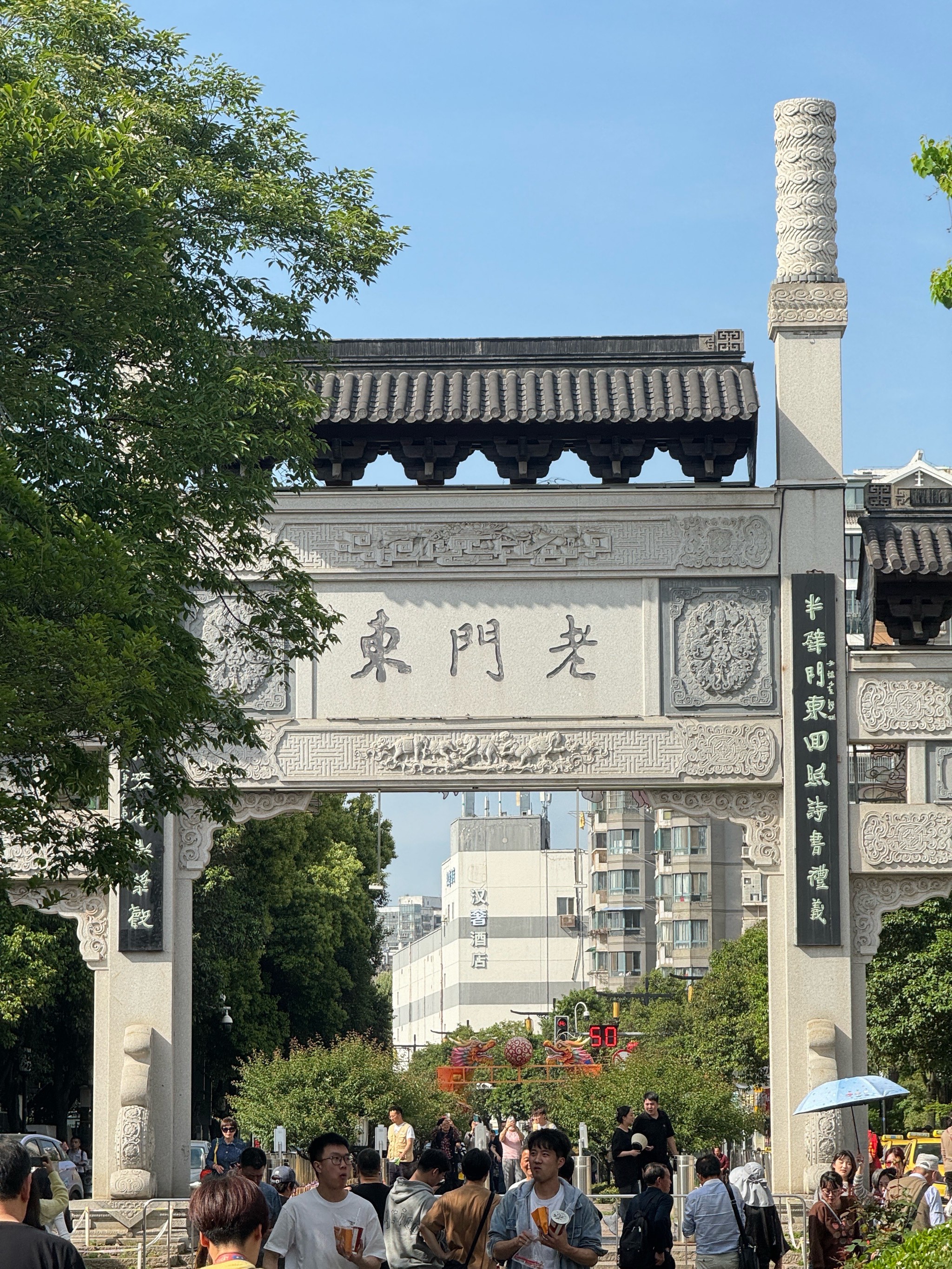 Nanjing served as the capital of six imperial dynasties spanning more than 1,500 years, earning it a status comparable to Rome or Constantinople. The original city wall, begun under the first Ming emperor in 1366, once ranked among the world's largest fortifications at 33 kilometres, longer than the walls of Paris or London. Laomendong sits at the historic heart of the southern old quarter, preserved not as a fabricated replica but as a living neighbourhood whose bones remain genuinely Ming and Qing.
The architecture follows the classic Huizhou-influenced style familiar throughout the lower Yangtze region. Whitewashed walls, dark clay roof tiles, and the distinctive stepped gables known as horse-head walls recall the silhouette of Georgian Edinburgh or a Flemish town. Wander down alleys such as Jiandaizi Lane and Santiaoying Lane to find courtyards dripping with crimson blossoms, carved wooden balconies, and the hilltop terrace of the Junhui Bookhouse offering sweeping views over the tiled rooftops.
Culturally, the quarter is a vibrant stage for Jinling traditions. The seventeenth-century Jiezi Garden was home to Li Yu, a Ming dynasty dramatist often compared to Molière for his theatrical genius. The Jinling Art Museum exhibits contemporary local artists, while Pioneer Bookstore anchors the literary scene. Visitors can attend performances by Deyunshe, China's leading crosstalk troupe, or roll up their sleeves at the Intangible Heritage Hall to craft velvet flowers and gold leaf, crafts that once adorned imperial palaces.
Food is essential to the experience. Time-honoured stalls serve Jiang Youji's crispy potstickers, Lu's delicate plum-blossom cakes, Xiao Zheng's flaky sesame biscuits, and steaming Jiming soup dumplings. Veteran foodies suggest ducking into the narrower lanes like Bianying for shorter queues and more authentic flavours. The cuisine reflects Nanjing's identity as a former southern capital where northern and southern Chinese palates converged.
After dusk, the quarter transforms. A 3D mapping projection bathes the colossal Ming city wall in shifting colours, the world's largest permanent installation of its kind. During the spring Lantern Festival, when the nearby Qinhuai River glows with thousands of lanterns, Laomendong becomes the festival's main showcase, evoking scenes that have welcomed travellers since the Ming dynasty. The red lanterns and lit gables create an atmosphere reminiscent of a medieval European festival night.
Plan to arrive around 4 pm to catch golden-hour photography on the gables before the light show begins. Entry is entirely free, and the area stays lively until late. From Wudingmen Station on Metro Line 3, Exit 2, walk 500 metres west. The quarter connects easily on foot to the Confucius Temple, Zhonghua Gate Castle, and the Dabaoen Temple ruins, forming a rich half-day or full-day heritage circuit through one of China's most historic cities.
Nanjing served as the capital of six imperial dynasties spanning more than 1,500 years, earning it a status comparable to Rome or Constantinople. The original city wall, begun under the first Ming emperor in 1366, once ranked among the world's largest fortifications at 33 kilometres, longer than the walls of Paris or London. Laomendong sits at the historic heart of the southern old quarter, preserved not as a fabricated replica but as a living neighbourhood whose bones remain genuinely Ming and Qing.
The architecture follows the classic Huizhou-influenced style familiar throughout the lower Yangtze region. Whitewashed walls, dark clay roof tiles, and the distinctive stepped gables known as horse-head walls recall the silhouette of Georgian Edinburgh or a Flemish town. Wander down alleys such as Jiandaizi Lane and Santiaoying Lane to find courtyards dripping with crimson blossoms, carved wooden balconies, and the hilltop terrace of the Junhui Bookhouse offering sweeping views over the tiled rooftops.
Culturally, the quarter is a vibrant stage for Jinling traditions. The seventeenth-century Jiezi Garden was home to Li Yu, a Ming dynasty dramatist often compared to Molière for his theatrical genius. The Jinling Art Museum exhibits contemporary local artists, while Pioneer Bookstore anchors the literary scene. Visitors can attend performances by Deyunshe, China's leading crosstalk troupe, or roll up their sleeves at the Intangible Heritage Hall to craft velvet flowers and gold leaf, crafts that once adorned imperial palaces.
Food is essential to the experience. Time-honoured stalls serve Jiang Youji's crispy potstickers, Lu's delicate plum-blossom cakes, Xiao Zheng's flaky sesame biscuits, and steaming Jiming soup dumplings. Veteran foodies suggest ducking into the narrower lanes like Bianying for shorter queues and more authentic flavours. The cuisine reflects Nanjing's identity as a former southern capital where northern and southern Chinese palates converged.
After dusk, the quarter transforms. A 3D mapping projection bathes the colossal Ming city wall in shifting colours, the world's largest permanent installation of its kind. During the spring Lantern Festival, when the nearby Qinhuai River glows with thousands of lanterns, Laomendong becomes the festival's main showcase, evoking scenes that have welcomed travellers since the Ming dynasty. The red lanterns and lit gables create an atmosphere reminiscent of a medieval European festival night.
Plan to arrive around 4 pm to catch golden-hour photography on the gables before the light show begins. Entry is entirely free, and the area stays lively until late. From Wudingmen Station on Metro Line 3, Exit 2, walk 500 metres west. The quarter connects easily on foot to the Confucius Temple, Zhonghua Gate Castle, and the Dabaoen Temple ruins, forming a rich half-day or full-day heritage circuit through one of China's most historic cities.