Qinhuai River Scenic Belt
⭐ 4.70
Qinhuai River Scenic Belt, Qinhuai District, Nanjing City, Jiangsu Province, China
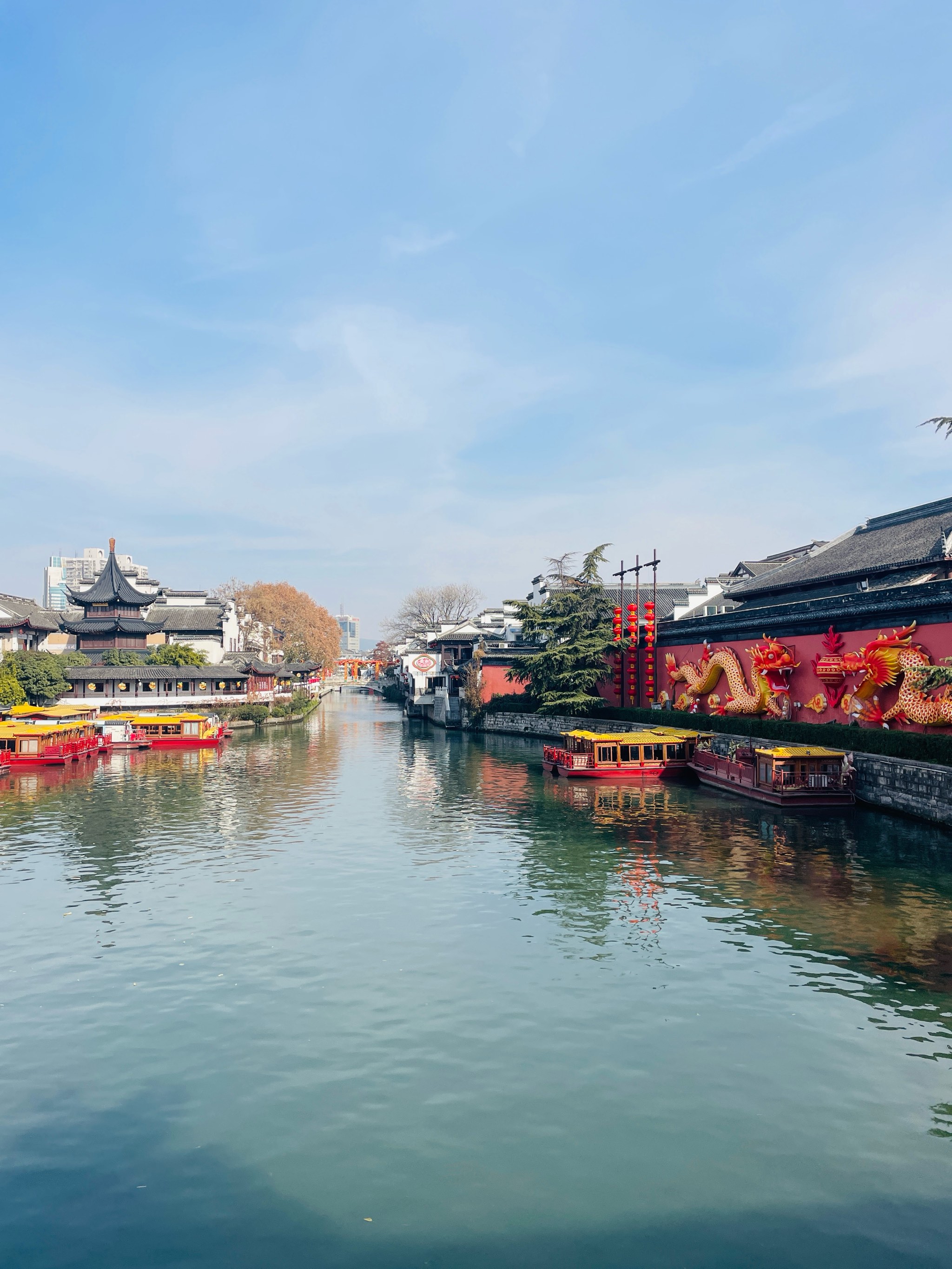 The Qinhuai has been Nanjing's lifeblood since the Six Dynasties period (3rd–6th centuries), when this stretch of the Yangtze tributary served as the commercial and cultural artery of successive southern Chinese capitals. Merchants crowded its wharves, scholars gathered in its teahouses, and poets from Li Bai to the modern essayist Zhu Ziqing found inspiration along its banks. Think of it as Nanjing's answer to the Seine or the Arno—only with a millennium more of continuous literary pedigree, and with waterborne gondolas that have been ferrying passengers since long before Venice took up the trade.
The architectural centerpiece is the Confucius Temple (Fuzimiao), first erected in 1034 and rebuilt repeatedly over the centuries. Today's imposing halls, with their sweeping eaves and vermilion columns, follow Ming and Qing design conventions and rank among the largest Confucian temple complexes south of the Yangtze. The main Dacheng Hall, housing statues of Confucius and his disciples, conveys the same gravitas as a European cathedral's nave. Admission is 30 yuan and the soaring interior deserves at least an hour of close attention.
Just steps away stands the Jiangnan Examination Hall, where an estimated one million candidates sat for the keju imperial examinations between 1168 and 1904. Converted into the China Imperial Examination Museum, its striking modern architecture—evoking stacked examination papers and ink-wash scrolls—contrasts beautifully with the reconstructed Ming-era courtyards. Entry is 50 yuan, and the immersive galleries offer one of Asia's most compelling introductions to a meritocratic civil service system that predated Western bureaucratic reforms by centuries.
Smaller but equally evocative sites line the riverbanks: Wuyi Lane recalls the powerful Wang and Xie clans who shaped Eastern Jin politics, while the former residence of courtesan Li Xiangjun evokes the legend of the "Eight Beauties of Qinhuai." The restored Ming City Wall snakes along the eastern edge, offering elevated vantage points comparable to strolling York or Dubrovnik's ramparts. The neighboring Laomendong historic district rewards aimless wandering with craft shops, snack stalls, and restored courtyard homes.
Practical visiting is refreshingly straightforward. The public scenic zones are free and open 24 hours, making dawn strolls and after-dark returns equally welcoming. Arrive via Metro Line 3 to Fuzimiao Station or Line 1 to Sanshanjie Station—both deposit you at the temple gates. Plan a full day: mornings for the temple and examination museum, afternoons for Laomendong and the city wall, then dinner at a riverside restaurant before boarding a painted cruise boat (80–140 yuan) as lanterns ignite along both banks.
The nightly cruise is the unmissable experience—boats glide past the Wen De and Wen Yuan bridges while lanterns reflect on black water, recreating the scene Zhu Ziqing immortalized in his 1923 essay "Oars and Lantern Shadows on the Qinhuai." Time your visit for Chinese New Year, when the Qinhuai Lantern Fair—dubbed "the finest under heaven"—transforms the riverbanks into a four-kilometer festival of illuminated sculptures. For Western travelers seeking an introduction to Nanjing's "Ancient Capital of Six Dynasties" heritage, the Qinhuai Belt delivers atmosphere, history, and spectacle in equal, unforgettable measure.
The Qinhuai has been Nanjing's lifeblood since the Six Dynasties period (3rd–6th centuries), when this stretch of the Yangtze tributary served as the commercial and cultural artery of successive southern Chinese capitals. Merchants crowded its wharves, scholars gathered in its teahouses, and poets from Li Bai to the modern essayist Zhu Ziqing found inspiration along its banks. Think of it as Nanjing's answer to the Seine or the Arno—only with a millennium more of continuous literary pedigree, and with waterborne gondolas that have been ferrying passengers since long before Venice took up the trade.
The architectural centerpiece is the Confucius Temple (Fuzimiao), first erected in 1034 and rebuilt repeatedly over the centuries. Today's imposing halls, with their sweeping eaves and vermilion columns, follow Ming and Qing design conventions and rank among the largest Confucian temple complexes south of the Yangtze. The main Dacheng Hall, housing statues of Confucius and his disciples, conveys the same gravitas as a European cathedral's nave. Admission is 30 yuan and the soaring interior deserves at least an hour of close attention.
Just steps away stands the Jiangnan Examination Hall, where an estimated one million candidates sat for the keju imperial examinations between 1168 and 1904. Converted into the China Imperial Examination Museum, its striking modern architecture—evoking stacked examination papers and ink-wash scrolls—contrasts beautifully with the reconstructed Ming-era courtyards. Entry is 50 yuan, and the immersive galleries offer one of Asia's most compelling introductions to a meritocratic civil service system that predated Western bureaucratic reforms by centuries.
Smaller but equally evocative sites line the riverbanks: Wuyi Lane recalls the powerful Wang and Xie clans who shaped Eastern Jin politics, while the former residence of courtesan Li Xiangjun evokes the legend of the "Eight Beauties of Qinhuai." The restored Ming City Wall snakes along the eastern edge, offering elevated vantage points comparable to strolling York or Dubrovnik's ramparts. The neighboring Laomendong historic district rewards aimless wandering with craft shops, snack stalls, and restored courtyard homes.
Practical visiting is refreshingly straightforward. The public scenic zones are free and open 24 hours, making dawn strolls and after-dark returns equally welcoming. Arrive via Metro Line 3 to Fuzimiao Station or Line 1 to Sanshanjie Station—both deposit you at the temple gates. Plan a full day: mornings for the temple and examination museum, afternoons for Laomendong and the city wall, then dinner at a riverside restaurant before boarding a painted cruise boat (80–140 yuan) as lanterns ignite along both banks.
The nightly cruise is the unmissable experience—boats glide past the Wen De and Wen Yuan bridges while lanterns reflect on black water, recreating the scene Zhu Ziqing immortalized in his 1923 essay "Oars and Lantern Shadows on the Qinhuai." Time your visit for Chinese New Year, when the Qinhuai Lantern Fair—dubbed "the finest under heaven"—transforms the riverbanks into a four-kilometer festival of illuminated sculptures. For Western travelers seeking an introduction to Nanjing's "Ancient Capital of Six Dynasties" heritage, the Qinhuai Belt delivers atmosphere, history, and spectacle in equal, unforgettable measure.