Korean Ethnic Folk Village
⭐ 4.20
Chaoyang Street, Yanji City, Yanbian Korean Autonomous Prefecture, Jilin Province, China
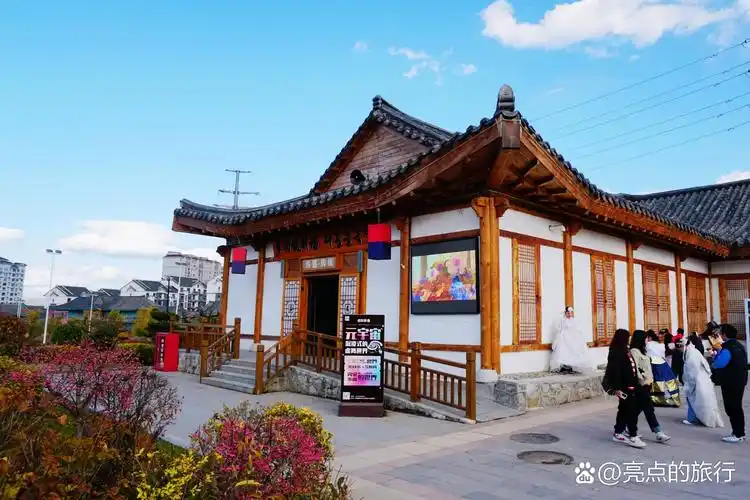 Yanbian Autonomous Prefecture, nestled in China's far northeast along the Russian and North Korean borders, has been the heartland of the Korean Chinese community since the late 19th century, when waves of migrants crossed the Tumen River seeking farmland. Much like Bavaria's open-air museums preserve Germanic folk life, this 9.4-hectare park safeguards the everyday heritage of a diaspora that has thrived here for over a century, offering Western visitors a rare window into the Korean world beyond Seoul's neon skyline.
The 40 traditional buildings echo the elegant proportions of Joseon-era hanok architecture, with their hallmark sweeping eaves, whitewashed walls, and dark grey clay roof tiles resting on hand-hewn timber frames. Stone-walled courtyards, ceramic kimchi jars, and crimson lanterns create a scene reminiscent of a Korean Joseon village or a Swiss heritage farmstead. Every wooden window lattice is carved with artisan precision, achieving what restorers call "repairing the old to look like the old."
The village functions as a living stage for China's national intangible cultural heritage. Visitors can pound tteok rice cakes, ferment kimchi, and brew makgeolli rice wine, or try their hand at traditional pastimes such as neolttwigi (seesaw jumping) and swing-jumping. Live performances feature gayageum zither music, long-drum dances, and reenactments of the hwarang coming-of-age ceremony and traditional Korean weddings, transforming spectators into active participants in a culture still very much alive.
The park opens daily from 9:00 a.m. to 9:00 p.m., with last entry at 8:30 p.m. Adult admission is just ¥30, with half-price or free tickets for seniors and students. It sits adjacent to Mao'er Mountain Forest Park, roughly 20 to 30 minutes by taxi from Yanji Chaoyangchuan Airport or the high-speed rail station. Insider tip: arrive between 3 and 4 p.m. to photograph the white walls in soft daylight, then stay as lanterns and LED illuminations transform the village into a luminous dreamscape after dusk.
Plan at least three to four hours to do the site justice. Pre-book the costume photography service to don a flowing hanbok-style Korean dress with matching hair and makeup, then pose among the stone walls and timber eaves. Refuel with regional specialties such as cold noodles, charcoal-grilled pork, and sweet rice wine. One important courtesy: remove your shoes before entering the traditional homes, and always ask permission before photographing residents or ceremonial performances—a small gesture that honors the living culture you have come to experience.
For travelers seeking an off-the-beaten-path cultural encounter, this village offers something European heritage sites rarely provide: not a preserved relic behind velvet ropes, but a vibrant, breathing community where the past is tasted, worn, danced, and celebrated every single day.
Yanbian Autonomous Prefecture, nestled in China's far northeast along the Russian and North Korean borders, has been the heartland of the Korean Chinese community since the late 19th century, when waves of migrants crossed the Tumen River seeking farmland. Much like Bavaria's open-air museums preserve Germanic folk life, this 9.4-hectare park safeguards the everyday heritage of a diaspora that has thrived here for over a century, offering Western visitors a rare window into the Korean world beyond Seoul's neon skyline.
The 40 traditional buildings echo the elegant proportions of Joseon-era hanok architecture, with their hallmark sweeping eaves, whitewashed walls, and dark grey clay roof tiles resting on hand-hewn timber frames. Stone-walled courtyards, ceramic kimchi jars, and crimson lanterns create a scene reminiscent of a Korean Joseon village or a Swiss heritage farmstead. Every wooden window lattice is carved with artisan precision, achieving what restorers call "repairing the old to look like the old."
The village functions as a living stage for China's national intangible cultural heritage. Visitors can pound tteok rice cakes, ferment kimchi, and brew makgeolli rice wine, or try their hand at traditional pastimes such as neolttwigi (seesaw jumping) and swing-jumping. Live performances feature gayageum zither music, long-drum dances, and reenactments of the hwarang coming-of-age ceremony and traditional Korean weddings, transforming spectators into active participants in a culture still very much alive.
The park opens daily from 9:00 a.m. to 9:00 p.m., with last entry at 8:30 p.m. Adult admission is just ¥30, with half-price or free tickets for seniors and students. It sits adjacent to Mao'er Mountain Forest Park, roughly 20 to 30 minutes by taxi from Yanji Chaoyangchuan Airport or the high-speed rail station. Insider tip: arrive between 3 and 4 p.m. to photograph the white walls in soft daylight, then stay as lanterns and LED illuminations transform the village into a luminous dreamscape after dusk.
Plan at least three to four hours to do the site justice. Pre-book the costume photography service to don a flowing hanbok-style Korean dress with matching hair and makeup, then pose among the stone walls and timber eaves. Refuel with regional specialties such as cold noodles, charcoal-grilled pork, and sweet rice wine. One important courtesy: remove your shoes before entering the traditional homes, and always ask permission before photographing residents or ceremonial performances—a small gesture that honors the living culture you have come to experience.
For travelers seeking an off-the-beaten-path cultural encounter, this village offers something European heritage sites rarely provide: not a preserved relic behind velvet ropes, but a vibrant, breathing community where the past is tasted, worn, danced, and celebrated every single day.