Tumen River Folk Park
⭐ 4.00
Tumen City, Yanbian Korean Autonomous Prefecture, Jilin Province, China
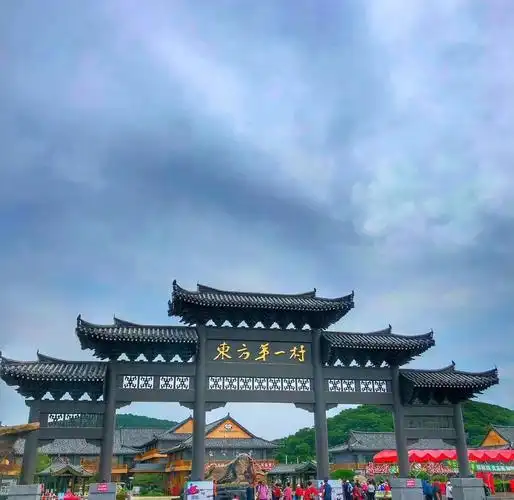 Opened in May 2026 on the banks of the Tumen River—which has marked the boundary between China and Korea since the late 19th century—this 130-million-yuan cultural park represents one of northeastern China's most ambitious folk heritage projects. Often compared to open-air ethnographic museums like Sweden's Skansen, it complements the larger Yanbian Korean Folk Village in nearby Yanji and serves as a gateway to understanding the Chaoxianzu, ethnic Koreans whose ancestors migrated across the Tumen beginning in the 1860s during the Joseon Dynasty's famines and later Japanese colonial upheavals.
The architecture echoes the elegant simplicity of traditional Korean homes, or hanok, with gracefully sloping tiled roofs, exposed wooden beam structures, and the signature palette of indigo-grey tiles against whitewashed walls. Buildings are arranged in organic village-like clusters, blending authentic vernacular design with modern exhibition spaces housing folk artifacts, costume galleries, and art museums. The aesthetic recalls both Seoul's Bukchon Hanok Village and Kyoto's preserved machiya districts, yet feels distinctly rooted in the rugged borderland landscape.
Culturally, the park functions as a living encyclopedia of Korean-Chinese heritage. Visitors can watch master crafters demonstrate intangible heritage arts like jasu embroidery and janggu drum-making, then roll up their sleeves to pound tteok rice cakes or stuff sundae sausages. Seasonal festivals highlight harvest rituals, traditional wedding reenactments, and folk dance performances, offering insight into how this community has preserved its identity across generations despite living far from the Korean peninsula.
Beyond its cultural core, the park caters to modern travelers with thoughtful amenities: a specialty café serving Korean-inspired brews, boutique hanok-style guesthouses, a children's play zone, lakeside recreation, and a medicinal dining hall where guests can savor herbal soups and ginseng-infused wellness cuisine rooted in traditional Korean medicine.
Practically speaking, the park sits just minutes from the Tumen Border Port, where travelers can gaze across the narrow river into North Korea, and connects seamlessly with the spectacular G331 Border Highway—a 9,300-kilometer scenic route tracing China's northern frontier. Spring and autumn offer the most comfortable weather and golden foliage; weekdays promise quieter exploration. Though the park initially offered free admission, it now charges a standard entrance fee, so check official websites before visiting. Allow at least half a day, though overnight stays in the on-site homestays reward those who linger longer into this evocative corner of East Asia.
Opened in May 2026 on the banks of the Tumen River—which has marked the boundary between China and Korea since the late 19th century—this 130-million-yuan cultural park represents one of northeastern China's most ambitious folk heritage projects. Often compared to open-air ethnographic museums like Sweden's Skansen, it complements the larger Yanbian Korean Folk Village in nearby Yanji and serves as a gateway to understanding the Chaoxianzu, ethnic Koreans whose ancestors migrated across the Tumen beginning in the 1860s during the Joseon Dynasty's famines and later Japanese colonial upheavals.
The architecture echoes the elegant simplicity of traditional Korean homes, or hanok, with gracefully sloping tiled roofs, exposed wooden beam structures, and the signature palette of indigo-grey tiles against whitewashed walls. Buildings are arranged in organic village-like clusters, blending authentic vernacular design with modern exhibition spaces housing folk artifacts, costume galleries, and art museums. The aesthetic recalls both Seoul's Bukchon Hanok Village and Kyoto's preserved machiya districts, yet feels distinctly rooted in the rugged borderland landscape.
Culturally, the park functions as a living encyclopedia of Korean-Chinese heritage. Visitors can watch master crafters demonstrate intangible heritage arts like jasu embroidery and janggu drum-making, then roll up their sleeves to pound tteok rice cakes or stuff sundae sausages. Seasonal festivals highlight harvest rituals, traditional wedding reenactments, and folk dance performances, offering insight into how this community has preserved its identity across generations despite living far from the Korean peninsula.
Beyond its cultural core, the park caters to modern travelers with thoughtful amenities: a specialty café serving Korean-inspired brews, boutique hanok-style guesthouses, a children's play zone, lakeside recreation, and a medicinal dining hall where guests can savor herbal soups and ginseng-infused wellness cuisine rooted in traditional Korean medicine.
Practically speaking, the park sits just minutes from the Tumen Border Port, where travelers can gaze across the narrow river into North Korea, and connects seamlessly with the spectacular G331 Border Highway—a 9,300-kilometer scenic route tracing China's northern frontier. Spring and autumn offer the most comfortable weather and golden foliage; weekdays promise quieter exploration. Though the park initially offered free admission, it now charges a standard entrance fee, so check official websites before visiting. Allow at least half a day, though overnight stays in the on-site homestays reward those who linger longer into this evocative corner of East Asia.