Kangding Ancient City Wall
⭐ 2.00
Kangding City, Garzê Tibetan Autonomous Prefecture, Sichuan Province, China
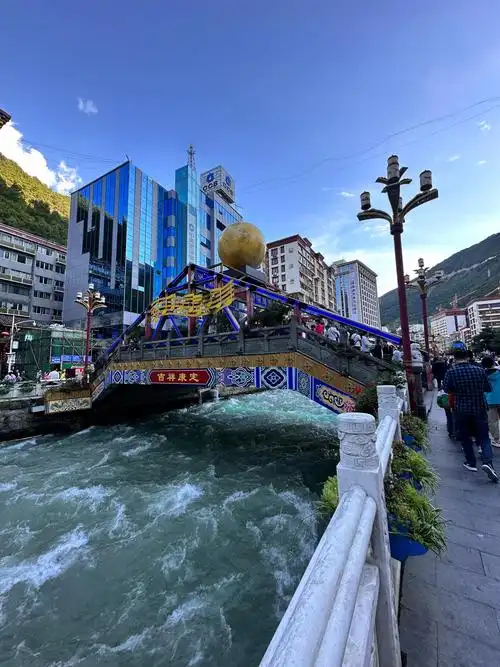 Kangding's defensive walls were first raised during the Ming dynasty and dramatically expanded in 1729 under Emperor Yongzheng of the Qing, transforming the town into a fully-fledged military and commercial gatekeeper on the legendary Chama Gudao, or Tea-Horse Road. This caravan network, stretching roughly 2,200 kilometers from the lowland tea fields of Sichuan to the high-altitude pastures of Tibet, served as one of Asia's great pre-modern trade arteries, comparable in importance to the medieval spice routes that linked Venice to Constantinople. The wall and its companion fortifications, known collectively as the "Three Passes," regulated the flow of merchants, levied duties, and kept the peace along a vital corridor where Chinese silks and brick teas were exchanged for Tibetan wool, salt, and ponies.
The builders worked with the mountainous terrain rather than against it, echoing the terraced fortifications found along Europe's Rhine or the highland castles of Scotland. Locally quarried stone slabs were stacked along the steep ridges, reinforced with rammed earth where the slopes grew treacherous, while gentler stretches along the river valley allowed for more orderly masonry and timber gatehouses. Crenellated parapets, gun platforms, and controlled gate passages made the wall a textbook example of Qing-era frontier military engineering, similar in spirit to the bastioned outposts of the Habsburg-Ottoman frontier, though adapted to the vertiginous geography of the eastern Tibetan plateau.
Culturally, the wall represents a tangible chapter in the long, often turbulent dialogue between Han Chinese and Tibetan peoples. As a frontier entrepôt, Kangding absorbed Khampa horsemen, Hui merchants, and Sichuan traders, blending their languages, foods, and faiths into a distinctive hybrid culture best embodied today in the swirling circle dances called guozhuang. The wall's remains thus serve not merely as military archaeology but as a reminder that the high plateau was never an isolated realm; it was threaded by commerce, pilgrimage, and diplomacy for centuries before the modern era.
Practically speaking, the site carries no entrance fee and can be explored at any hour, with surviving fragments clustered around Love Song Square (Qingge Guangchang) and the trailheads leading toward Kuaihuolin and Mount Paoma. Visitors should set aside half a day for a contemplative walking circuit that begins at the wall memorials, follows the Zheduo River footpath past the old Lu Cheng gate area, climbs toward Mount Paoma for a sweeping city panorama, and ends at the Liuliu Cheng heritage district where evening illuminations and free guozhuang performances bring the Tibetan-Kangding spirit vividly to life.
At roughly 2,560 meters above sea level, Kangding sits high enough to leave some travelers mildly short of breath, so new arrivals should pace themselves, hydrate generously, and dress for sharp temperature swings between sun and shade. While the physical remains are modest, the site's real reward lies in using it as a launchpad for deeper exploration of a town that has enchanted travelers, pilgrims, and traders for centuries, and that, much like an Andalusian white village or a Tyrolean market town, rewards those who wander its lanes on foot rather than rushing through by coach.
Kangding's defensive walls were first raised during the Ming dynasty and dramatically expanded in 1729 under Emperor Yongzheng of the Qing, transforming the town into a fully-fledged military and commercial gatekeeper on the legendary Chama Gudao, or Tea-Horse Road. This caravan network, stretching roughly 2,200 kilometers from the lowland tea fields of Sichuan to the high-altitude pastures of Tibet, served as one of Asia's great pre-modern trade arteries, comparable in importance to the medieval spice routes that linked Venice to Constantinople. The wall and its companion fortifications, known collectively as the "Three Passes," regulated the flow of merchants, levied duties, and kept the peace along a vital corridor where Chinese silks and brick teas were exchanged for Tibetan wool, salt, and ponies.
The builders worked with the mountainous terrain rather than against it, echoing the terraced fortifications found along Europe's Rhine or the highland castles of Scotland. Locally quarried stone slabs were stacked along the steep ridges, reinforced with rammed earth where the slopes grew treacherous, while gentler stretches along the river valley allowed for more orderly masonry and timber gatehouses. Crenellated parapets, gun platforms, and controlled gate passages made the wall a textbook example of Qing-era frontier military engineering, similar in spirit to the bastioned outposts of the Habsburg-Ottoman frontier, though adapted to the vertiginous geography of the eastern Tibetan plateau.
Culturally, the wall represents a tangible chapter in the long, often turbulent dialogue between Han Chinese and Tibetan peoples. As a frontier entrepôt, Kangding absorbed Khampa horsemen, Hui merchants, and Sichuan traders, blending their languages, foods, and faiths into a distinctive hybrid culture best embodied today in the swirling circle dances called guozhuang. The wall's remains thus serve not merely as military archaeology but as a reminder that the high plateau was never an isolated realm; it was threaded by commerce, pilgrimage, and diplomacy for centuries before the modern era.
Practically speaking, the site carries no entrance fee and can be explored at any hour, with surviving fragments clustered around Love Song Square (Qingge Guangchang) and the trailheads leading toward Kuaihuolin and Mount Paoma. Visitors should set aside half a day for a contemplative walking circuit that begins at the wall memorials, follows the Zheduo River footpath past the old Lu Cheng gate area, climbs toward Mount Paoma for a sweeping city panorama, and ends at the Liuliu Cheng heritage district where evening illuminations and free guozhuang performances bring the Tibetan-Kangding spirit vividly to life.
At roughly 2,560 meters above sea level, Kangding sits high enough to leave some travelers mildly short of breath, so new arrivals should pace themselves, hydrate generously, and dress for sharp temperature swings between sun and shade. While the physical remains are modest, the site's real reward lies in using it as a launchpad for deeper exploration of a town that has enchanted travelers, pilgrims, and traders for centuries, and that, much like an Andalusian white village or a Tyrolean market town, rewards those who wander its lanes on foot rather than rushing through by coach.