Nanjing Museum
⭐ 4.60
Nanjing Museum, Nanjing, Jiangsu Province, China
 Founded in 1933 through the advocacy of Cai Yuanpei, the progressive educator who later headed China's national academy, Nanjing Museum predates many of Europe's post-war cultural institutions and stands as the country's oldest state-run综合性 museum. Granted "First-Class National Museum" status alongside the Palace Museum in Beijing and the National Museum in Shanghai, it offers visitors a sweeping narrative of Chinese civilization comparable to viewing the combined collections of London's British Museum and the Musée Guimet in Paris. With nearly 430,000 catalogued treasures, the institution ranks just behind the Forbidden City in scale and significance.
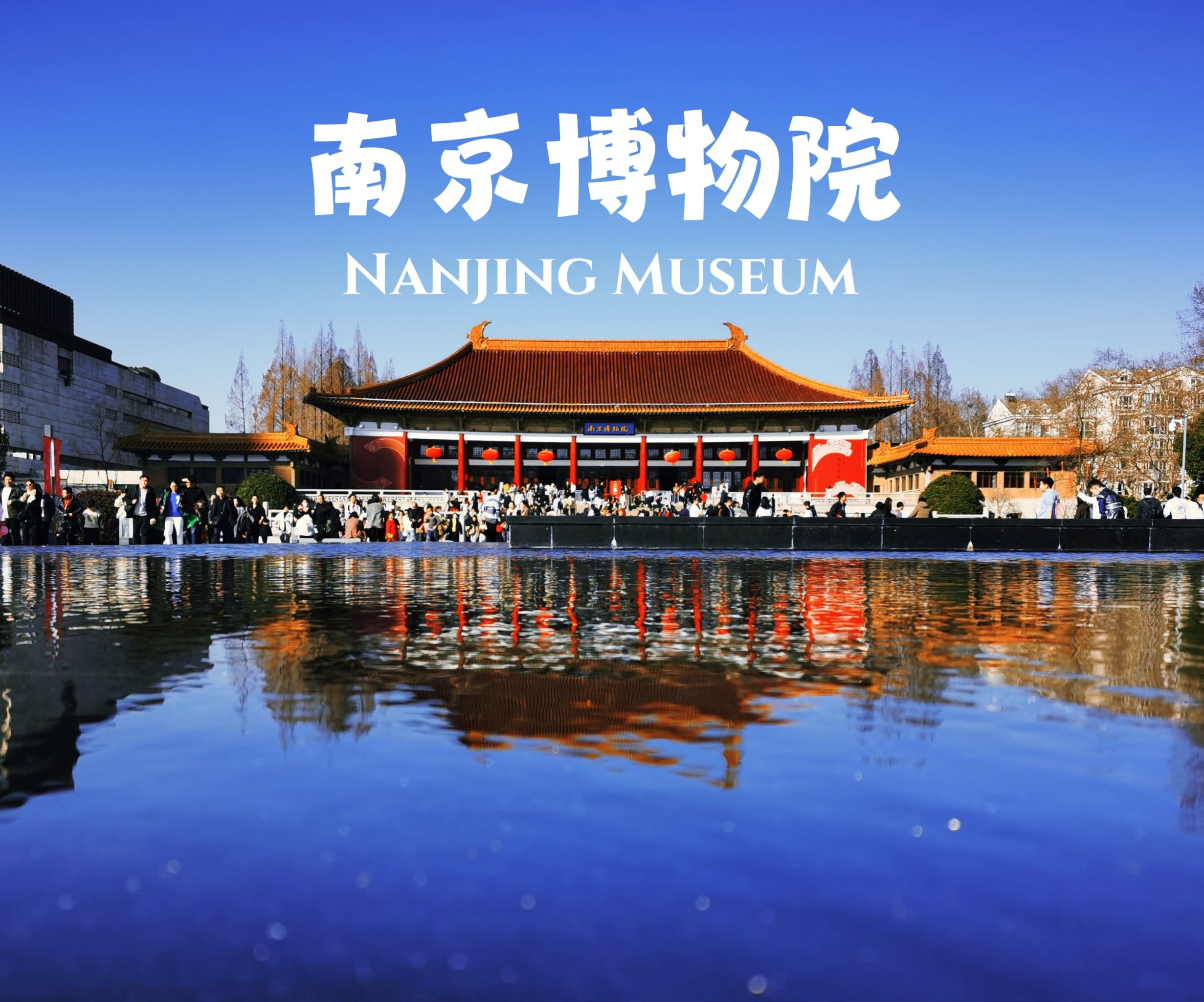
The main building draws on the architectural vocabulary of Liao-dynasty palace halls, blending the imposing red-walled grandeur of northern imperial design with the elegant, understated refinements typical of Jiangnan aesthetics. Sweeping eaves and intricate dougong brackets recall the silhouette of Kyoto's Byodo-in Temple, while a rooftop observation deck frames panoramic views toward the purple-tinged slopes of Zijin Mountain—a beloved subject for landscape photographers. Covering more than 70,000 square meters, the campus arranges its six pavilions in an intuitive flow that guides visitors naturally from ancient history through to the modern era.
Among the headline treasures, visitors encounter a gold beast from the Western Han dynasty, a jade cicada resting on a golden leaf, a rose-quartz censer carved with coiled dragons, and Qianlong-era blue-glazed porcelain of extraordinary delicacy. A brick mural depicting the Seven Sages of the Bamboo Grove—comparable in cultural weight to Raphael's School of Athens as a philosophical self-portrait—anchors the Eastern Jin section. The Digital Pavilion employs VR and AR to animate these artifacts, while the Intangible Heritage Pavilion regularly hosts live demonstrations by masters of cloud brocade weaving and paper cutting.
Descend one floor and you step into the Republican Era Pavilion, an immersive recreation of 1930s Nanjing where a vintage tram rumbles past a tea house, post office, and bookshop dressed in period signage. Atmospheric lighting and period soundscapes conjure the world of qipao dresses and scholar's robes, much as a meticulously restored set transports viewers into the 1920s. This underground streetscape has earned near-mythical status on Chinese social media as a photography destination, drawing influencers and history enthusiasts eager to capture the ambiance of China's interwar capital.
The museum operates Tuesday through Sunday from 9:00 a.m. to 5:00 p.m., with last entry at 4:00 p.m., closing only on Mondays outside public holidays. Admission is free but reservations are mandatory—secure tickets through the official WeChat mini-program seven days in advance, as popular slots vanish within seconds of their 6:00 p.m. release. Take Metro Line 2 to Ming Gugong Station, Exit 1, followed by an eight-minute walk; public transit is strongly recommended over driving. Allocate three to five hours and follow the suggested route of History → Special Exhibitions → Republican Era → Arts/Heritage pavilions. Wear comfortable shoes, bring your passport for manual verification at the foreign-visitor window, and consider renting an audio guide. Flash photography and tripods are prohibited.
Founded in 1933 through the advocacy of Cai Yuanpei, the progressive educator who later headed China's national academy, Nanjing Museum predates many of Europe's post-war cultural institutions and stands as the country's oldest state-run综合性 museum. Granted "First-Class National Museum" status alongside the Palace Museum in Beijing and the National Museum in Shanghai, it offers visitors a sweeping narrative of Chinese civilization comparable to viewing the combined collections of London's British Museum and the Musée Guimet in Paris. With nearly 430,000 catalogued treasures, the institution ranks just behind the Forbidden City in scale and significance.
The main building draws on the architectural vocabulary of Liao-dynasty palace halls, blending the imposing red-walled grandeur of northern imperial design with the elegant, understated refinements typical of Jiangnan aesthetics. Sweeping eaves and intricate dougong brackets recall the silhouette of Kyoto's Byodo-in Temple, while a rooftop observation deck frames panoramic views toward the purple-tinged slopes of Zijin Mountain—a beloved subject for landscape photographers. Covering more than 70,000 square meters, the campus arranges its six pavilions in an intuitive flow that guides visitors naturally from ancient history through to the modern era.
Among the headline treasures, visitors encounter a gold beast from the Western Han dynasty, a jade cicada resting on a golden leaf, a rose-quartz censer carved with coiled dragons, and Qianlong-era blue-glazed porcelain of extraordinary delicacy. A brick mural depicting the Seven Sages of the Bamboo Grove—comparable in cultural weight to Raphael's School of Athens as a philosophical self-portrait—anchors the Eastern Jin section. The Digital Pavilion employs VR and AR to animate these artifacts, while the Intangible Heritage Pavilion regularly hosts live demonstrations by masters of cloud brocade weaving and paper cutting.
Descend one floor and you step into the Republican Era Pavilion, an immersive recreation of 1930s Nanjing where a vintage tram rumbles past a tea house, post office, and bookshop dressed in period signage. Atmospheric lighting and period soundscapes conjure the world of qipao dresses and scholar's robes, much as a meticulously restored set transports viewers into the 1920s. This underground streetscape has earned near-mythical status on Chinese social media as a photography destination, drawing influencers and history enthusiasts eager to capture the ambiance of China's interwar capital.
The museum operates Tuesday through Sunday from 9:00 a.m. to 5:00 p.m., with last entry at 4:00 p.m., closing only on Mondays outside public holidays. Admission is free but reservations are mandatory—secure tickets through the official WeChat mini-program seven days in advance, as popular slots vanish within seconds of their 6:00 p.m. release. Take Metro Line 2 to Ming Gugong Station, Exit 1, followed by an eight-minute walk; public transit is strongly recommended over driving. Allocate three to five hours and follow the suggested route of History → Special Exhibitions → Republican Era → Arts/Heritage pavilions. Wear comfortable shoes, bring your passport for manual verification at the foreign-visitor window, and consider renting an audio guide. Flash photography and tripods are prohibited.