Paoma Mountain
⭐ 3.60
Paoma Mountain Scenic Area, Kangding City, Sichuan Province, China
 Rising between 2,600 and 4,100 meters along the northern foothills of the sacred Mount Gongga—often called the "King of Sichuan Mountains"—Paoma Mountain occupies a place in the Chinese imagination comparable to how the Scottish Highlands or the Bavarian Alps stir hearts across Europe. Since the Qing dynasty (1644–1911), the mountain has hosted a spectacular annual horse race on the 13th day of the fifth lunar month, a tradition that once drew traders, nomads, and pilgrims from across the Kham Tibetan region. The melody "Kangding Love Song," composed in the 1940s and admired by musicians worldwide, transformed this local festival site into a symbol of romance and ethnic harmony.
The spiritual heart of Paoma Mountain lies in the ruins of Jixiang Chan Temple, a Buddhist sanctuary said to be roughly a thousand years old. Once a vital outpost on the legendary Tea-Horse Road—the ancient trade network linking Sichuan's tea growers with Tibetan horsemen across some of the world's highest passes—the temple complex testifies to centuries of cultural exchange between Han and Tibetan worlds. Nearby stands the elegant Lingyun White Stupa, whose slender whitewashed form recalls the Buddhist reliquary monuments of Nepal and Bhutan, though its proportions remain distinctly Tibetan. Together these sacred structures illustrate how Kangding functioned as a meeting point of commerce, faith, and folk tradition.
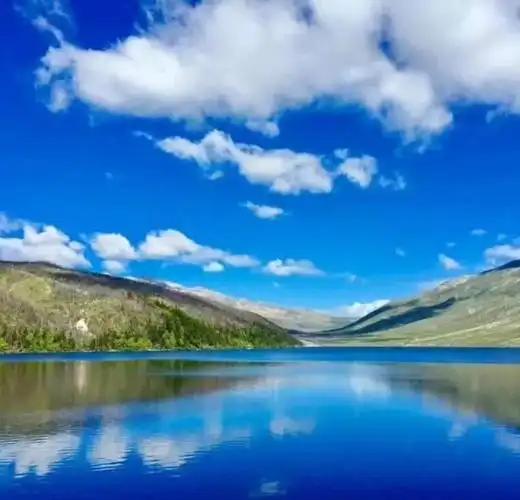
The summit holds the glacier-carved Five-Color Lake, shimmering at roughly 4,100 meters with hues that shift between turquoise and deep blue under a high-altitude sun. On clear days the lake reflects the jagged snow peaks of the Daxue Range, a panorama often compared to scenes from the Italian Dolomites or the Swiss Bernese Oberland. Below the lake stretches Paoma Ping, the original horse-racing meadow, now preserved as a forest park where Tibetan *guozhuang* circle dances and folk performances still enliven festivals. Newly built Song Terrace and Lovers' Pool add a lighter romantic touch, weaving the famous love song into the very landscape.
Access is refreshingly simple. The mountain entrance sits within easy walking distance of Kangding's compact old town, and a convenient shuttle bus now connects the lower gate to the central area. Entrance to the developed zone is currently free, while a round-trip cable car costs around 55 yuan and operates roughly from 8:30 a.m. to 6:00 p.m. Hikers should allow about two hours for the climb, while cable car riders can complete the visit in two to three hours. Foreign travelers are advised to arrange their trip through a registered local agency and confirm permits in advance, as Ganzi's borderland status requires proper documentation.
The best season runs from May to October, when wildflowers carpet the meadows and the weather permits safe access to the high lake. The most vibrant celebration occurs during the fourth lunar month's Bathing Festival and the traditional mountain-pilgrimage gathering on the eighth day of the fourth month. Practical precautions matter: sturdy non-slip hiking shoes, a windproof jacket, sunscreen, and sunglasses are essential, since summit winds are strong and the elevation can cause mild altitude symptoms. Rain makes the stone paths slippery, so caution is advised during sudden mountain showers. With its blend of song, prayer flags, and high-mountain vistas, Paoma Mountain offers an experience few other sites can match—a place where romance, religion, and raw Himalayan scenery meet in a single afternoon.
Rising between 2,600 and 4,100 meters along the northern foothills of the sacred Mount Gongga—often called the "King of Sichuan Mountains"—Paoma Mountain occupies a place in the Chinese imagination comparable to how the Scottish Highlands or the Bavarian Alps stir hearts across Europe. Since the Qing dynasty (1644–1911), the mountain has hosted a spectacular annual horse race on the 13th day of the fifth lunar month, a tradition that once drew traders, nomads, and pilgrims from across the Kham Tibetan region. The melody "Kangding Love Song," composed in the 1940s and admired by musicians worldwide, transformed this local festival site into a symbol of romance and ethnic harmony.
The spiritual heart of Paoma Mountain lies in the ruins of Jixiang Chan Temple, a Buddhist sanctuary said to be roughly a thousand years old. Once a vital outpost on the legendary Tea-Horse Road—the ancient trade network linking Sichuan's tea growers with Tibetan horsemen across some of the world's highest passes—the temple complex testifies to centuries of cultural exchange between Han and Tibetan worlds. Nearby stands the elegant Lingyun White Stupa, whose slender whitewashed form recalls the Buddhist reliquary monuments of Nepal and Bhutan, though its proportions remain distinctly Tibetan. Together these sacred structures illustrate how Kangding functioned as a meeting point of commerce, faith, and folk tradition.
The summit holds the glacier-carved Five-Color Lake, shimmering at roughly 4,100 meters with hues that shift between turquoise and deep blue under a high-altitude sun. On clear days the lake reflects the jagged snow peaks of the Daxue Range, a panorama often compared to scenes from the Italian Dolomites or the Swiss Bernese Oberland. Below the lake stretches Paoma Ping, the original horse-racing meadow, now preserved as a forest park where Tibetan *guozhuang* circle dances and folk performances still enliven festivals. Newly built Song Terrace and Lovers' Pool add a lighter romantic touch, weaving the famous love song into the very landscape.
Access is refreshingly simple. The mountain entrance sits within easy walking distance of Kangding's compact old town, and a convenient shuttle bus now connects the lower gate to the central area. Entrance to the developed zone is currently free, while a round-trip cable car costs around 55 yuan and operates roughly from 8:30 a.m. to 6:00 p.m. Hikers should allow about two hours for the climb, while cable car riders can complete the visit in two to three hours. Foreign travelers are advised to arrange their trip through a registered local agency and confirm permits in advance, as Ganzi's borderland status requires proper documentation.
The best season runs from May to October, when wildflowers carpet the meadows and the weather permits safe access to the high lake. The most vibrant celebration occurs during the fourth lunar month's Bathing Festival and the traditional mountain-pilgrimage gathering on the eighth day of the fourth month. Practical precautions matter: sturdy non-slip hiking shoes, a windproof jacket, sunscreen, and sunglasses are essential, since summit winds are strong and the elevation can cause mild altitude symptoms. Rain makes the stone paths slippery, so caution is advised during sudden mountain showers. With its blend of song, prayer flags, and high-mountain vistas, Paoma Mountain offers an experience few other sites can match—a place where romance, religion, and raw Himalayan scenery meet in a single afternoon.