Meilu Villa
⭐ 4.40
Meilu Villa, Guling Town, Lushan City, Jiujiang City, Jiangxi Province, China
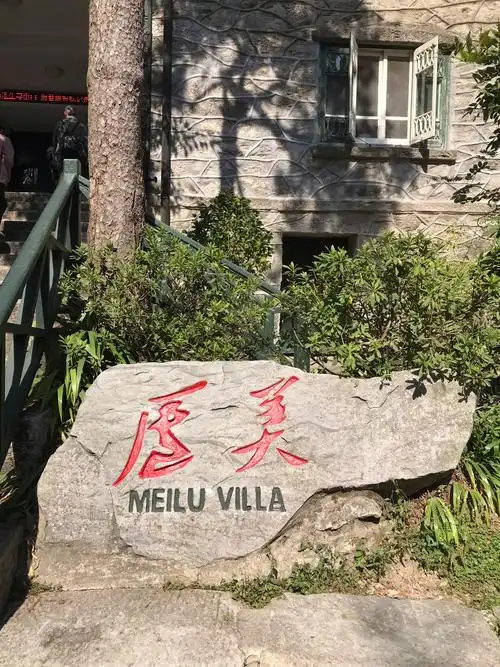 Meilu Villa occupies a fascinating place in the broader tapestry of twentieth-century world history. Built in 1903 when European powers were carving out comfortable retreats across colonial Asia, the villa later became a quiet stage for one of the most consequential diplomatic episodes preceding the Second Sino-Japanese War. In 1937, Zhou Enlai twice trekked up Mount Lu to the "Meilu Negotiation Hall" to meet Chiang Kai-shek, attempting to forge a United Front against Japan. Think of it as a Chinese sibling to the wartime conferences held at Yalta or Cairo, where the fates of nations were negotiated over tea rather than ink.
Architecturally, the villa is a textbook example of the English "curtain wall" style, the same idiom you'll recognize in grand country houses across the Cotswolds or Scottish Highlands. Two storeys of honey-coloured stone are wrapped in broad, breezy verandas designed to catch mountain air, while lush native trees soften the British formality. Inside, Victorian elegance reigns: thick imported English timber floors creak underfoot, an ornate carved fireplace anchors the sitting room, and a graceful wooden staircase climbs to the private quarters above, all preserved in remarkable original condition.
The interiors transport visitors straight into the 1930s. The master bedroom centres on a magnificent carved wooden bed shipped from England, while the drawing room boasts an antique Russian piano whose keys still gleam beneath layers of varnish. Crucially, the negotiation room has been left exactly as it was when Zhou and Chiang faced each other across the table, with the original chairs, lamps, and even picture frames intact. This attention to period detail rivals the best-preserved political residences in Europe, from Churchill's Chartwell to Macmillan's red-brick retreats.
Beyond its political weight, Meilu stands as a vivid symbol of cultural fusion. A stone tablet inscribed with Chiang's own calligraphy anchors the courtyard, where English architecture, Russian craftsmanship, and Chinese literati aesthetics converge in a single frame. The villa speaks to an era when modern China opened itself to global influences, offering a tangible lesson that history lessons rarely deliver: a single room can hold the hopes, anxieties, and contradictions of an entire century.
Practicalities for the visitor are refreshingly simple. The villa sits at 180 Hedong Road in Lushan City, easily reached from the main Mount Lu scenic bus routes. Doors open daily from 08:30 to 16:30, with last entry recommended by 16:00. Admission is included in the standard Mount Lu joint ticket, so no separate purchase is needed. Plan for 30 to 45 minutes inside, or up to an hour for devoted history enthusiasts. Note that some interior areas are photograph-free and touching the artefacts is strictly prohibited.
Pair your visit with the nearby Lushan Conference Site and the Lushan Museum to piece together a full "Modern China in One Day" itinerary, then linger on the villa's shaded garden paths. In a country of spectacular landscapes and ancient monuments, Meilu Villa offers something rarer: an English-feeling country house where the ghosts of the Second World War still feel almost within earshot, making it an essential stop for any traveller curious about the human side of history.
Meilu Villa occupies a fascinating place in the broader tapestry of twentieth-century world history. Built in 1903 when European powers were carving out comfortable retreats across colonial Asia, the villa later became a quiet stage for one of the most consequential diplomatic episodes preceding the Second Sino-Japanese War. In 1937, Zhou Enlai twice trekked up Mount Lu to the "Meilu Negotiation Hall" to meet Chiang Kai-shek, attempting to forge a United Front against Japan. Think of it as a Chinese sibling to the wartime conferences held at Yalta or Cairo, where the fates of nations were negotiated over tea rather than ink.
Architecturally, the villa is a textbook example of the English "curtain wall" style, the same idiom you'll recognize in grand country houses across the Cotswolds or Scottish Highlands. Two storeys of honey-coloured stone are wrapped in broad, breezy verandas designed to catch mountain air, while lush native trees soften the British formality. Inside, Victorian elegance reigns: thick imported English timber floors creak underfoot, an ornate carved fireplace anchors the sitting room, and a graceful wooden staircase climbs to the private quarters above, all preserved in remarkable original condition.
The interiors transport visitors straight into the 1930s. The master bedroom centres on a magnificent carved wooden bed shipped from England, while the drawing room boasts an antique Russian piano whose keys still gleam beneath layers of varnish. Crucially, the negotiation room has been left exactly as it was when Zhou and Chiang faced each other across the table, with the original chairs, lamps, and even picture frames intact. This attention to period detail rivals the best-preserved political residences in Europe, from Churchill's Chartwell to Macmillan's red-brick retreats.
Beyond its political weight, Meilu stands as a vivid symbol of cultural fusion. A stone tablet inscribed with Chiang's own calligraphy anchors the courtyard, where English architecture, Russian craftsmanship, and Chinese literati aesthetics converge in a single frame. The villa speaks to an era when modern China opened itself to global influences, offering a tangible lesson that history lessons rarely deliver: a single room can hold the hopes, anxieties, and contradictions of an entire century.
Practicalities for the visitor are refreshingly simple. The villa sits at 180 Hedong Road in Lushan City, easily reached from the main Mount Lu scenic bus routes. Doors open daily from 08:30 to 16:30, with last entry recommended by 16:00. Admission is included in the standard Mount Lu joint ticket, so no separate purchase is needed. Plan for 30 to 45 minutes inside, or up to an hour for devoted history enthusiasts. Note that some interior areas are photograph-free and touching the artefacts is strictly prohibited.
Pair your visit with the nearby Lushan Conference Site and the Lushan Museum to piece together a full "Modern China in One Day" itinerary, then linger on the villa's shaded garden paths. In a country of spectacular landscapes and ancient monuments, Meilu Villa offers something rarer: an English-feeling country house where the ghosts of the Second World War still feel almost within earshot, making it an essential stop for any traveller curious about the human side of history.