Lushan Museum
⭐ 3.80
Lushan Museum, Lushan City, Jiujiang City, Jiangxi Province, China
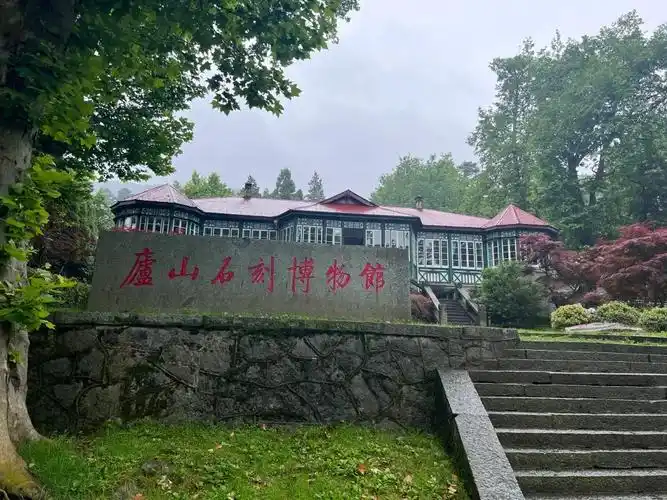 The museum's origins lie in one of the most charged political episodes of the Cold War era. The villa was built in 1961 as a retreat for Mao Zedong, who used it repeatedly through the 1960s and worked here during the politically turbulent year of 1970. Converted into a public museum in 1984, the building echoes the fate of other leader-turned-museum sites familiar to Western travelers—much as Hitler's Berghof or Stalin's dachas now serve as historical documents rather than residences. For visitors interested in 20th-century Chinese history, the preserved rooms function as a time capsule of the early People's Republic.
Architecturally, the museum blends Chinese siheyuan (courtyard) planning with Western villa influences, reminiscent of the hybrid mansions that line Italy's Lake Como or France's Côte d'Azur. Spanning roughly 20,000 square meters and opening onto the shimmering waters of Lulin Lake, the low-slung complex features tiled roofs, latticed windows, and columned verandas framed by pine and camphor trees. The result feels closer to a serene Mediterranean cloister than a typical Chinese institution—an atmosphere that encourages unhurried exploration.
The collection's undisputed masterpiece is Xu Conglong's "Five Hundred Arhat" scrolls, painted over six years during the early Qing dynasty. Comparable in ambition and devotional intensity to Raphael's Vatican frescoes or Hieronymus Bosch's dense religious panoramas, these 112 hanging scrolls present a complete Buddhist pantheon in meticulous ink and color. Complementing the scrolls are Han-dynasty through Ming and Qing ceramics, bronze ritual vessels, Chiang Kai-shek and Soong Mei-ling memorabilia from the Republican period, and rock specimens documenting Lushan's Pleistocene glaciology—a vivid reminder that this mountain once sat at the edge of an Ice Age icefield.
The museum is open Tuesday through Sunday, 8:30 a.m. to 5:00 p.m., with last admission at 4:30 p.m.; it closes on Mondays. Beginning July 1, 2026, entry becomes free but requires advance reservation through the "Visit Lushan" mini-program on WeChat or Alipay, with daily visitor caps in place. Allow 1.5 to 2 hours for a comfortable visit. Note that audio guides are available primarily in Mandarin; English-speaking guides can be arranged by phoning the museum in advance, or visitors may bring their own translation devices.
Combine your visit with the nearby Meilu Villa (the former summer residence of Chiang Kai-shek and Soong Mei-ling) and the Lushan Conference Site to form an evocative "Republican-era Trail" that can be walked in roughly two to three hours. Arrive at opening or after 3 p.m. to avoid tour-group crowds, and bring a light jacket even in summer—Lushan's elevation of about 1,100 meters keeps temperatures noticeably cooler than the Yangtze valley below, much like a midsummer day in the Austrian Alps.
The museum's origins lie in one of the most charged political episodes of the Cold War era. The villa was built in 1961 as a retreat for Mao Zedong, who used it repeatedly through the 1960s and worked here during the politically turbulent year of 1970. Converted into a public museum in 1984, the building echoes the fate of other leader-turned-museum sites familiar to Western travelers—much as Hitler's Berghof or Stalin's dachas now serve as historical documents rather than residences. For visitors interested in 20th-century Chinese history, the preserved rooms function as a time capsule of the early People's Republic.
Architecturally, the museum blends Chinese siheyuan (courtyard) planning with Western villa influences, reminiscent of the hybrid mansions that line Italy's Lake Como or France's Côte d'Azur. Spanning roughly 20,000 square meters and opening onto the shimmering waters of Lulin Lake, the low-slung complex features tiled roofs, latticed windows, and columned verandas framed by pine and camphor trees. The result feels closer to a serene Mediterranean cloister than a typical Chinese institution—an atmosphere that encourages unhurried exploration.
The collection's undisputed masterpiece is Xu Conglong's "Five Hundred Arhat" scrolls, painted over six years during the early Qing dynasty. Comparable in ambition and devotional intensity to Raphael's Vatican frescoes or Hieronymus Bosch's dense religious panoramas, these 112 hanging scrolls present a complete Buddhist pantheon in meticulous ink and color. Complementing the scrolls are Han-dynasty through Ming and Qing ceramics, bronze ritual vessels, Chiang Kai-shek and Soong Mei-ling memorabilia from the Republican period, and rock specimens documenting Lushan's Pleistocene glaciology—a vivid reminder that this mountain once sat at the edge of an Ice Age icefield.
The museum is open Tuesday through Sunday, 8:30 a.m. to 5:00 p.m., with last admission at 4:30 p.m.; it closes on Mondays. Beginning July 1, 2026, entry becomes free but requires advance reservation through the "Visit Lushan" mini-program on WeChat or Alipay, with daily visitor caps in place. Allow 1.5 to 2 hours for a comfortable visit. Note that audio guides are available primarily in Mandarin; English-speaking guides can be arranged by phoning the museum in advance, or visitors may bring their own translation devices.
Combine your visit with the nearby Meilu Villa (the former summer residence of Chiang Kai-shek and Soong Mei-ling) and the Lushan Conference Site to form an evocative "Republican-era Trail" that can be walked in roughly two to three hours. Arrive at opening or after 3 p.m. to avoid tour-group crowds, and bring a light jacket even in summer—Lushan's elevation of about 1,100 meters keeps temperatures noticeably cooler than the Yangtze valley below, much like a midsummer day in the Austrian Alps.