Zhonghua Gate Castle
⭐ 3.80
Zhonghua Gate Castle, Qinhuai District, Nanjing, Jiangsu, China
 Rising in the late 14th century, just as the Hundred Years' War was winding down in France and Constantinople was falling to the Ottomans, Zhonghua Gate formed the southern anchor of the world's longest city wall, which once stretched 33 kilometers around the Ming capital of Nanjing. Commissioned by Zhu Yuanzhang, the rebel-turned-emperor who unified China after toppling the Mongol Yuan dynasty, the fortress originally bore the name Jubao ("Treasure-Gathering") Gate, a folk legend linking it to the legendary wealth of merchant Shen Wansan. Designated a National Key Cultural Relic in 1961, it remains the single most complete surviving specimen of pre-gunpowder urban fortification anywhere on the planet.
The architectural ambition is staggering even by European standards: measuring roughly 128 meters deep, 118 meters wide, and 21 meters tall, the complex outscales the famous barbicans of Carcassonne or Kraków. Three concentric U-shaped enclosures—each designed to trap invaders in a killing ground once the outer gate sealed behind them—funnel attackers through four successive arched passageways. Twenty-seven vaulted chambers concealed within the walls could shelter up to 3,000 troops, while three iron-reinforced drop gates could be slammed down to seal the corridors in an instant. Horse ramps flanking the structure still allow visitors to ride or walk to the ramparts exactly as Ming garrison soldiers once did.
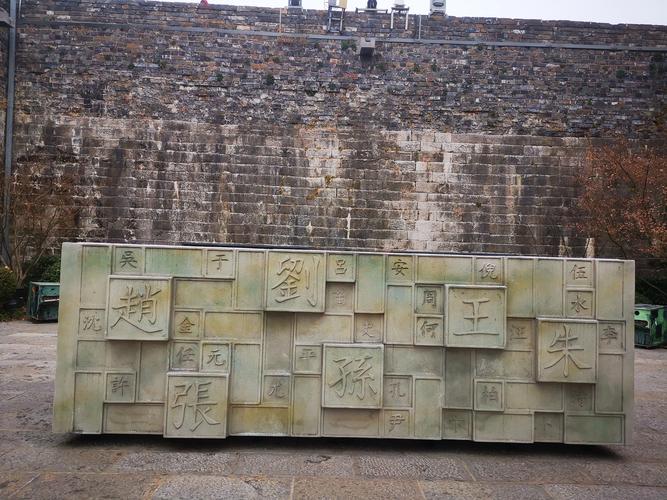
What makes the fortress genuinely extraordinary, however, is its engineering foresight. Every one of the roughly 100,000 bricks bears a stamped inscription identifying the kiln, the foreman, and the individual brick-maker responsible for its quality—a six-century-old accountability system that would not look out of place in a modern ISO audit. The masons bonded these bricks with a mortar of slaked lime, tung oil, and sticky-rice soup, a recipe so durable that some joints remain tight to this day, rivaling the longevity claimed for Roman pozzolana concrete. These humble inscriptions have become a treasure trove for historians studying Ming administration, labor organization, and the industrial geography of imperial China.
A well-organized visitor flow begins at the south entrance, where three small but worthwhile museums cover the Ming Great Wall project, the inscribed bricks themselves, and the Jubao Gate legend. From there, a gentle climb up the horse ramp leads to the wall walk and into the heart of the barbican complex, where the soldier caves and drop-gate mechanisms can be examined up close. The viewing terrace offers a superb panorama encompassing the Qinhuai River, the lantern-lit lanes of the Old Gate East historic district, and the slender silhouette of the reconstructed Dabaoen Temple pagoda—an irresistible composition for photographers, especially as dusk settles and the walls glow under floodlights.
[DETAILED]
Practicalities are refreshingly straightforward. Daytime admission is 50 RMB, with opening hours from 08:30 to 17:00; from April through October, a popular night session runs until 22:00 for 90 RMB and includes a light show. Allow between one and one-and-a-half hours for a thorough visit. Nanjing summers are notoriously humid and hot, so July and August travelers should aim for a late-afternoon arrival around 17:00, when the heat eases, the museums can be toured in air-conditioned comfort, and the sunset-to-lights transition unfolds overhead. The site lies a brief 250-meter walk from Exit 2 of Zhonghuamen Station on Metro Line 1, and multiple bus routes stop at the nearby Zhonghuamen Nei station. Passport, sturdy walking shoes, sun protection, and a water bottle are essentials. The neighboring Old Gate East quarter and Dabaoen Temple ruins are both within easy walking distance, allowing visitors to assemble a relaxed half-day cultural itinerary without ever hailing a taxi.
Rising in the late 14th century, just as the Hundred Years' War was winding down in France and Constantinople was falling to the Ottomans, Zhonghua Gate formed the southern anchor of the world's longest city wall, which once stretched 33 kilometers around the Ming capital of Nanjing. Commissioned by Zhu Yuanzhang, the rebel-turned-emperor who unified China after toppling the Mongol Yuan dynasty, the fortress originally bore the name Jubao ("Treasure-Gathering") Gate, a folk legend linking it to the legendary wealth of merchant Shen Wansan. Designated a National Key Cultural Relic in 1961, it remains the single most complete surviving specimen of pre-gunpowder urban fortification anywhere on the planet.
The architectural ambition is staggering even by European standards: measuring roughly 128 meters deep, 118 meters wide, and 21 meters tall, the complex outscales the famous barbicans of Carcassonne or Kraków. Three concentric U-shaped enclosures—each designed to trap invaders in a killing ground once the outer gate sealed behind them—funnel attackers through four successive arched passageways. Twenty-seven vaulted chambers concealed within the walls could shelter up to 3,000 troops, while three iron-reinforced drop gates could be slammed down to seal the corridors in an instant. Horse ramps flanking the structure still allow visitors to ride or walk to the ramparts exactly as Ming garrison soldiers once did.
What makes the fortress genuinely extraordinary, however, is its engineering foresight. Every one of the roughly 100,000 bricks bears a stamped inscription identifying the kiln, the foreman, and the individual brick-maker responsible for its quality—a six-century-old accountability system that would not look out of place in a modern ISO audit. The masons bonded these bricks with a mortar of slaked lime, tung oil, and sticky-rice soup, a recipe so durable that some joints remain tight to this day, rivaling the longevity claimed for Roman pozzolana concrete. These humble inscriptions have become a treasure trove for historians studying Ming administration, labor organization, and the industrial geography of imperial China.
A well-organized visitor flow begins at the south entrance, where three small but worthwhile museums cover the Ming Great Wall project, the inscribed bricks themselves, and the Jubao Gate legend. From there, a gentle climb up the horse ramp leads to the wall walk and into the heart of the barbican complex, where the soldier caves and drop-gate mechanisms can be examined up close. The viewing terrace offers a superb panorama encompassing the Qinhuai River, the lantern-lit lanes of the Old Gate East historic district, and the slender silhouette of the reconstructed Dabaoen Temple pagoda—an irresistible composition for photographers, especially as dusk settles and the walls glow under floodlights.
[DETAILED]
Practicalities are refreshingly straightforward. Daytime admission is 50 RMB, with opening hours from 08:30 to 17:00; from April through October, a popular night session runs until 22:00 for 90 RMB and includes a light show. Allow between one and one-and-a-half hours for a thorough visit. Nanjing summers are notoriously humid and hot, so July and August travelers should aim for a late-afternoon arrival around 17:00, when the heat eases, the museums can be toured in air-conditioned comfort, and the sunset-to-lights transition unfolds overhead. The site lies a brief 250-meter walk from Exit 2 of Zhonghuamen Station on Metro Line 1, and multiple bus routes stop at the nearby Zhonghuamen Nei station. Passport, sturdy walking shoes, sun protection, and a water bottle are essentials. The neighboring Old Gate East quarter and Dabaoen Temple ruins are both within easy walking distance, allowing visitors to assemble a relaxed half-day cultural itinerary without ever hailing a taxi.