Rishengchang Draft Bank
⭐ 3.80
Pingyao Ancient City, Pingyao County, Jinzhong, Shanxi Province, China
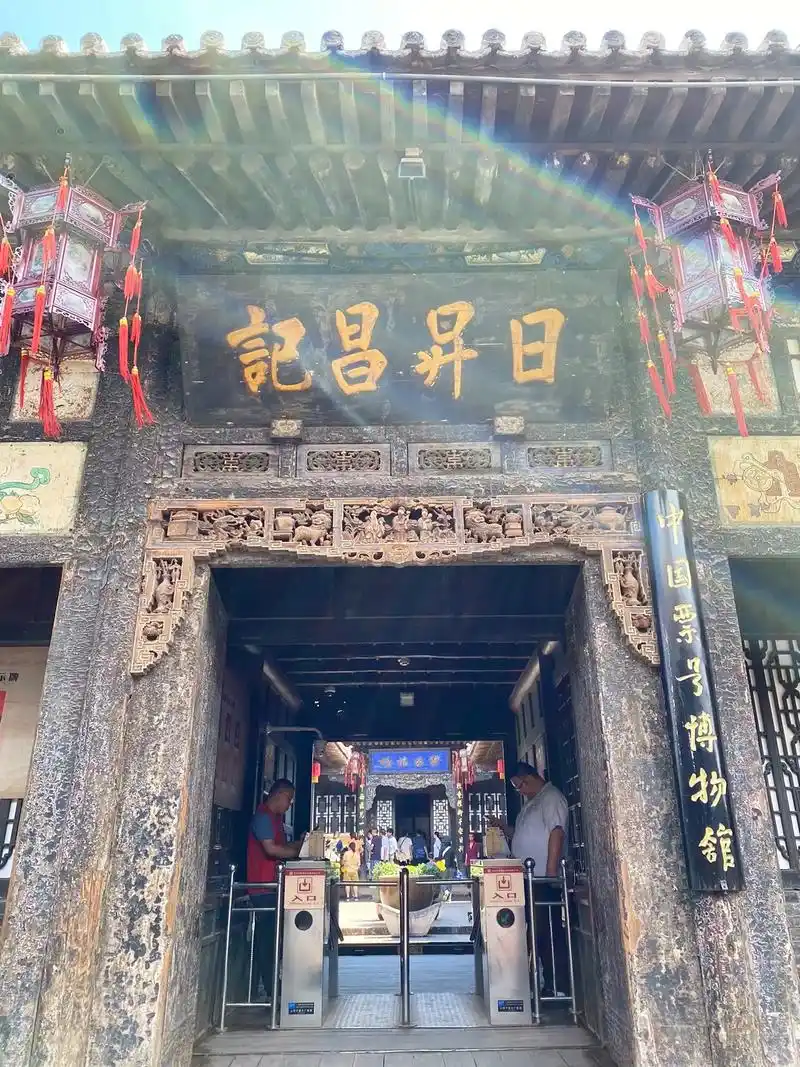 Founded in 1823 by the dye merchant Lei Lütai, Rishengchang emerged just six years after Britain's first true savings bank and roughly a decade before American banking took shape in Philadelphia. Its founders pioneered a remittance system that moved silver across China without physical transport, conceptually comparable to the Medici family's Florentine branches yet executed at far greater geographic scale. At its peak, the bank's branches spanned more than thirty cities, processing annual transfers equivalent to tens of millions in modern currency and earning the legendary slogan "Tong Hui Tian Xia," meaning "connections reaching the entire world."
The complex follows a classic "shop in front, vault behind" configuration arranged along a north-south axis. Visitors enter through the original ground-floor counter hall, where merchants once conducted transactions over polished wooden desks. Beyond lie the manager's quarters, accountant's rooms, and clerks' dormitories, each preserving the austere aesthetic favored by the Shanxi merchant fraternity. The atmosphere recalls the counting houses of Renaissance Florence, though here function triumphs over ornament in the very Chinese tradition of practical elegance.
The highlight is undoubtedly the underground vault, whose legendary entrance concealed beneath a heated brick sleeping platform speaks to extraordinary security ingenuity. Massive iron doors, simulated silver ingots, and ingenious traps demonstrate anti-theft sophistication rivaling European castle strongrooms. Equally fascinating is the cipher system: clerks encoded transfers using literary Chinese poetry, watermarked paper, and specially formulated seals, an early example of multi-layer authentication that anticipated modern banking security protocols by nearly two centuries.
Rishengchang also introduced groundbreaking management codes, including a prohibition against hiring the boss's three categories of relatives, a startlingly modern governance concept for the era. These rules, alongside surviving Qing-dynasty ledgers and correspondence displayed in glass cases, document how Shanxi merchants essentially invented institutional finance in China. The site is now a nationally protected cultural monument and forms a cornerstone for understanding the Silk Road era's later commercial evolution.
Practical planning is straightforward. Rishengchang is included in Pingyao's combined ticket (125 RMB, valid three days, covering 22 sites), available only at the city gates; foreign visitors need a passport for purchase. Opening hours shift seasonally, roughly 8:00 to 18:30 in summer. Flash photography and tripods are forbidden, and some exhibits ban cameras entirely.
Strongly recommend hiring a licensed guide or renting an audio device, as English signage is unreliable. Visit between 9:00 and 10:30 on weekdays to avoid tour-group crowds, allowing 45 to 60 minutes. The suggested route runs counter hall, manager's office, remittance cipher room, underground vault, then accountant's chambers. Pairing Rishengchang with the neighboring Weitaihui draft bank provides an illuminating comparison of competing Shanxi merchant houses.
Founded in 1823 by the dye merchant Lei Lütai, Rishengchang emerged just six years after Britain's first true savings bank and roughly a decade before American banking took shape in Philadelphia. Its founders pioneered a remittance system that moved silver across China without physical transport, conceptually comparable to the Medici family's Florentine branches yet executed at far greater geographic scale. At its peak, the bank's branches spanned more than thirty cities, processing annual transfers equivalent to tens of millions in modern currency and earning the legendary slogan "Tong Hui Tian Xia," meaning "connections reaching the entire world."
The complex follows a classic "shop in front, vault behind" configuration arranged along a north-south axis. Visitors enter through the original ground-floor counter hall, where merchants once conducted transactions over polished wooden desks. Beyond lie the manager's quarters, accountant's rooms, and clerks' dormitories, each preserving the austere aesthetic favored by the Shanxi merchant fraternity. The atmosphere recalls the counting houses of Renaissance Florence, though here function triumphs over ornament in the very Chinese tradition of practical elegance.
The highlight is undoubtedly the underground vault, whose legendary entrance concealed beneath a heated brick sleeping platform speaks to extraordinary security ingenuity. Massive iron doors, simulated silver ingots, and ingenious traps demonstrate anti-theft sophistication rivaling European castle strongrooms. Equally fascinating is the cipher system: clerks encoded transfers using literary Chinese poetry, watermarked paper, and specially formulated seals, an early example of multi-layer authentication that anticipated modern banking security protocols by nearly two centuries.
Rishengchang also introduced groundbreaking management codes, including a prohibition against hiring the boss's three categories of relatives, a startlingly modern governance concept for the era. These rules, alongside surviving Qing-dynasty ledgers and correspondence displayed in glass cases, document how Shanxi merchants essentially invented institutional finance in China. The site is now a nationally protected cultural monument and forms a cornerstone for understanding the Silk Road era's later commercial evolution.
Practical planning is straightforward. Rishengchang is included in Pingyao's combined ticket (125 RMB, valid three days, covering 22 sites), available only at the city gates; foreign visitors need a passport for purchase. Opening hours shift seasonally, roughly 8:00 to 18:30 in summer. Flash photography and tripods are forbidden, and some exhibits ban cameras entirely.
Strongly recommend hiring a licensed guide or renting an audio device, as English signage is unreliable. Visit between 9:00 and 10:30 on weekdays to avoid tour-group crowds, allowing 45 to 60 minutes. The suggested route runs counter hall, manager's office, remittance cipher room, underground vault, then accountant's chambers. Pairing Rishengchang with the neighboring Weitaihui draft bank provides an illuminating comparison of competing Shanxi merchant houses.